Wild turkey
Meleagris gallopavo
Turkeys
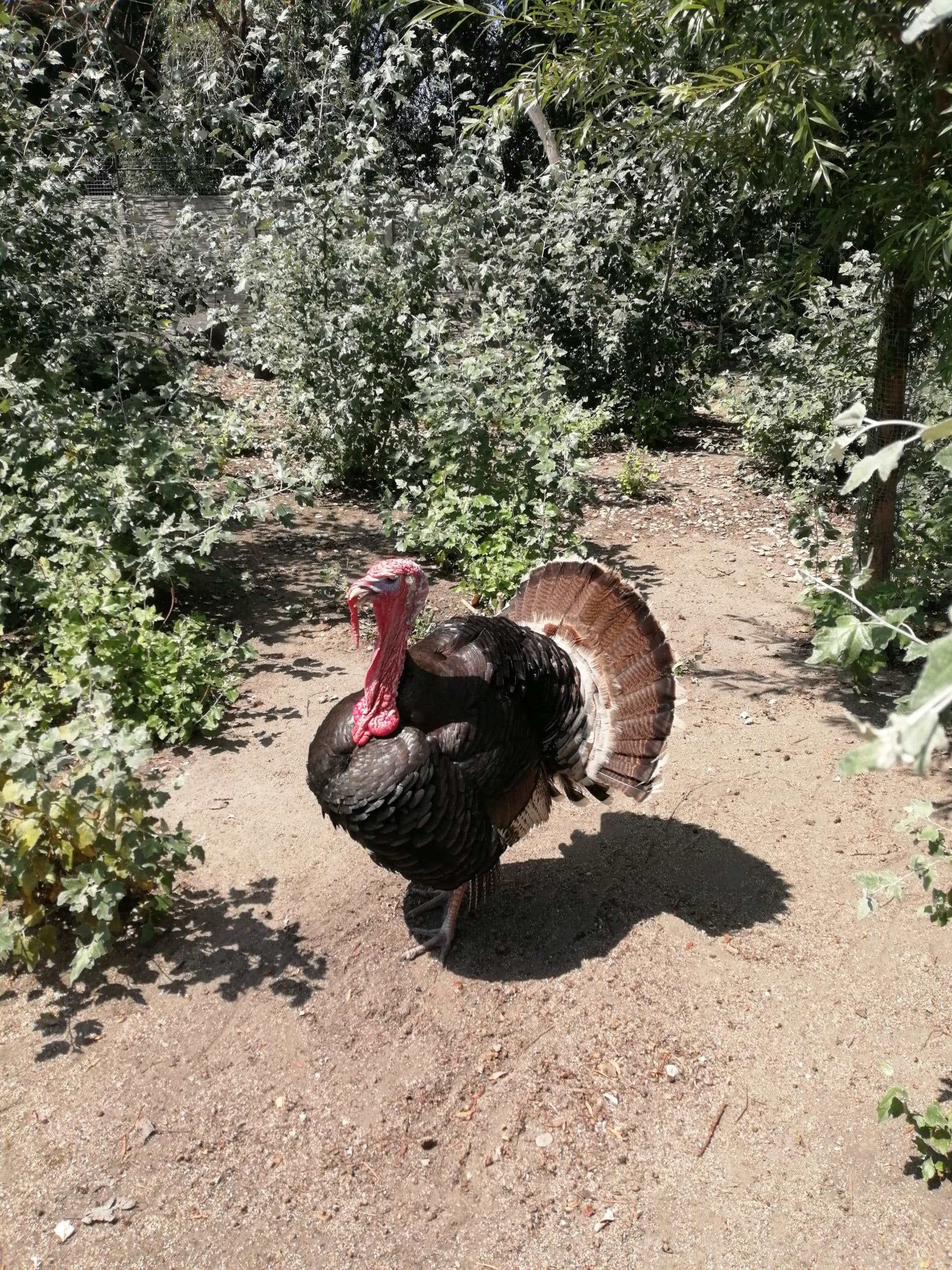
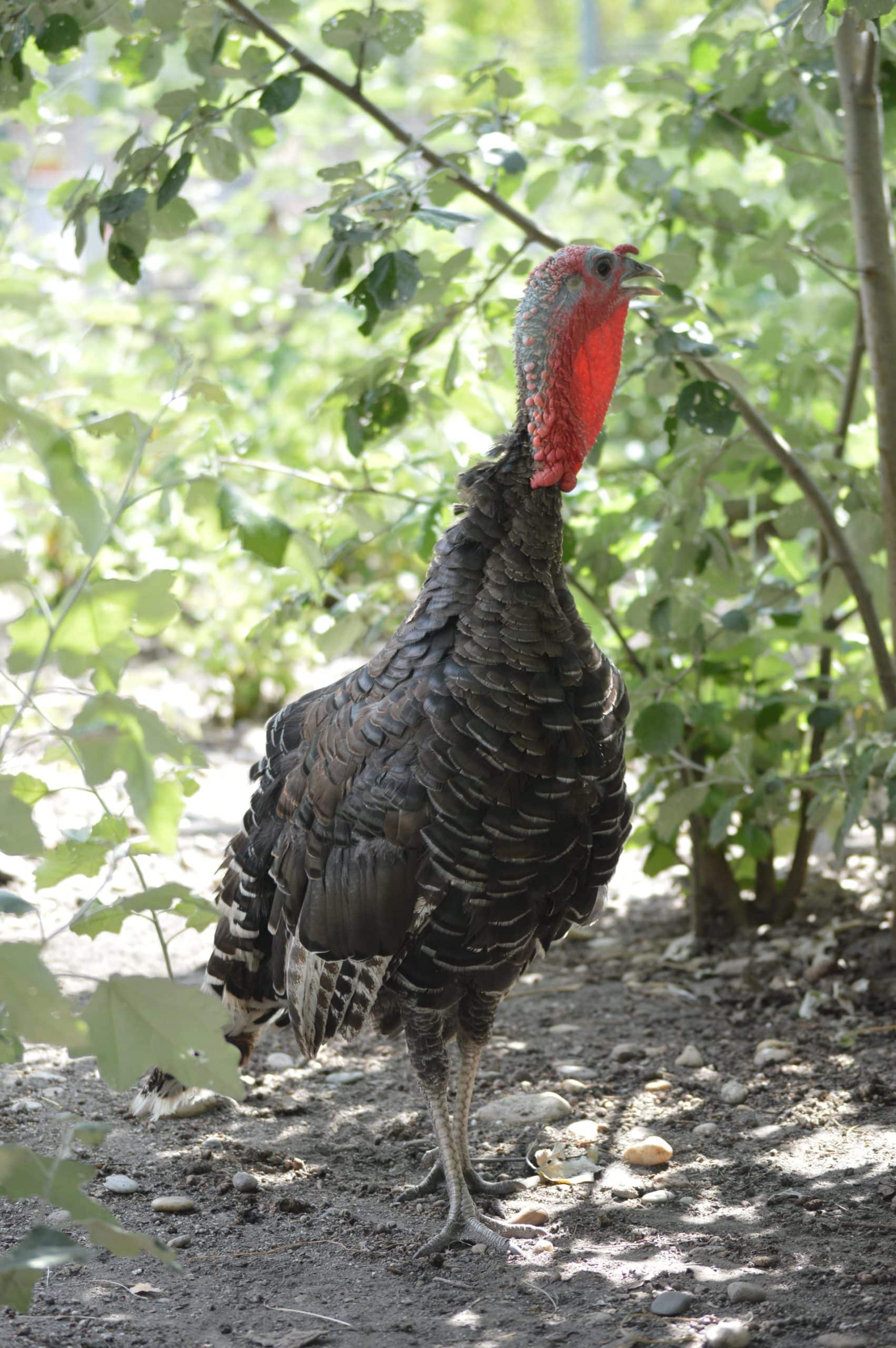
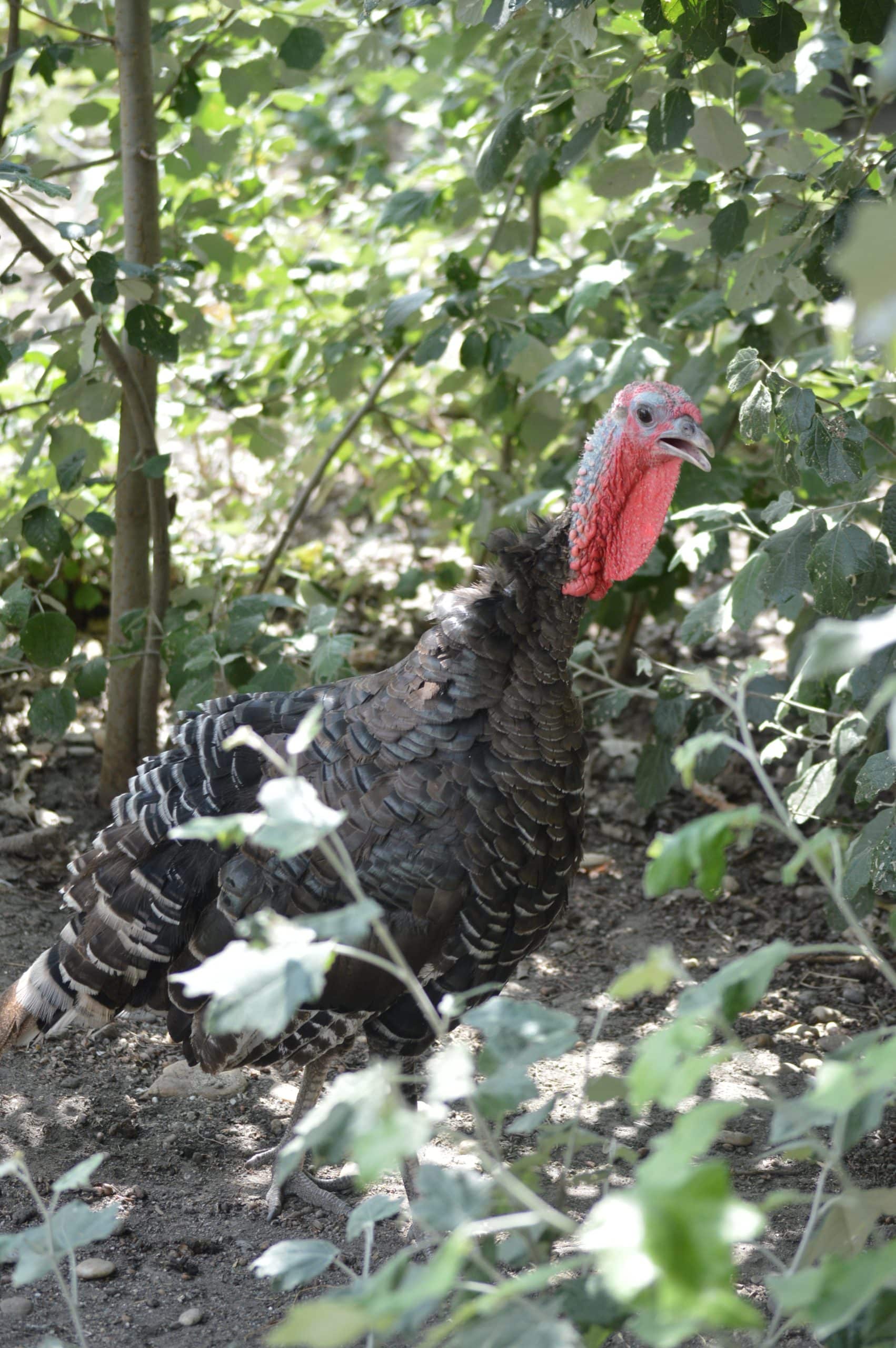
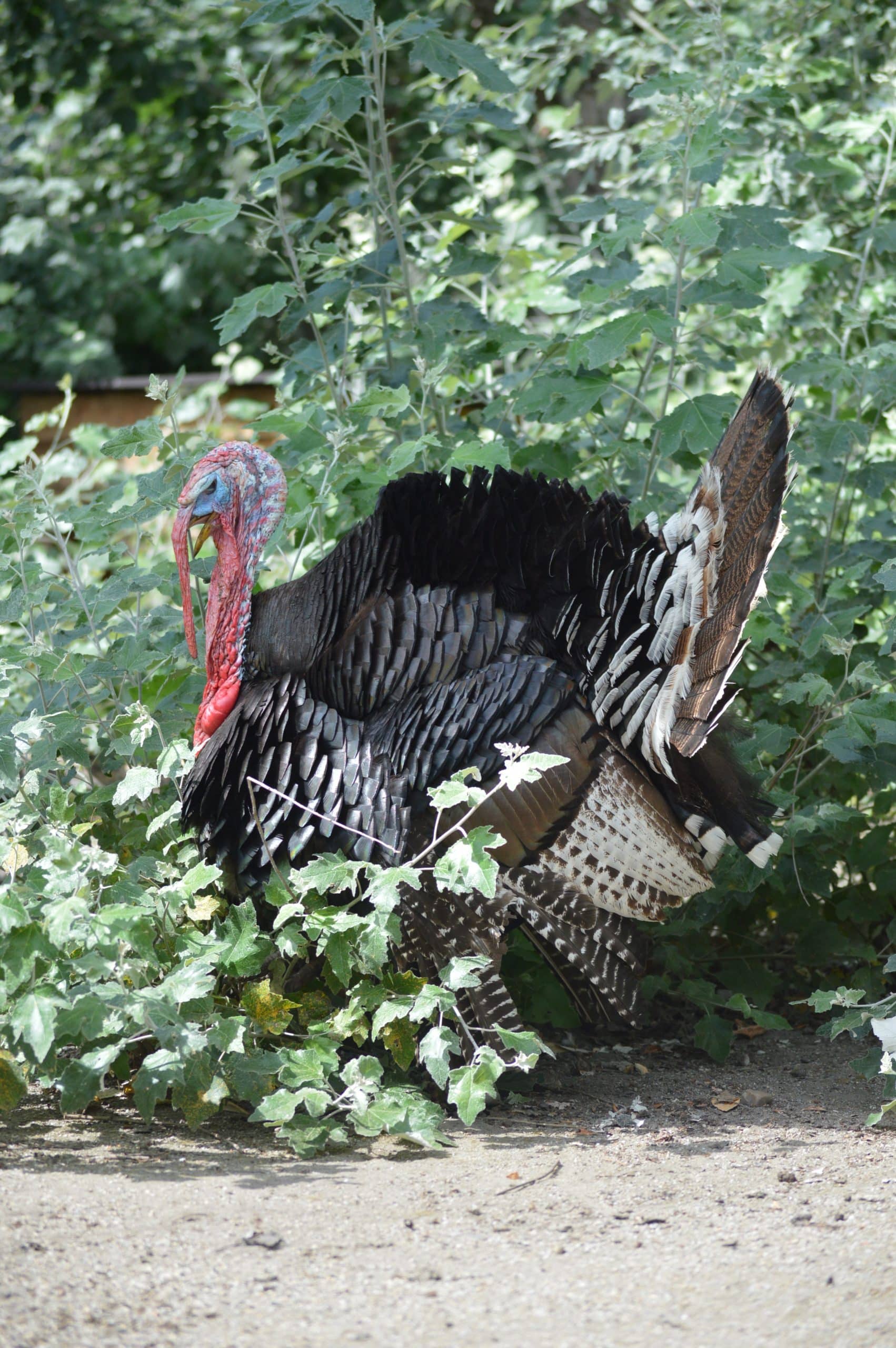
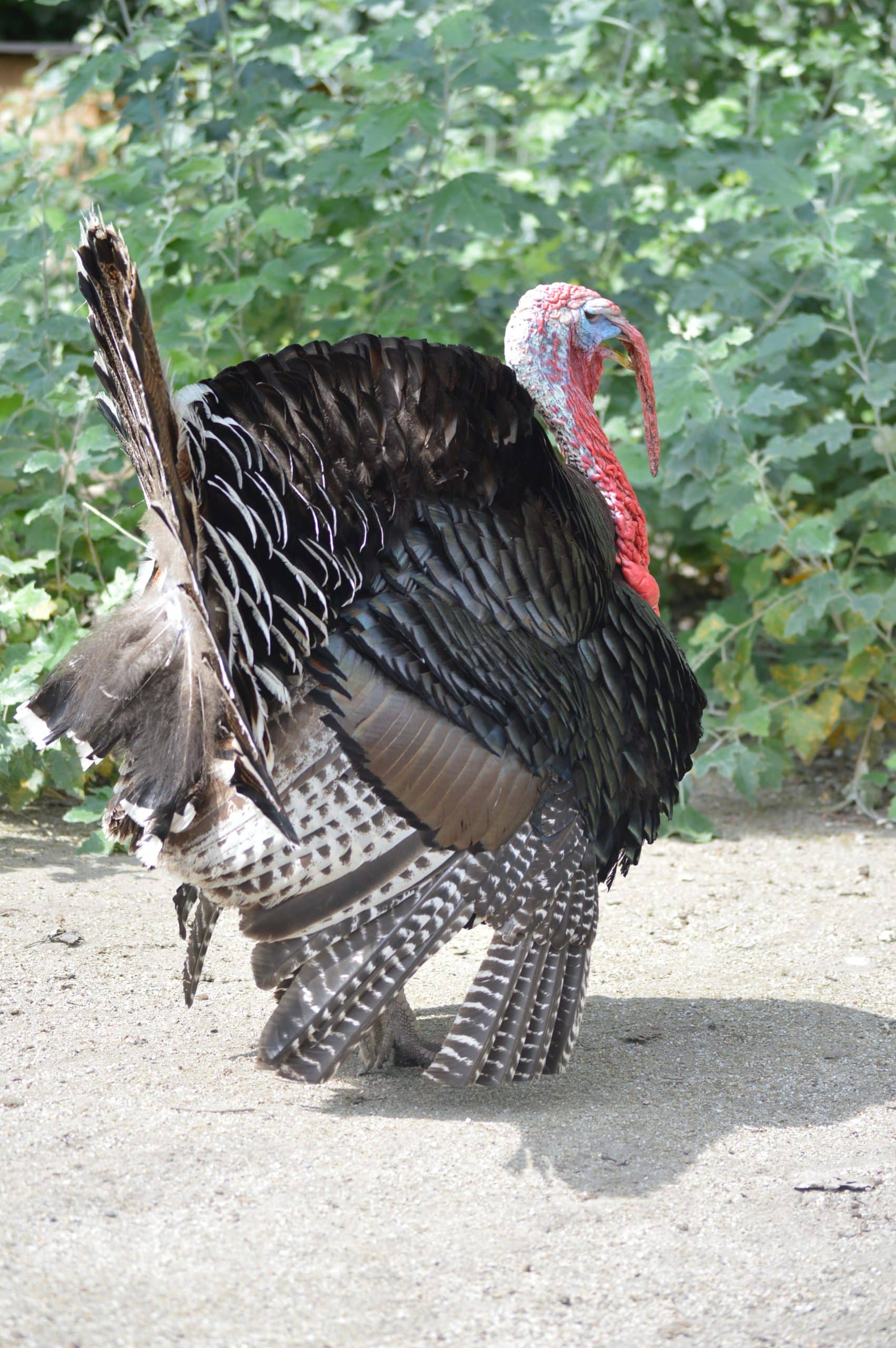
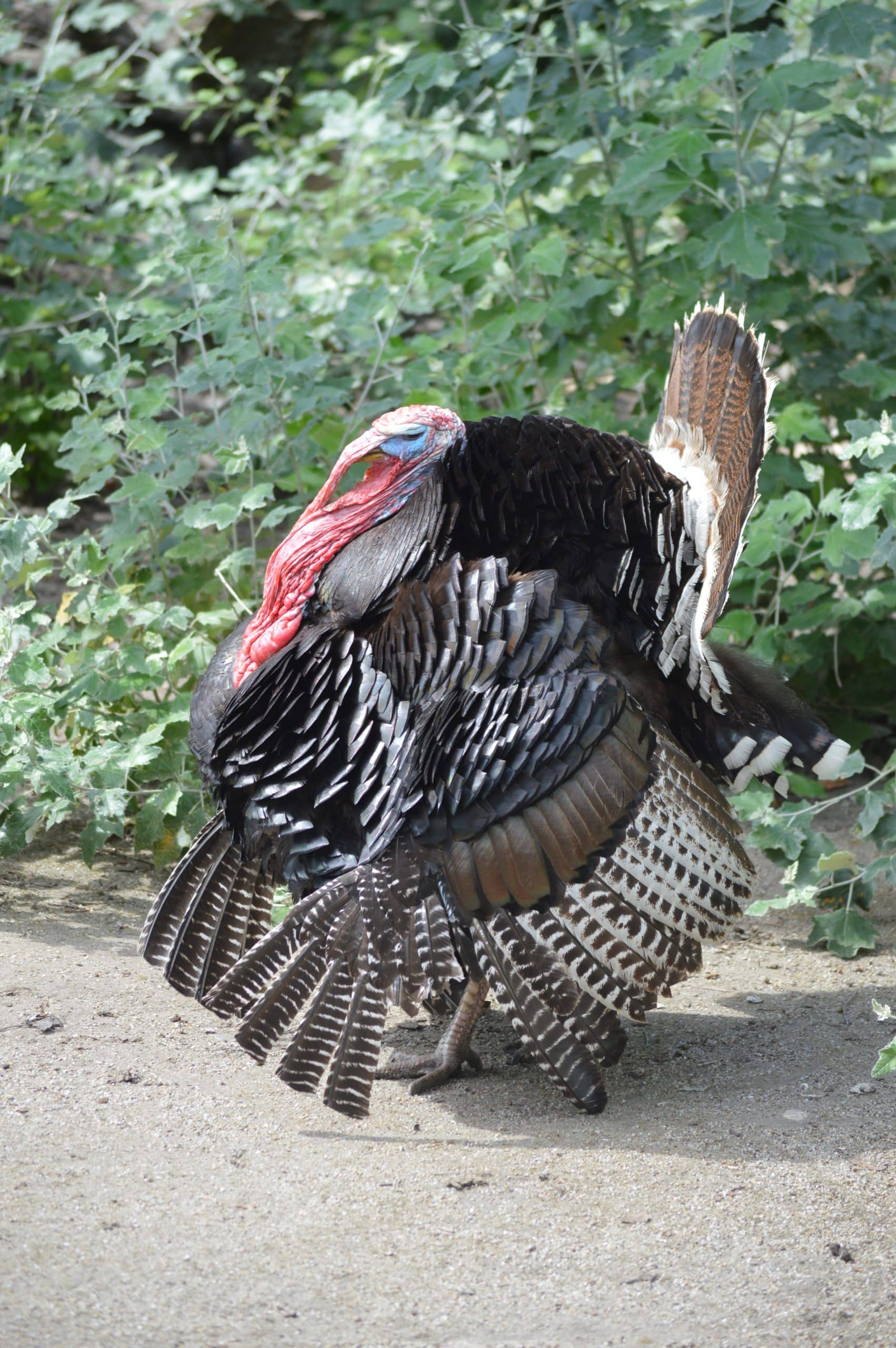
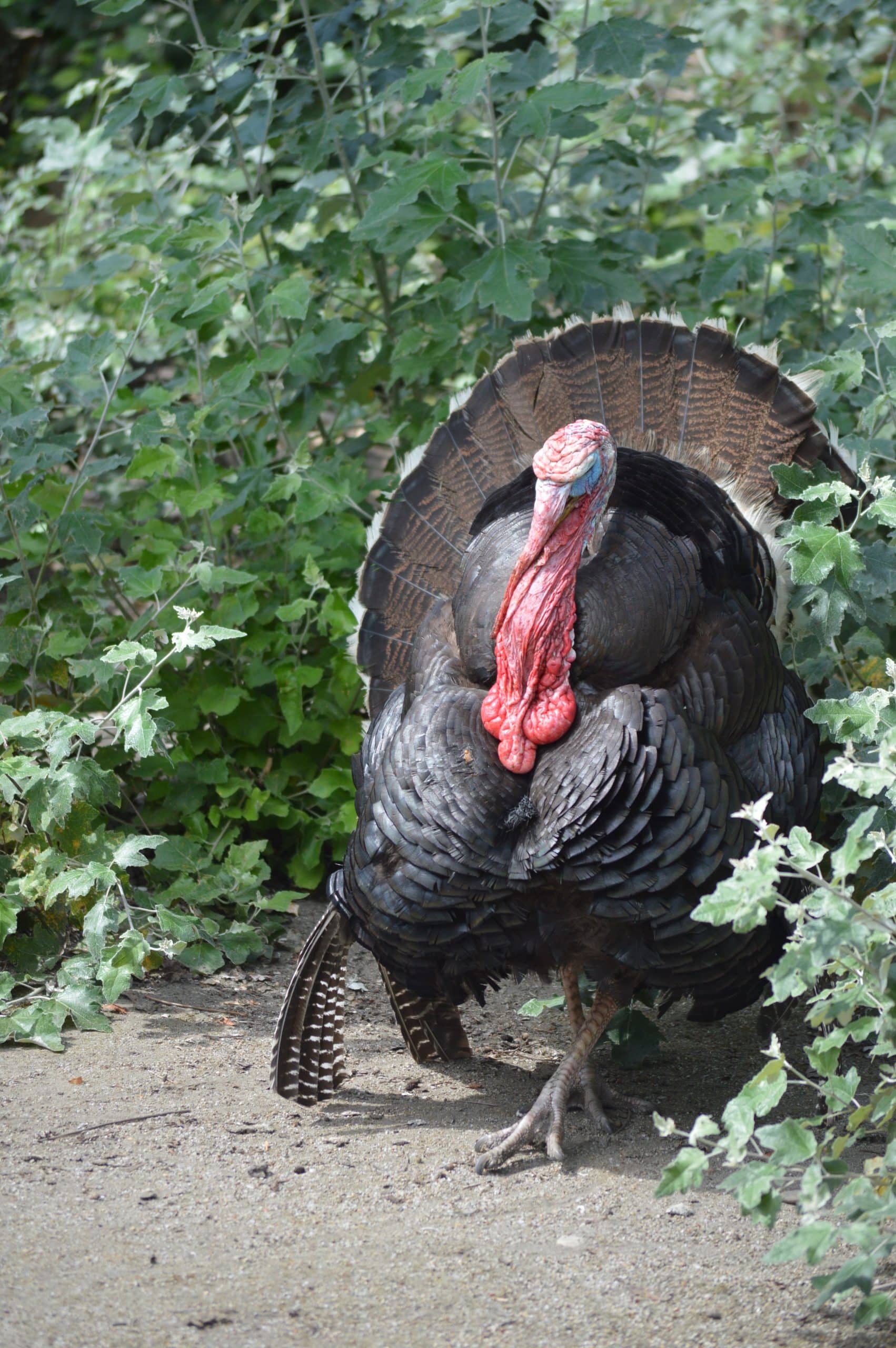
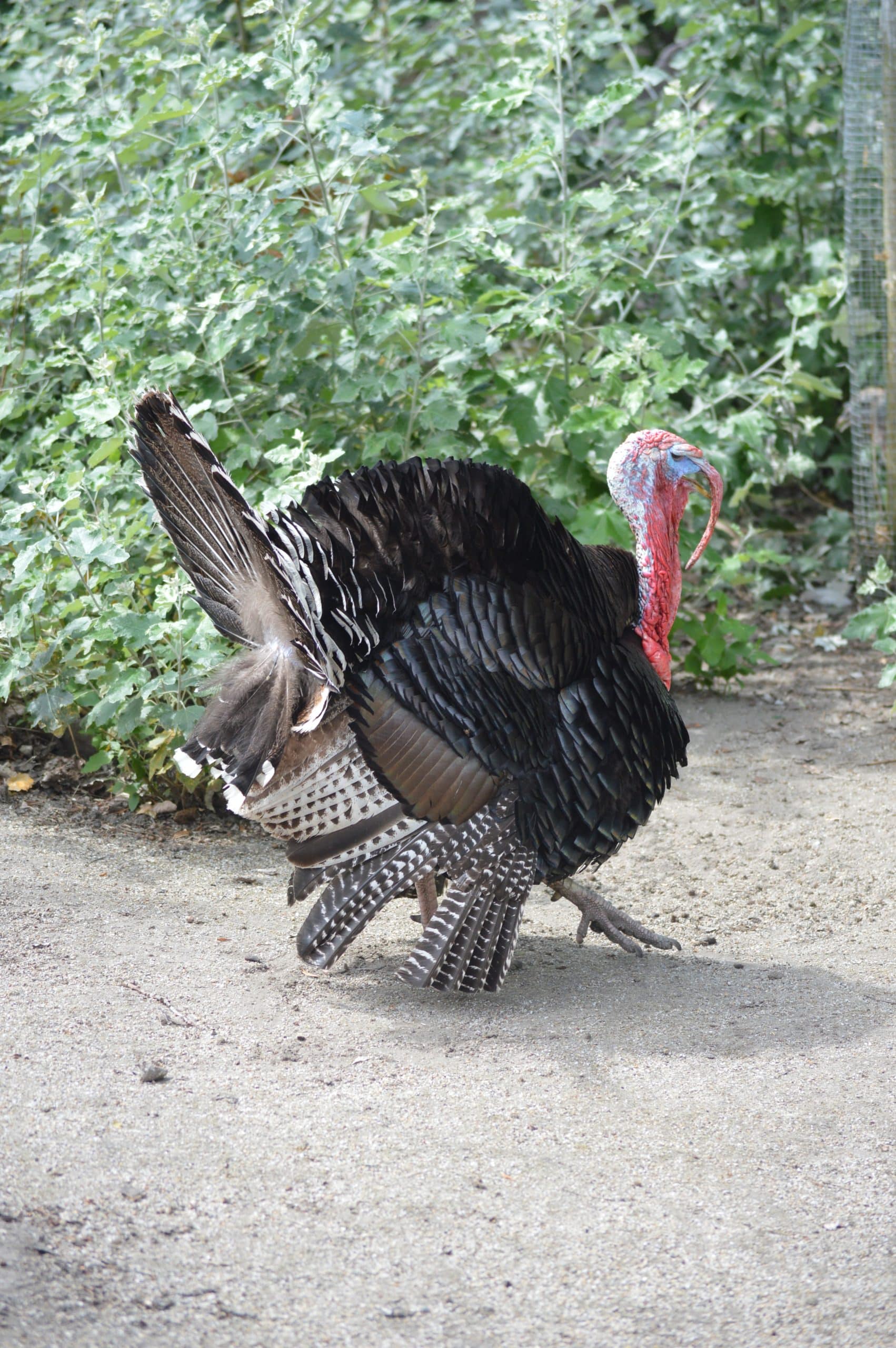
Wild turkeys, typical American birds, can be seen right at the beginning of Malkia Park, between the guest house and the lynx. We breed a male and three females. The male constantly guards and courts his females. If he didn’t have them, he would make a loud and frequent “whisper”.
These animals cannot be adopted.
The North American wild turkey is leaner and much more colourful than its domesticated relative. It is the largest gallinaceous bird in North America. The head and neck are naked. The skin is coloured blue to purple. Individuals of both sexes have a wattle on the neck, which is, however, much more pronounced in the male. In addition, the turkey has thickened skin folds that turn deep red when excited. Another feature is a long outgrowth of skin over the beak, which in males elongates when excited and then hangs down over the tip of the beak. In females and juveniles, it looks like a small horn on the forehead. The plumage is predominantly dark green with a gold or copper sheen. The feathers on the neck, chest, and back are black edged. The males grow a strange tuft of feathers on their chests, which can reach the ground in old individuals. The legs are pinkish-purple-grey, with a small spur in the male.
They live in both forests and wetlands or swampy areas. They have a huge variety of enemies. For example, many sleep in trees that stand in water and are difficult to access to avoid danger. It is very heavy and therefore very difficult to take off from the ground – it has to run a few metres first to be able to “lift off” itself from the ground.
Apart from the breeding season, males and females live in separate flocks. At the time of breeding, the male runs and makes loud noises, spreading his tail feathers into a large fan. Each male tries to fertilise as many females as possible and fights hard for his harem with his rivals. The female then digs a shallow hole in the ground where she lays her eggs. The chicks are initially grey spotted, but soon grow their first flight feathers. They remain under the careful supervision of their mother for 3 months.
The English name “turkey” is short for “turkey fowl”, which actually means “poultry from Turkey”. Turkeys have been known in Europe for so long that their true place of origin has long since been forgotten and they were “relocated” to Muslim countries. At the same time, confusion with the helmeted guineafowl also played a role here.
Benjamin Franklin wished to have a wild turkey in the national emblem of the United States. In the end, this honour went to the bald eagle, which looks more dignified.
Wild turkey
Meleagris gallopavo
Turkeys
Date of hatching
Unknown
Order
Family
BODY LENGTH
up to 1.2 m male, female is smaller
Weight
4.5-15.8 kg male
2.7-6.3 kg female
LIFE EXPECTANCY
ca 5 years, record was 13 years
INCUBATION PERIOD
28 days
NUMBER OF EGGS
8-15 creamy white eggs with brown spots
CARE OF THE YOUNG
in the 2nd week they can fly, they become independent in the 3rd month
Occurrence
middle and south of the North America
Food
fruits, roots, seeds, tubers, insects, carcasses, gastropods, amphibians
Wild turkeys, typical American birds, can be seen right at the beginning of Malkia Park, between the guest house and the lynx. We breed a male and three females. The male constantly guards and courts his females. If he didn’t have them, he would make a loud and frequent “whisper”.
These animals cannot be adopted.
The North American wild turkey is leaner and much more colourful than its domesticated relative. It is the largest gallinaceous bird in North America. The head and neck are naked. The skin is coloured blue to purple. Individuals of both sexes have a wattle on the neck, which is, however, much more pronounced in the male. In addition, the turkey has thickened skin folds that turn deep red when excited. Another feature is a long outgrowth of skin over the beak, which in males elongates when excited and then hangs down over the tip of the beak. In females and juveniles, it looks like a small horn on the forehead. The plumage is predominantly dark green with a gold or copper sheen. The feathers on the neck, chest, and back are black edged. The males grow a strange tuft of feathers on their chests, which can reach the ground in old individuals. The legs are pinkish-purple-grey, with a small spur in the male.
They live in both forests and wetlands or swampy areas. They have a huge variety of enemies. For example, many sleep in trees that stand in water and are difficult to access to avoid danger. It is very heavy and therefore very difficult to take off from the ground – it has to run a few metres first to be able to “lift off” itself from the ground.
Apart from the breeding season, males and females live in separate flocks. At the time of breeding, the male runs and makes loud noises, spreading his tail feathers into a large fan. Each male tries to fertilise as many females as possible and fights hard for his harem with his rivals. The female then digs a shallow hole in the ground where she lays her eggs. The chicks are initially grey spotted, but soon grow their first flight feathers. They remain under the careful supervision of their mother for 3 months.
The English name “turkey” is short for “turkey fowl”, which actually means “poultry from Turkey”. Turkeys have been known in Europe for so long that their true place of origin has long since been forgotten and they were “relocated” to Muslim countries. At the same time, confusion with the helmeted guineafowl also played a role here.
Benjamin Franklin wished to have a wild turkey in the national emblem of the United States. In the end, this honour went to the bald eagle, which looks more dignified.