Swan goose
Anser cygnoides domesticus
Swan goose
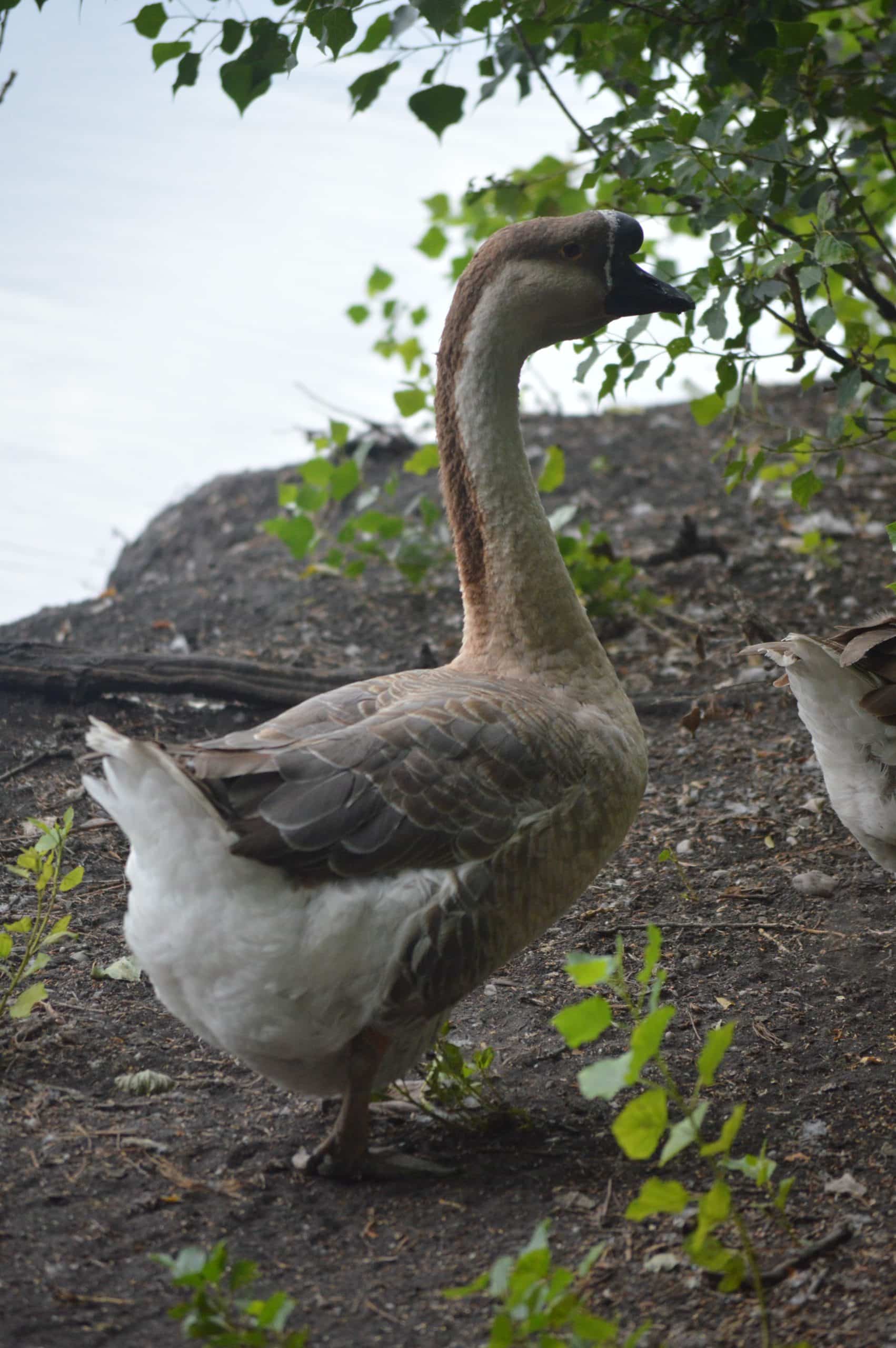
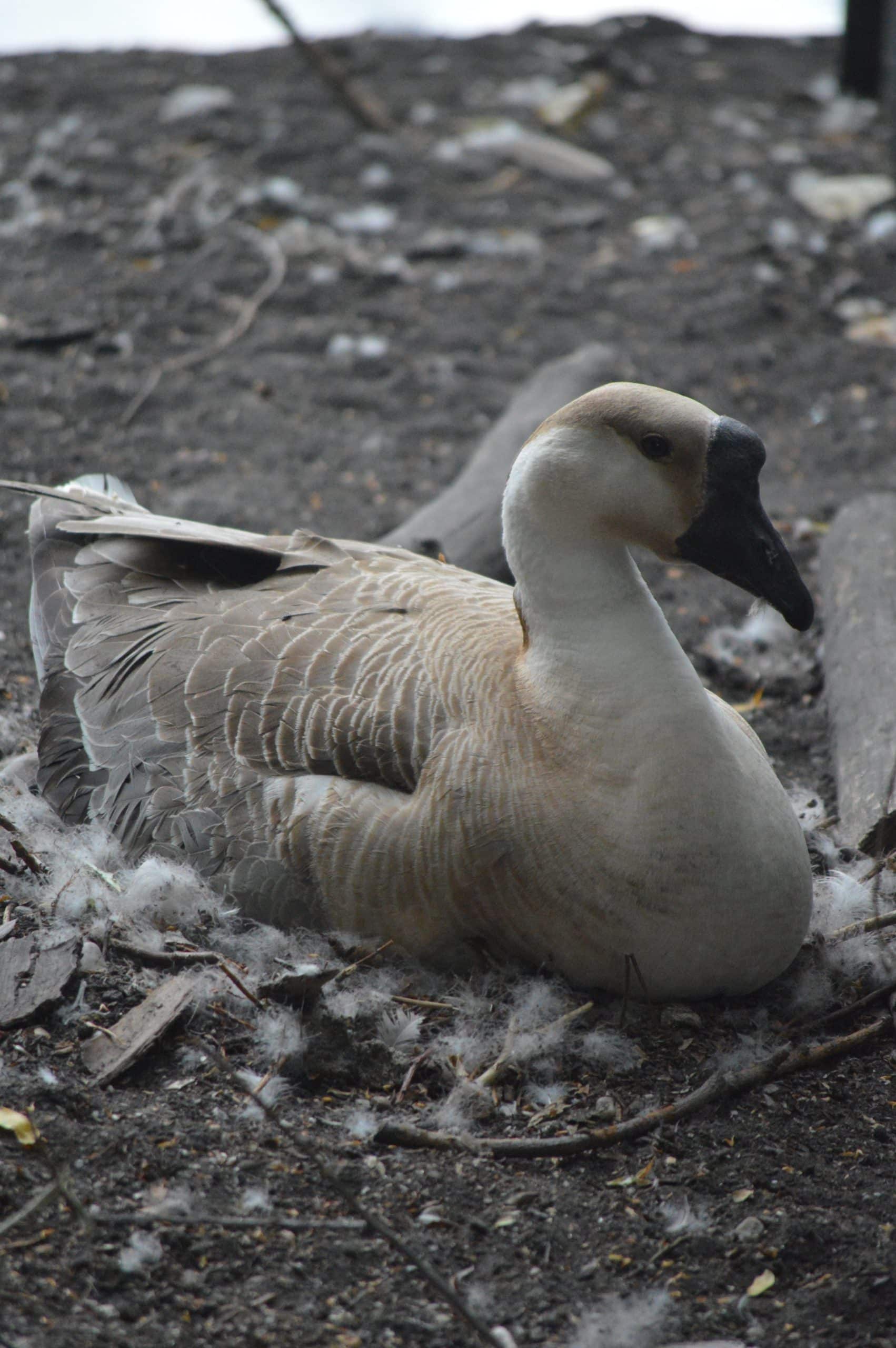

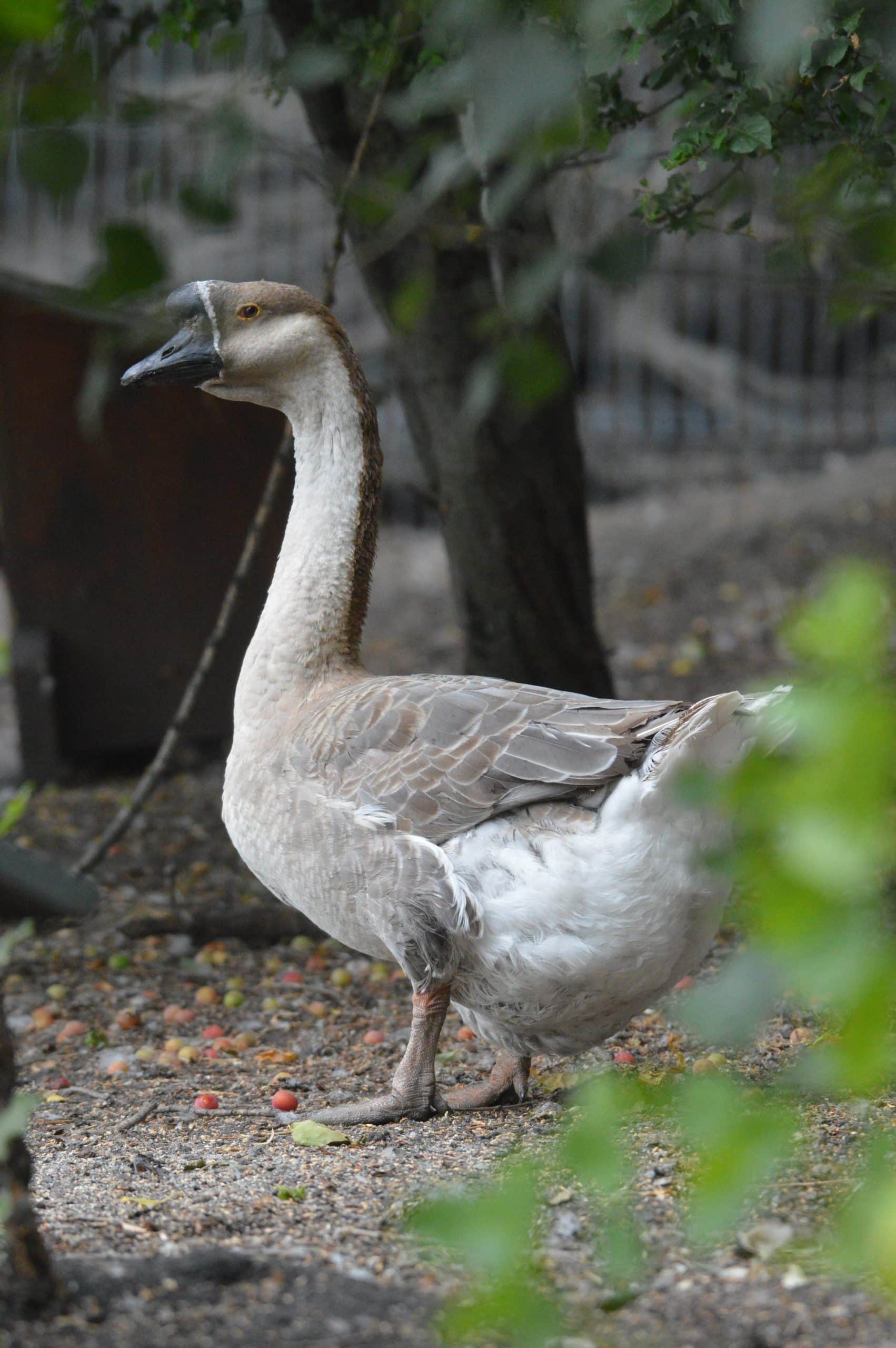
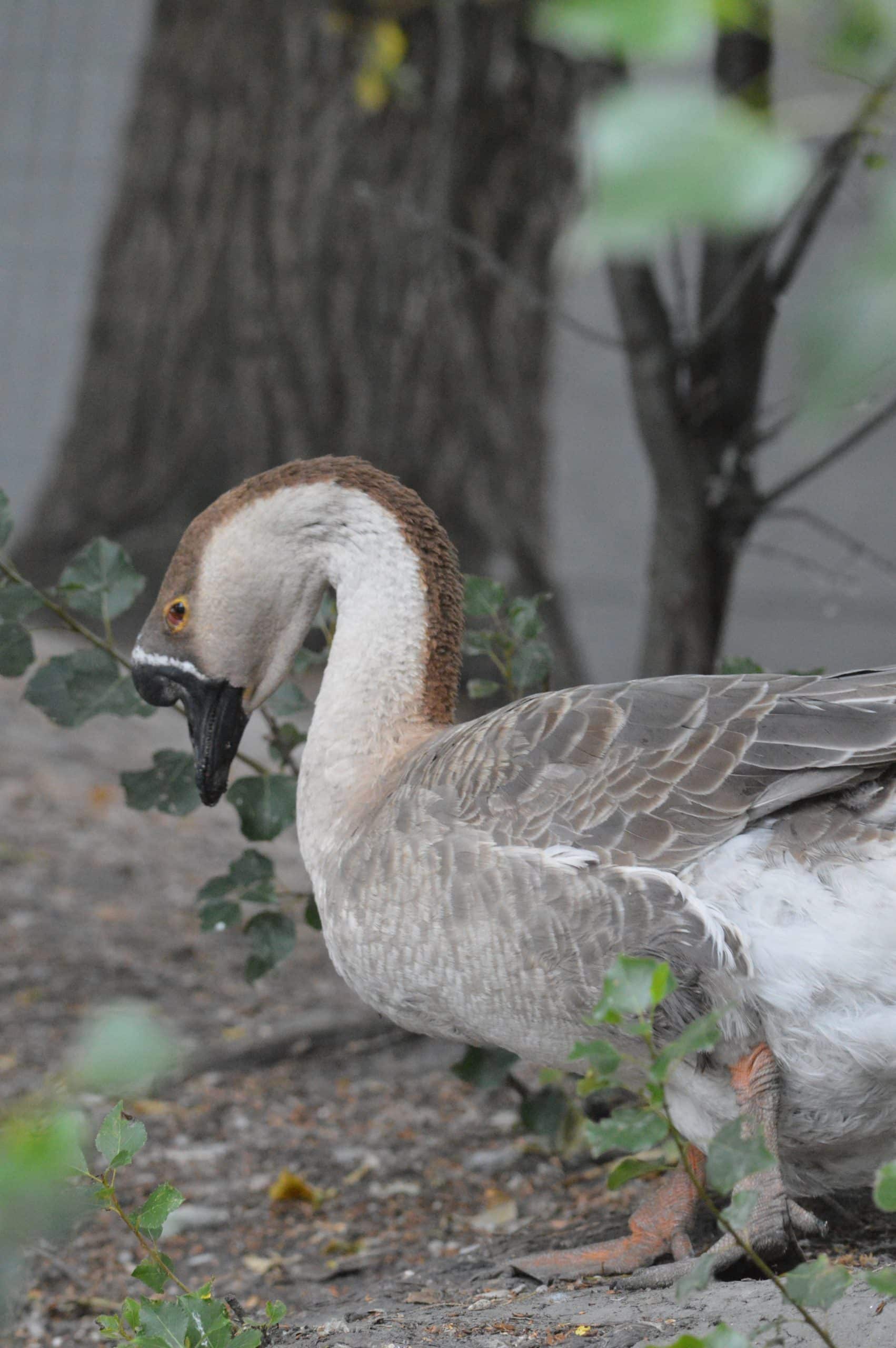
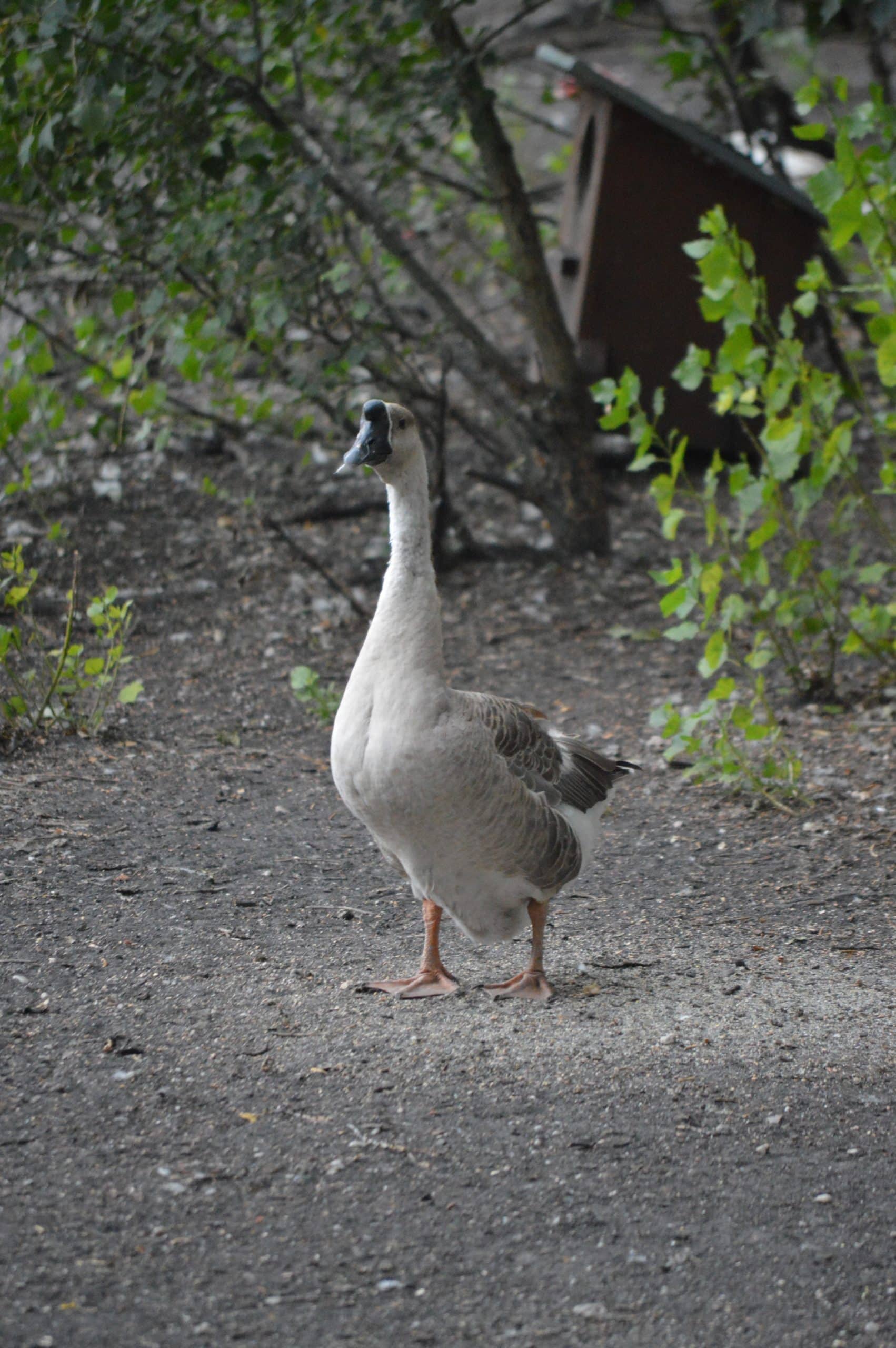
Visitors can see and feed geese and swans on our lake, where these birds have the opportunity to move freely. These geese like to stay in their small species group.
These animals cannot be adopted.
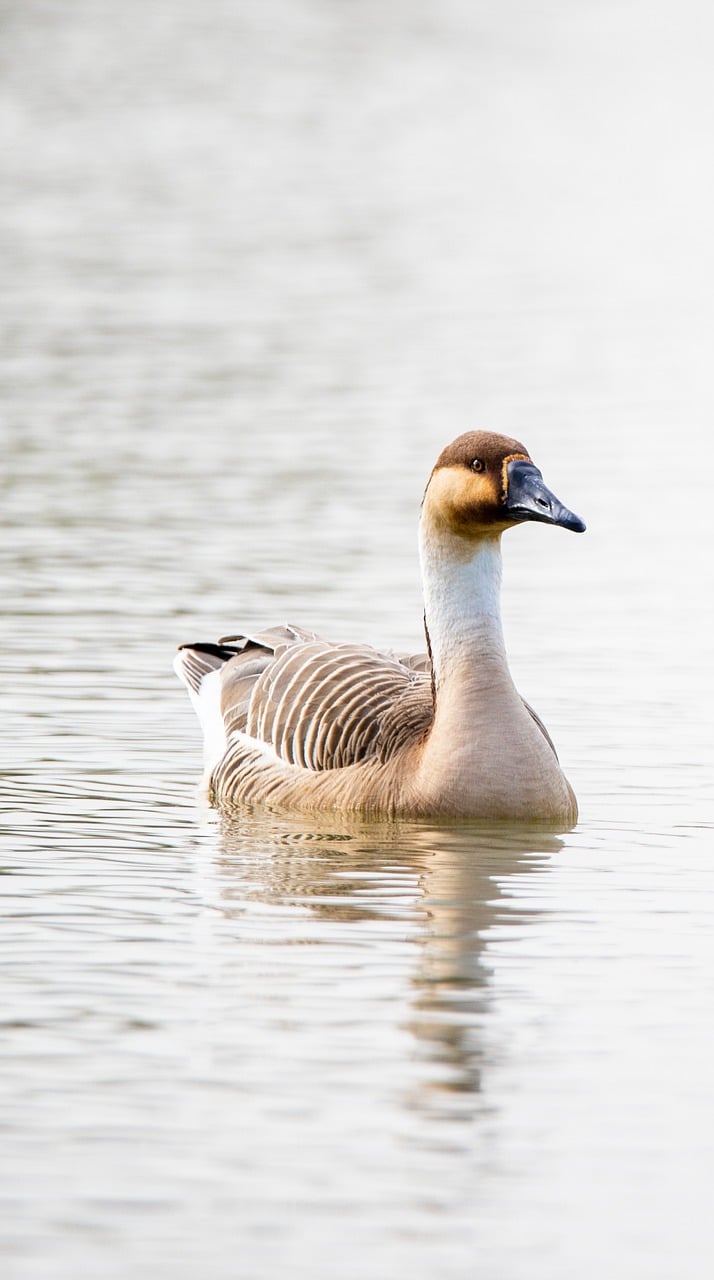
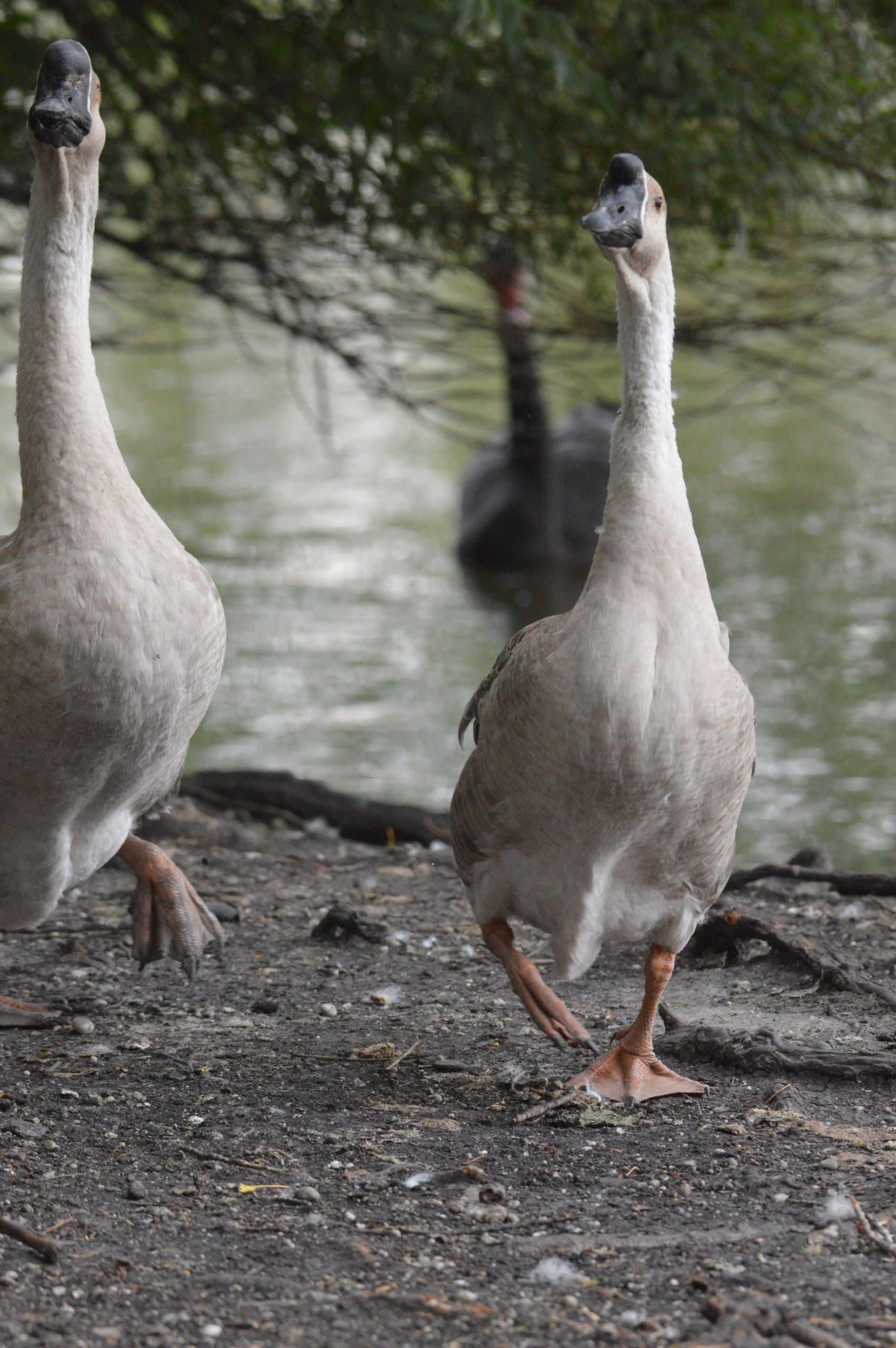
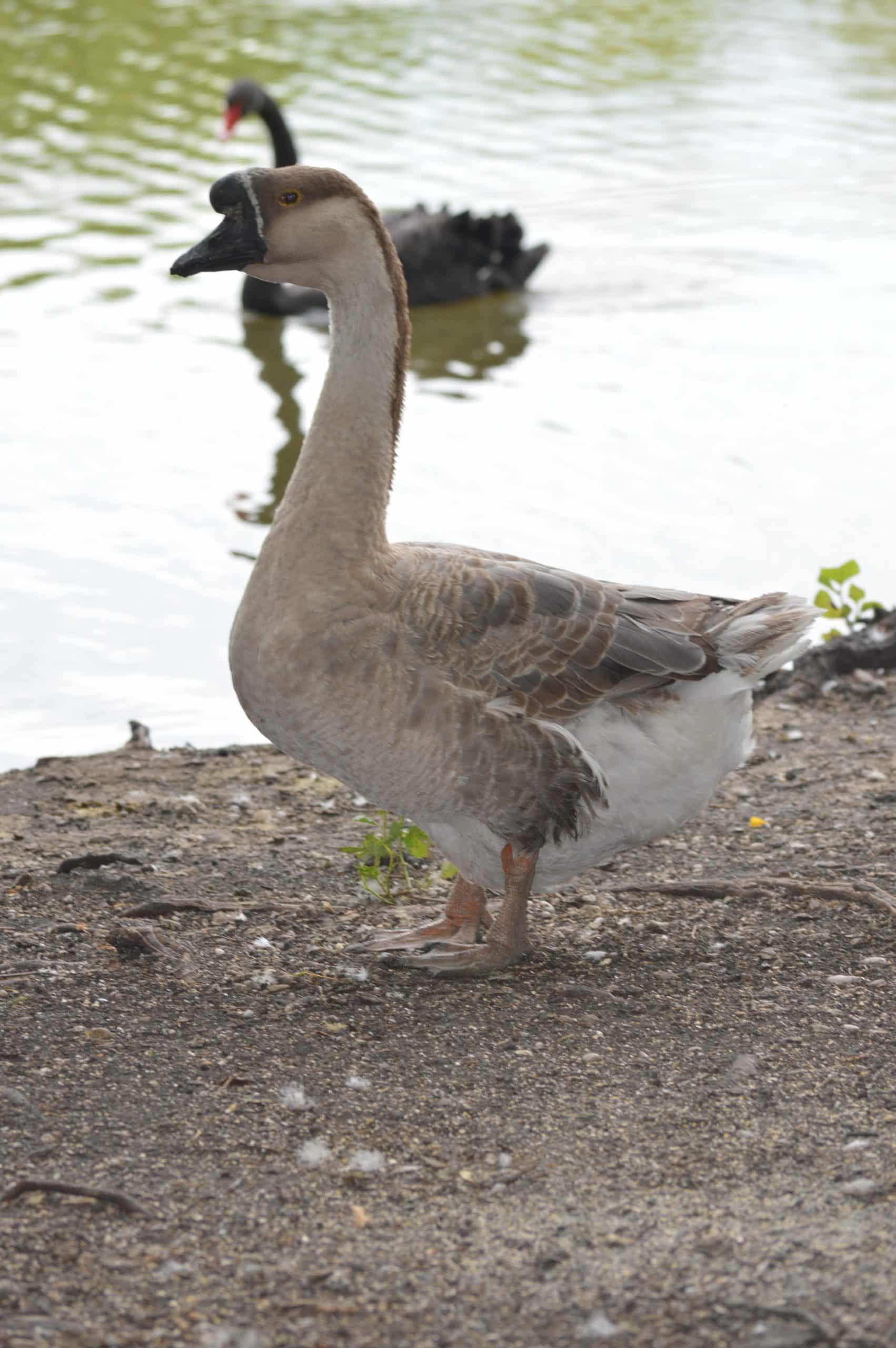
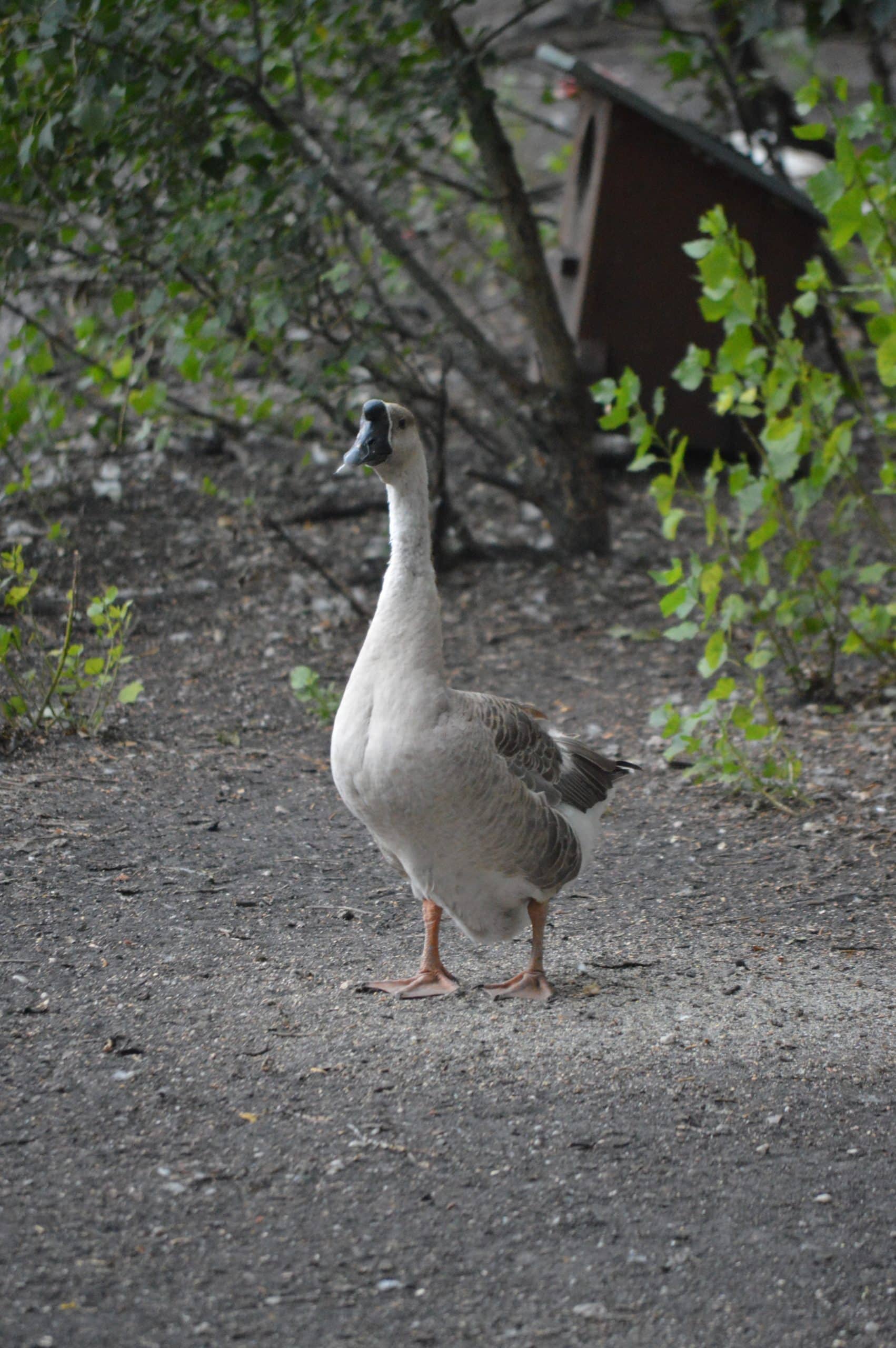
The colour of the feathers is brown to white. In brown colouration, it is typical that the upper part of the body from the beak to the end of the tail is chestnut-brown with white edging of the large feathers, while the lower part of the body is significantly paler to greyish with a clear border. In flight, the wings look dark, with no noticeable pattern. The long, heavy beak is completely black. The legs are orange like in the most of its relatives.
The young are more matte than adult birds and they lack the white base and dark stripes on the underside of the body.
It inhabits steppe to taiga and mountain valleys near fresh water. Outside the breeding season, it forms small flocks or lives in pairs. In winter, it grazes on flats and stubble fields, sometimes far from water. The birds return from their wintering grounds around April and the breeding season starts soon afterwards. It nests near marshes and other wetlands. It lays its eggs in a shallow plant nest placed directly on the ground, often on a small mound to keep it dry. The young are born feathered, they can see and are able to move.
In Asia, it has been bred as a domesticated Chinese goose for thousands of years. It was introduced to Europe as a game bird.
As a breed it is very fertile, with most geese not retaining the instinct to brood and raise their young.
Swan goose
Anser cygnoides domesticus
Swan goose
Date of hatching
Unknown
Order
Family
Distribution
BODY LENGTH
81-94 cm
Weight
2,8-3,5 kg
LIFE EXPECTANCY
in captivity up to 20 years
WINGSSPAN
1,6-1,8 m
INCUBATION PERIOD
28 days
NUMBER OF EGGS
ca 5-6 eggs, in captivity up to 50 a year
Occurrence
Mongolia, northern China, Laos, also introduced to Europe
Food
grass, plants, leaves, seeds, aquatic plants
Visitors can see and feed geese and swans on our lake, where these birds have the opportunity to move freely. These geese like to stay in their small species group.
These animals cannot be adopted.
The colour of the feathers is brown to white. In brown colouration, it is typical that the upper part of the body from the beak to the end of the tail is chestnut-brown with white edging of the large feathers, while the lower part of the body is significantly paler to greyish with a clear border. In flight, the wings look dark, with no noticeable pattern. The long, heavy beak is completely black. The legs are orange like in the most of its relatives.
The young are more matte than adult birds and they lack the white base and dark stripes on the underside of the body.
It inhabits steppe to taiga and mountain valleys near fresh water. Outside the breeding season, it forms small flocks or lives in pairs. In winter, it grazes on flats and stubble fields, sometimes far from water. The birds return from their wintering grounds around April and the breeding season starts soon afterwards. It nests near marshes and other wetlands. It lays its eggs in a shallow plant nest placed directly on the ground, often on a small mound to keep it dry. The young are born feathered, they can see and are able to move.
In Asia, it has been bred as a domesticated Chinese goose for thousands of years. It was introduced to Europe as a game bird.
As a breed it is very fertile, with most geese not retaining the instinct to brood and raise their young.