Cape Barren goose
Cereopsis novaehollandiae
Zemnárka
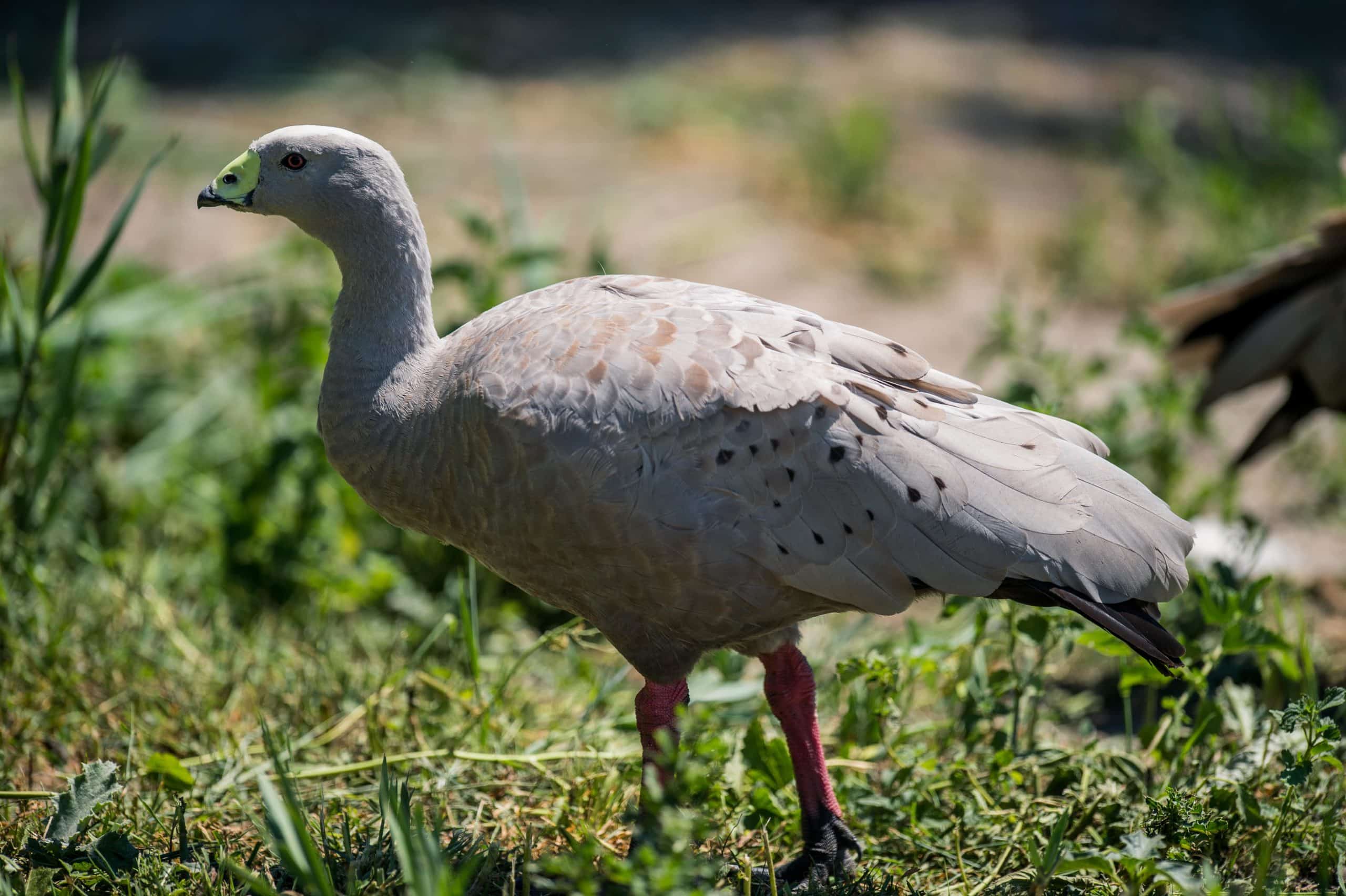
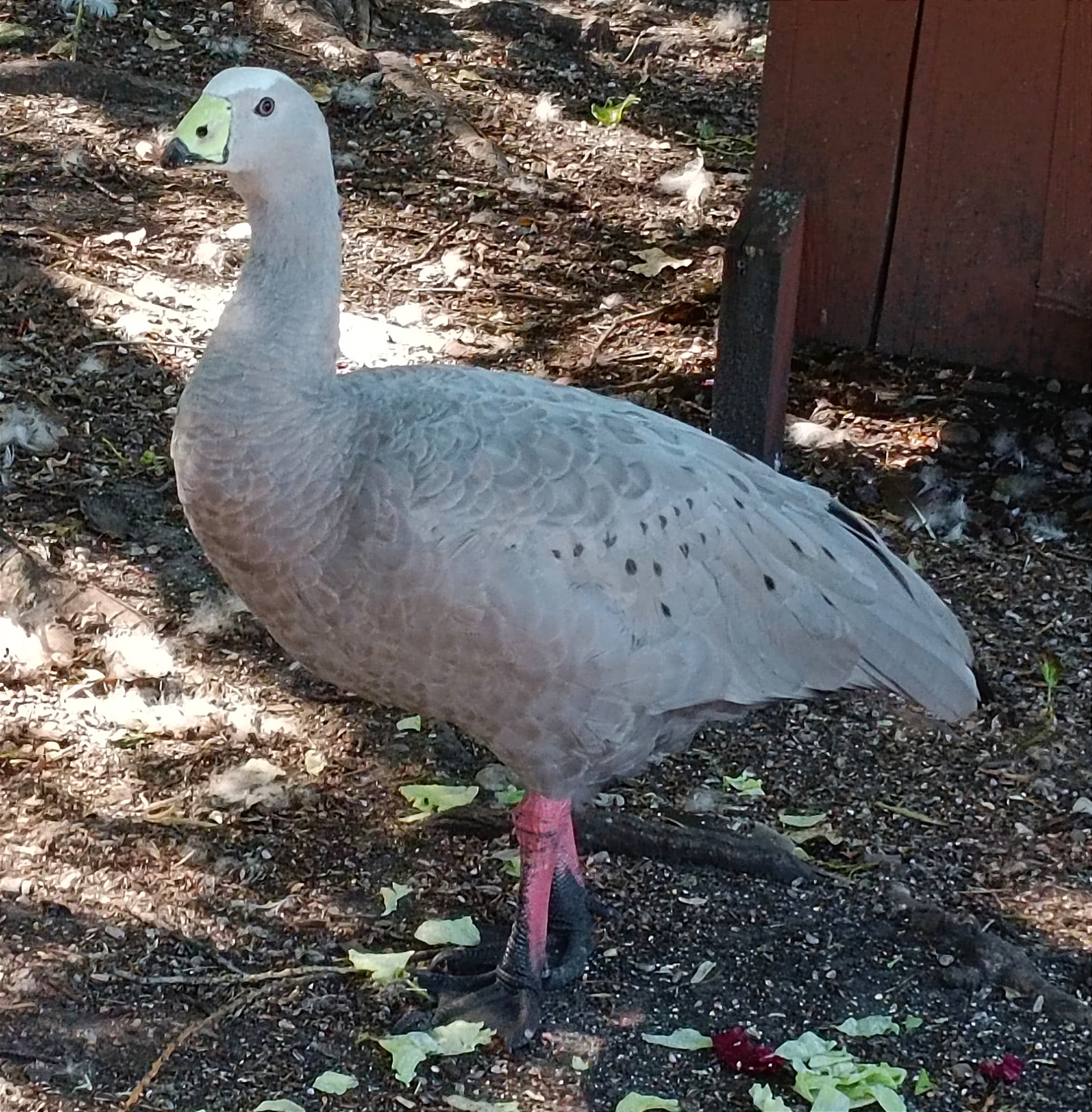
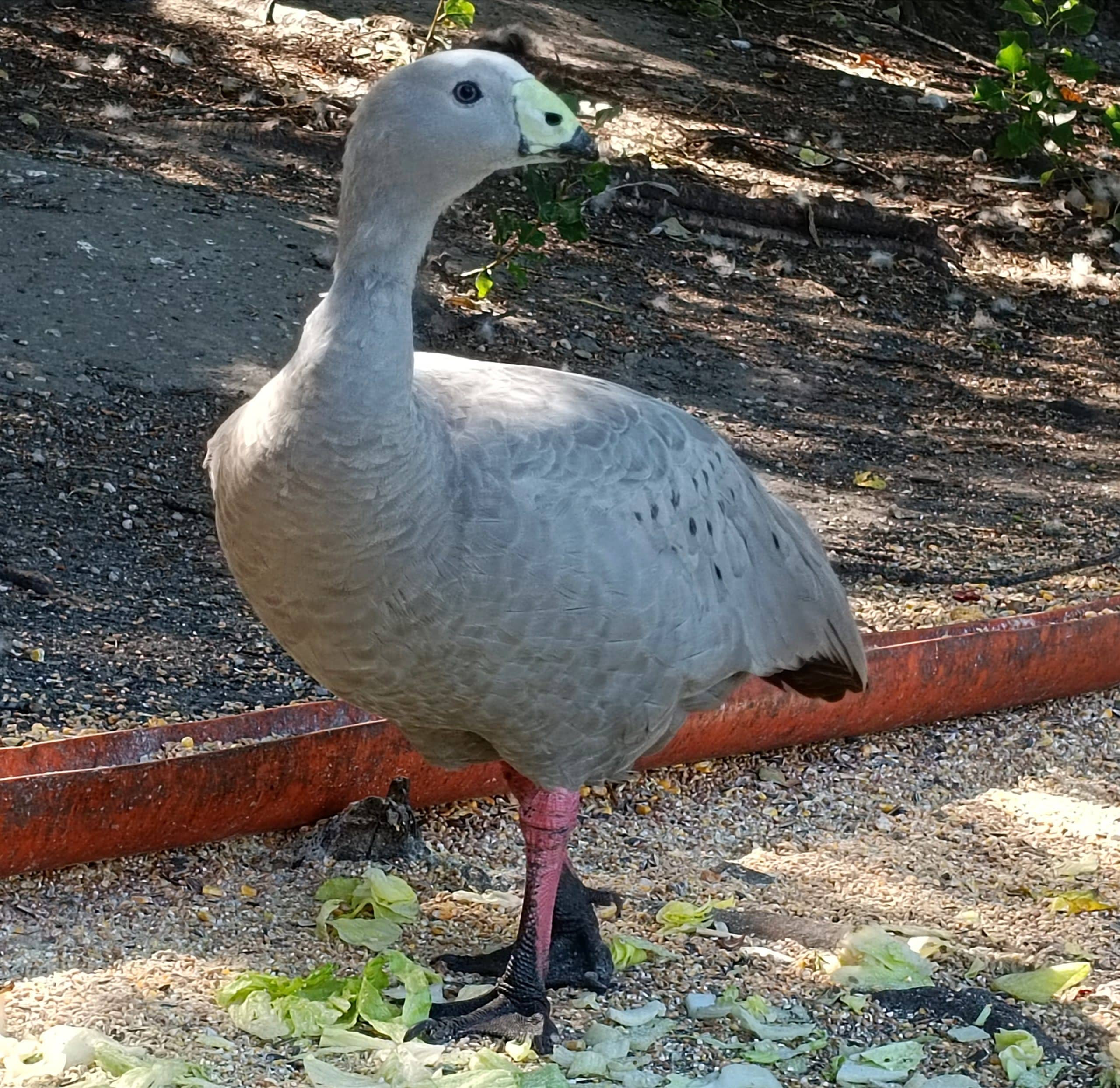
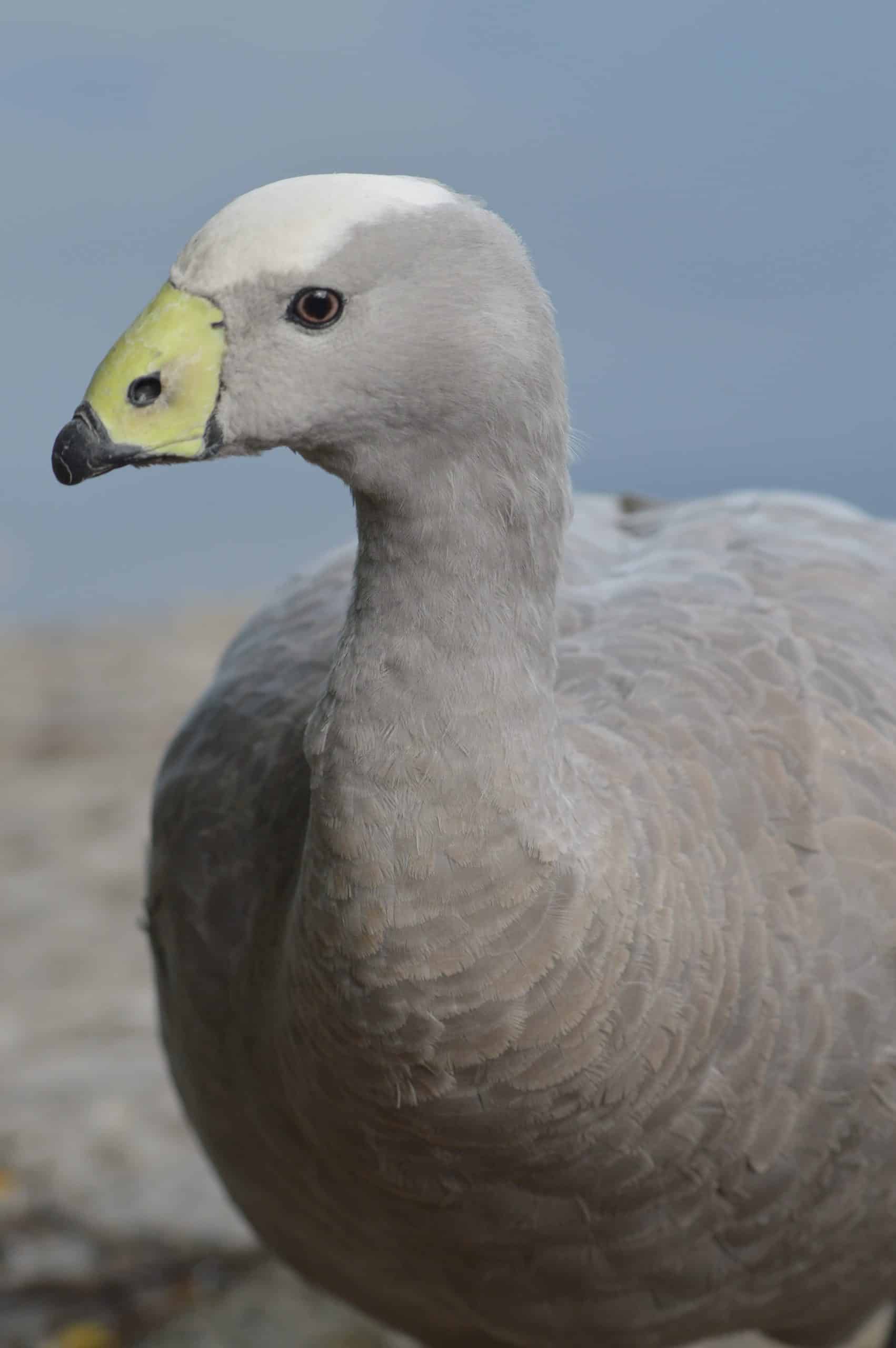

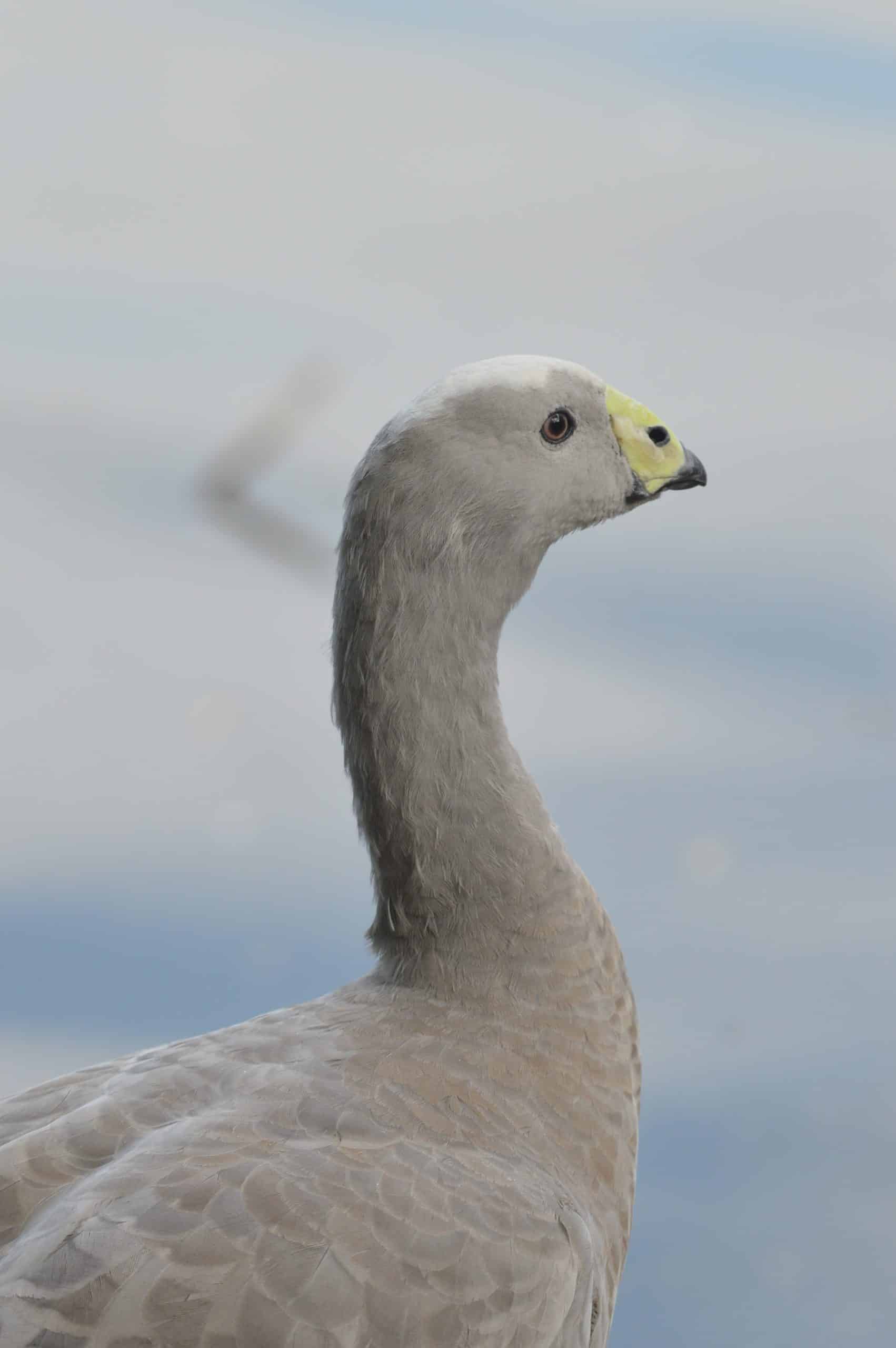
Despite the fact that this species is considered the world’s most unique geese, they do not belong to endangered species and their abundance is reasonable. At Malkia Park, we currently breed a male of this species, which you can find roaming freely around the lake.
THANK YOU for the adoption contribution for the Cape Barren goose :
Dávidovi Popovičovi.
They are bulky geese and their almost uniform grey plumage with rounded black spots is unique. The tail feathers and flight feathers are black, and the legs are pink with black feet. The short, slightly curved greenish-yellow beak has distinctive black edges.
Males are slightly larger than females.
They favour grassy areas, grassland, heathland, and marsh edges.
They feed by grazing and rarely swim. Cape Barren geese live monogamously and form pairs for life. During the breeding season, they are found in small territories, which are fiercely defended by the male. The female sits in the nest on the eggs. The hatchlings are cared for together, while the territory is also guarded by both parents until the young become independent. Young individuals form nomadic groups with 50 or more members. Outside the breeding season, adults also associate in flocks.
In Australia, it is also called “Pig goose” based on the grunting sound made by the female.
Once an endangered species, it is now protected, and populations have increased so much that they are considered stable.
Cape Barren goose
Cereopsis novaehollandiae
Zemnárka
Date of hatching
unknown
Order
Family
BODY LENGTH
75 - 100 cm
Weight
3-7 kg
LIFE EXPECTANCY
20 years
WINGSSPAN
150-190 cm
INCUBATION PERIOD
ca 35 days
CARE OF THE YOUNG
ca 6 weeks
NUMBER OF EGGS
1-7 (usually 4-5)
Occurrence
coast of southern Australia
Food
grass, clovers, plants and their seeds, occasionally insects
Zemnárka
Despite the fact that this species is considered the world’s most unique geese, they do not belong to endangered species and their abundance is reasonable. At Malkia Park, we currently breed a male of this species, which you can find roaming freely around the lake.
THANK YOU for the adoption contribution for the Cape Barren goose :
Dávidovi Popovičovi.
They are bulky geese and their almost uniform grey plumage with rounded black spots is unique. The tail feathers and flight feathers are black, and the legs are pink with black feet. The short, slightly curved greenish-yellow beak has distinctive black edges.
Males are slightly larger than females.
They favour grassy areas, grassland, heathland, and marsh edges.
They feed by grazing and rarely swim. Cape Barren geese live monogamously and form pairs for life. During the breeding season, they are found in small territories, which are fiercely defended by the male. The female sits in the nest on the eggs. The hatchlings are cared for together, while the territory is also guarded by both parents until the young become independent. Young individuals form nomadic groups with 50 or more members. Outside the breeding season, adults also associate in flocks.
In Australia, it is also called “Pig goose” based on the grunting sound made by the female.
Once an endangered species, it is now protected, and populations have increased so much that they are considered stable.