Domesticated equine
Equus asinus
Donkeys

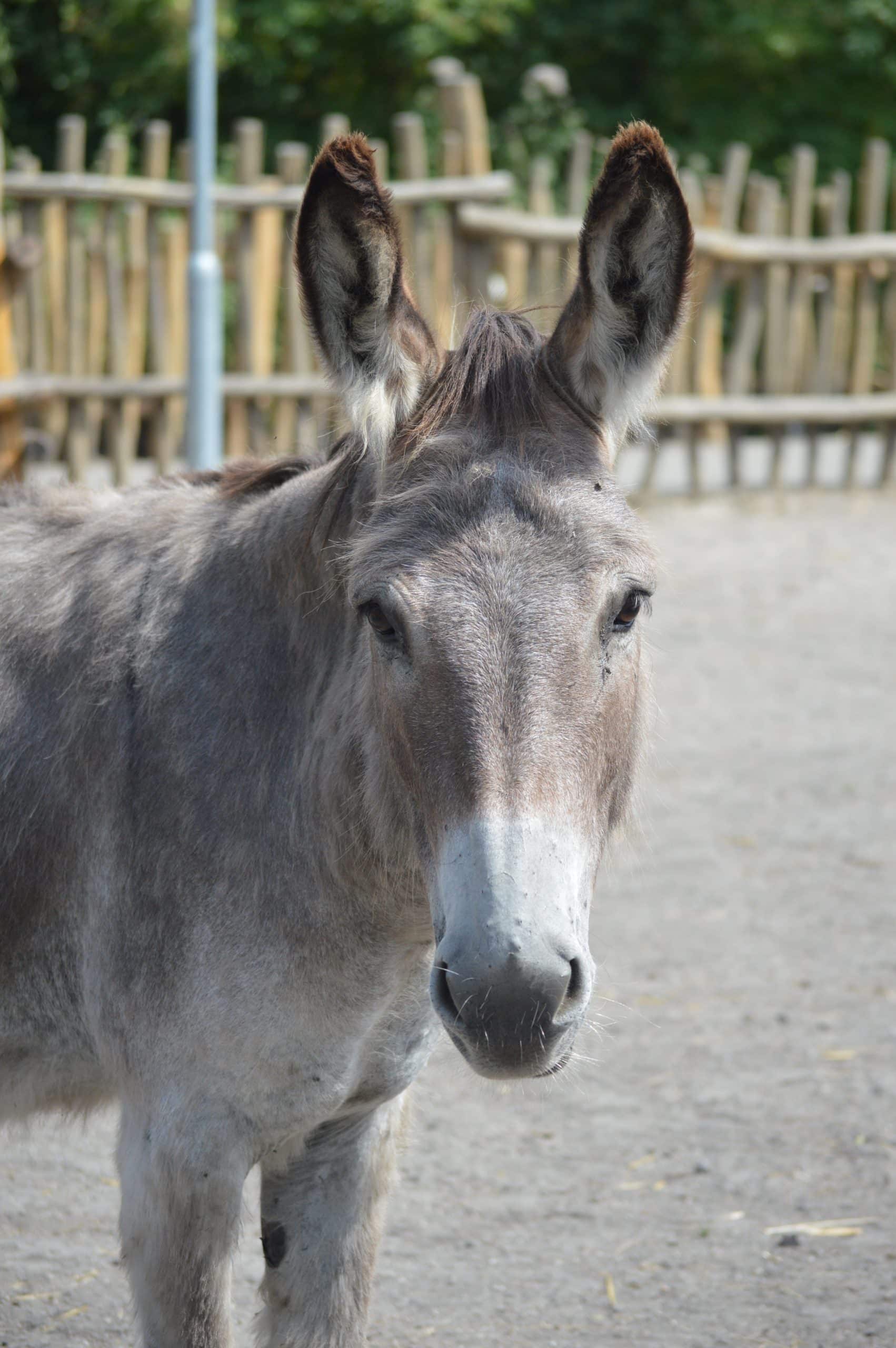
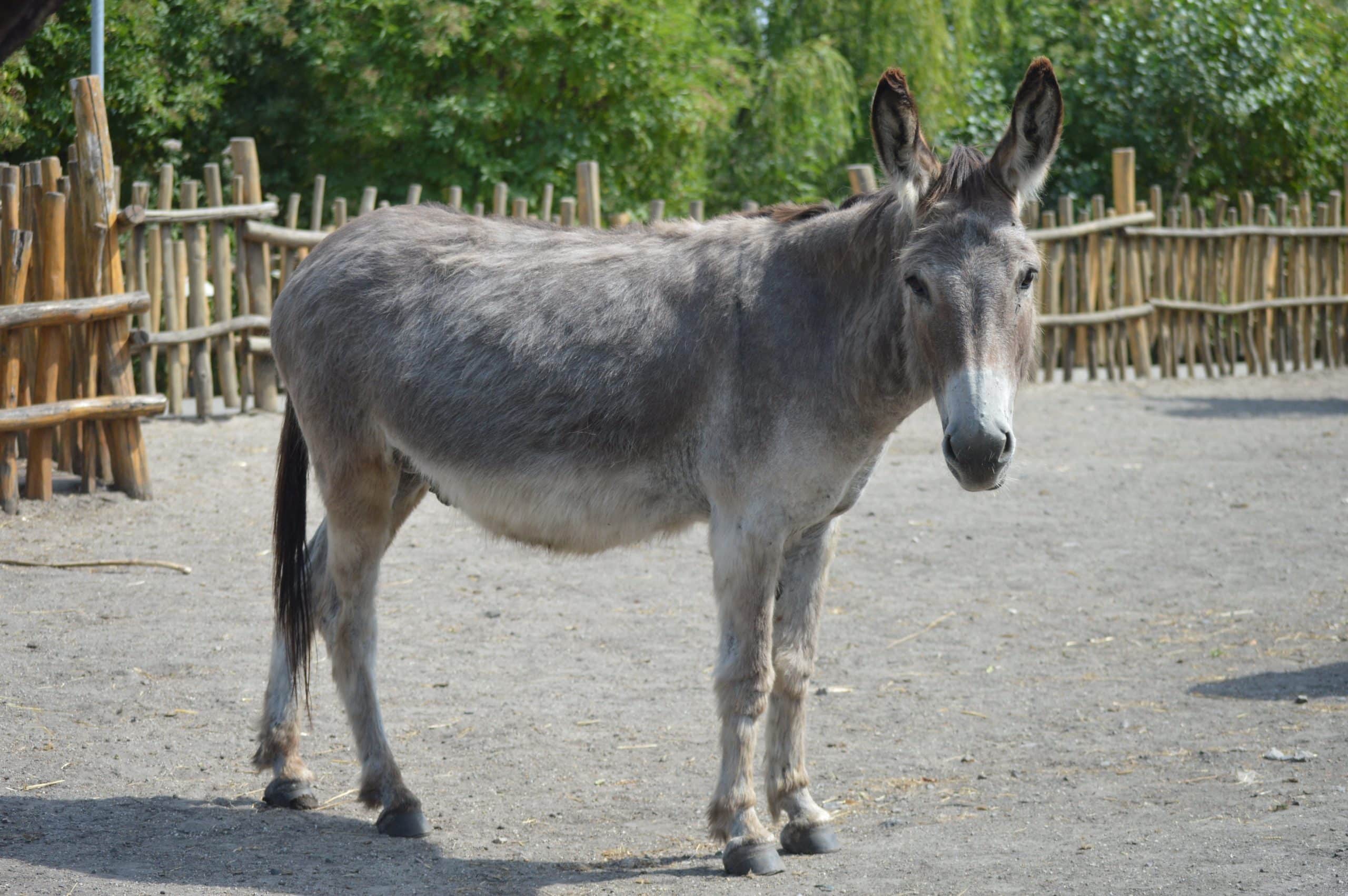


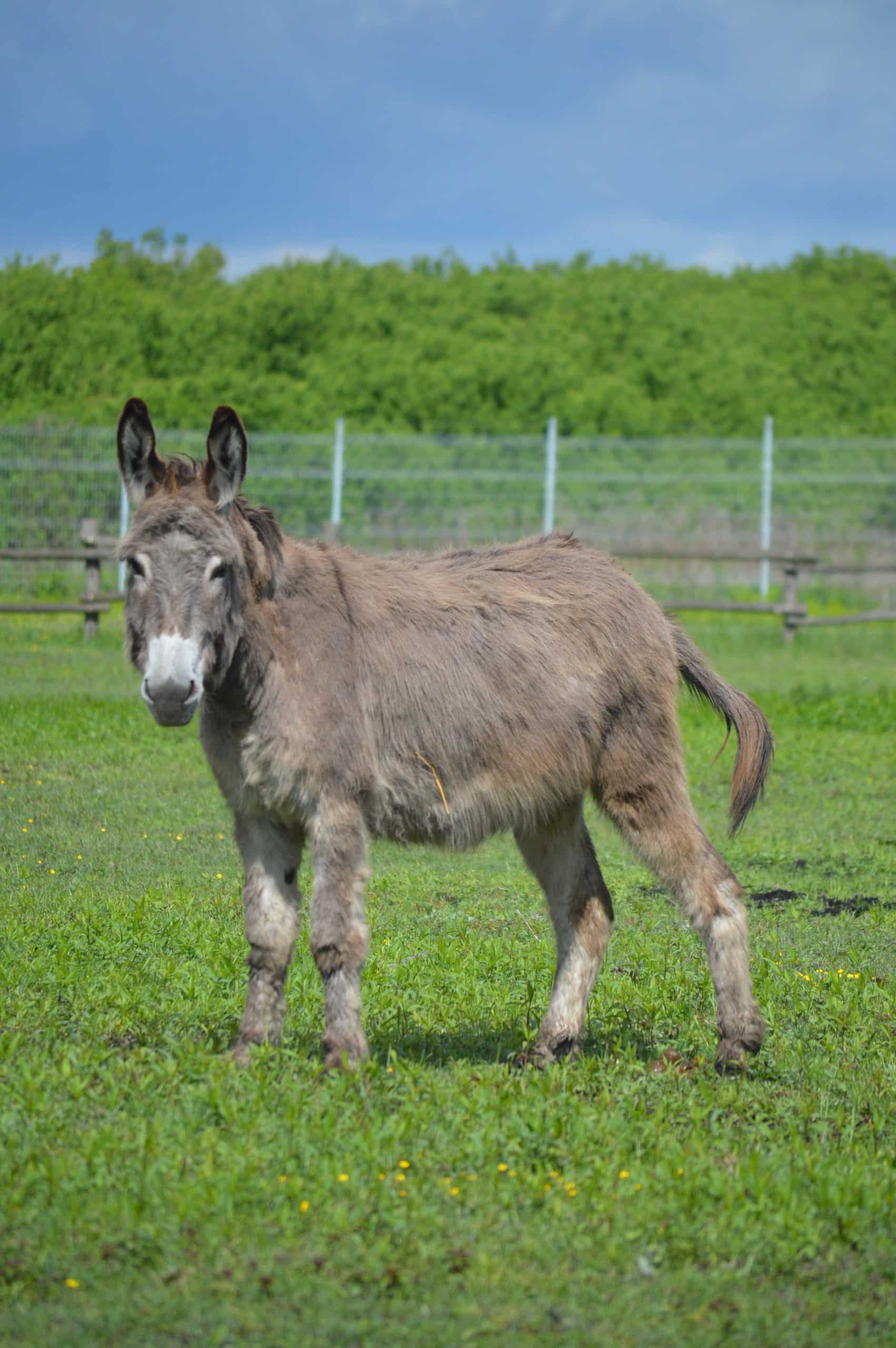


Our zebra steppe Vilko refused to leave his previous breeder without his herd of donkeys. This herd has gradually become smaller and larger and today donkeys are an essential part of the animals of Malkia Park.
Not yet adopted
The colour of the donkeys ranges from white to grey to black. The short upright mane and tail, resembling a cow’s rather than a horse’s, are darker than the rest of the body. Dark, so-called. eels, the belt extends from the mane to the tail in some breeds. It is crossed on the back in the area of the shoulder blades by a dark stripe, thus forming a shoulder cross. The ears are darker at the tip and some animals have darker bands on the legs.
Donkey breeds do not differ as significantly as horse breeds. They differ mainly in size.
The large ears of the donkeys help not only in picking up distant sounds, but also in cooling the blood.
The pupil of ungulates has a rectangular pupil – better horizontal vision. The eyes located on the sides of the head allow better peripheral vision with a 350º angle, but they have so-called blind spots – a place directly in front of the head and directly behind the buttocks.
In the wild, the male is territorial. Females and juveniles live in groups of about 30 individuals.
Somarians live in herds in which there is a strict hierarchy. Herding is advantageous to the individual – more eyes are more likely to see a potential predator. When in danger they run away, only when directly attacked they bite and kick.
The leader of the donkey herds, unlike horses, is usually an old female. There are regular stallion changes in the herds.
The cub is able to stand on its feet soon after birth. They go so that they can follow their mother and the flock. A female donkey nurses her young for 9 months. Her milk contains more sugars and less fat and protein than cow’s milk.
Together with the horse, it is the only domesticated ungulate.
Somarians served humans even before horses. The ancient Egyptians used them in the construction of pyramids as early as three thousand years BC.
Donkey’s milk is said to be more nutritious than cow’s milk and the Egyptian ruler Cleopatra VII. bathed in it to keep her skin smooth.
Crossing a male donkey with a female horse produces an infertile mule, similar to a horse; crossing a female donkey with a male horse produces a female mule, more like a donkey.
There is perhaps no animal that, given its work output, would settle for such a meagre living as the donkey.
The donkey is not a ruminant, it has only a simple stomach.
Although donkeys are slower than horses, they are confident and can carry heavy loads over uneven terrain.
Domesticated equine
Equus asinus
Donkeys
Date of birth
Petko: 28.04.2014
Sasha: 28.03.2015
Rose: 01.01.2014
Snow White: 30.01.2018
Michela: 01.01.2013
Order
Family
BODY LENGTH
approx. 120 cm
HEIGHT
at withers 90-130 cm (depending on breed)
Weight
up to 280 kg (depending on breed)
LIFE EXPECTANCY
even more than 25 years
LENGTH OF PREGNANCY
12 months
NUMBER OF YOUTHS
1, rarely 2
Occurrence
Domestication widespread throughout the world.
Food
mainly grass and shrub leaves, tree bark
Somariky
Our zebra steppe Vilko refused to leave his previous breeder without his herd of donkeys. This herd has gradually become smaller and larger and today donkeys are an essential part of the animals of Malkia Park.
Not yet adopted
The colour of the donkeys ranges from white to grey to black. The short upright mane and tail, resembling a cow’s rather than a horse’s, are darker than the rest of the body. Dark, so-called. eels, the belt extends from the mane to the tail in some breeds. It is crossed on the back in the area of the shoulder blades by a dark stripe, thus forming a shoulder cross. The ears are darker at the tip and some animals have darker bands on the legs.
Donkey breeds do not differ as significantly as horse breeds. They differ mainly in size.
The large ears of the donkeys help not only in picking up distant sounds, but also in cooling the blood.
The pupil of ungulates has a rectangular pupil – better horizontal vision. The eyes located on the sides of the head allow better peripheral vision with a 350º angle, but they have so-called blind spots – a place directly in front of the head and directly behind the buttocks.
In the wild, the male is territorial. Females and juveniles live in groups of about 30 individuals.
Somarians live in herds in which there is a strict hierarchy. Herding is advantageous to the individual – more eyes are more likely to see a potential predator. When in danger they run away, only when directly attacked they bite and kick.
The leader of the donkey herds, unlike horses, is usually an old female. There are regular stallion changes in the herds.
The cub is able to stand on its feet soon after birth. They go so that they can follow their mother and the flock. A female donkey nurses her young for 9 months. Her milk contains more sugars and less fat and protein than cow’s milk.
Together with the horse, it is the only domesticated ungulate.
Somarians served humans even before horses. The ancient Egyptians used them in the construction of pyramids as early as three thousand years BC.
Donkey’s milk is said to be more nutritious than cow’s milk and the Egyptian ruler Cleopatra VII. bathed in it to keep her skin smooth.
Crossing a male donkey with a female horse produces an infertile mule, similar to a horse; crossing a female donkey with a male horse produces a female mule, more like a donkey.
There is perhaps no animal that, given its work output, would settle for such a meagre living as the donkey.
The donkey is not a ruminant, it has only a simple stomach.
Although donkeys are slower than horses, they are confident and can carry heavy loads over uneven terrain.