Ara blue-yellow
Ara ararauna
Lili, Paulo, Majo a Joja





The blue-yellow macaws came to us from breeders who could no longer take care of them for various reasons. Macaws are noisy companions and require a lot of care and mental distraction.
Not yet adopted
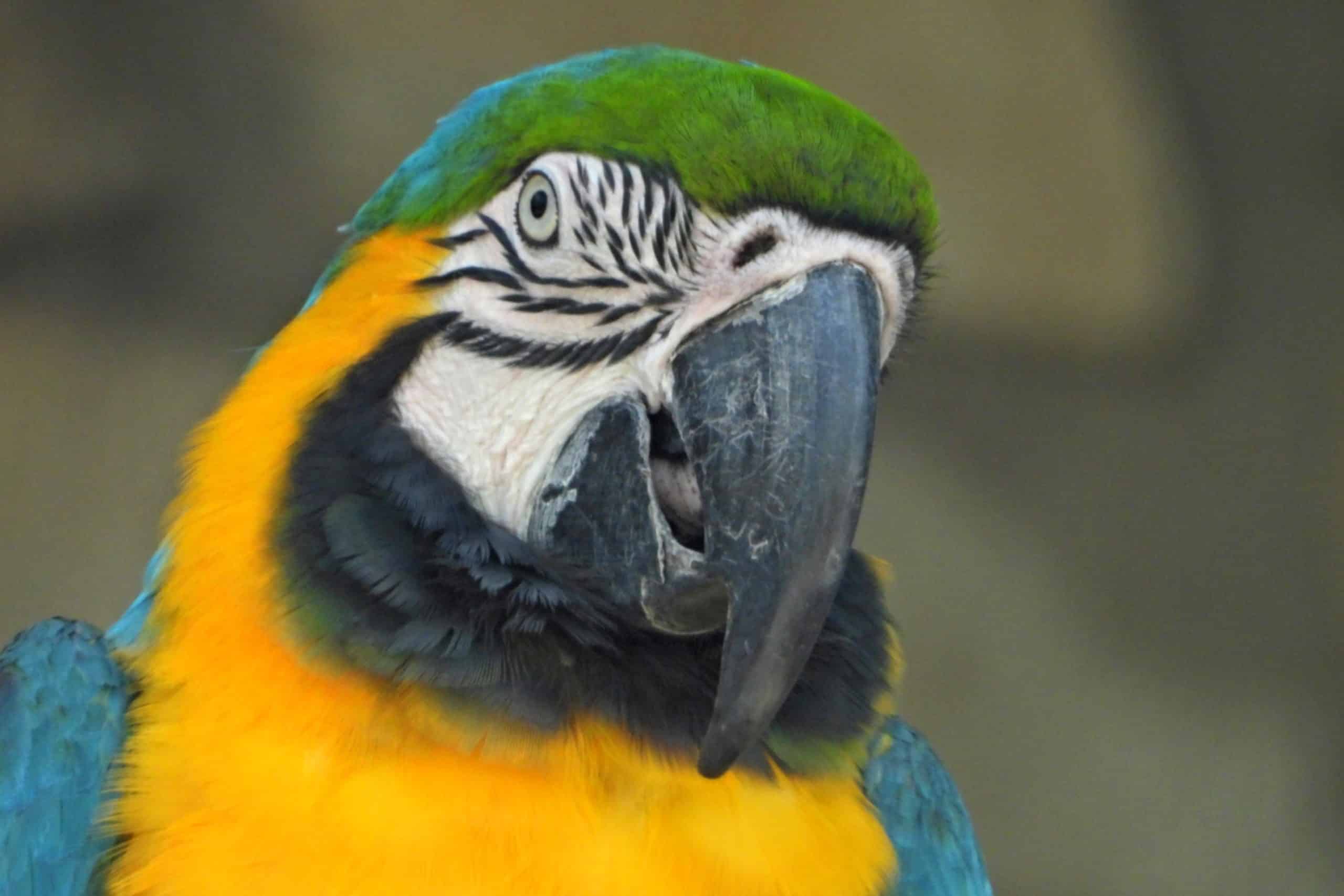
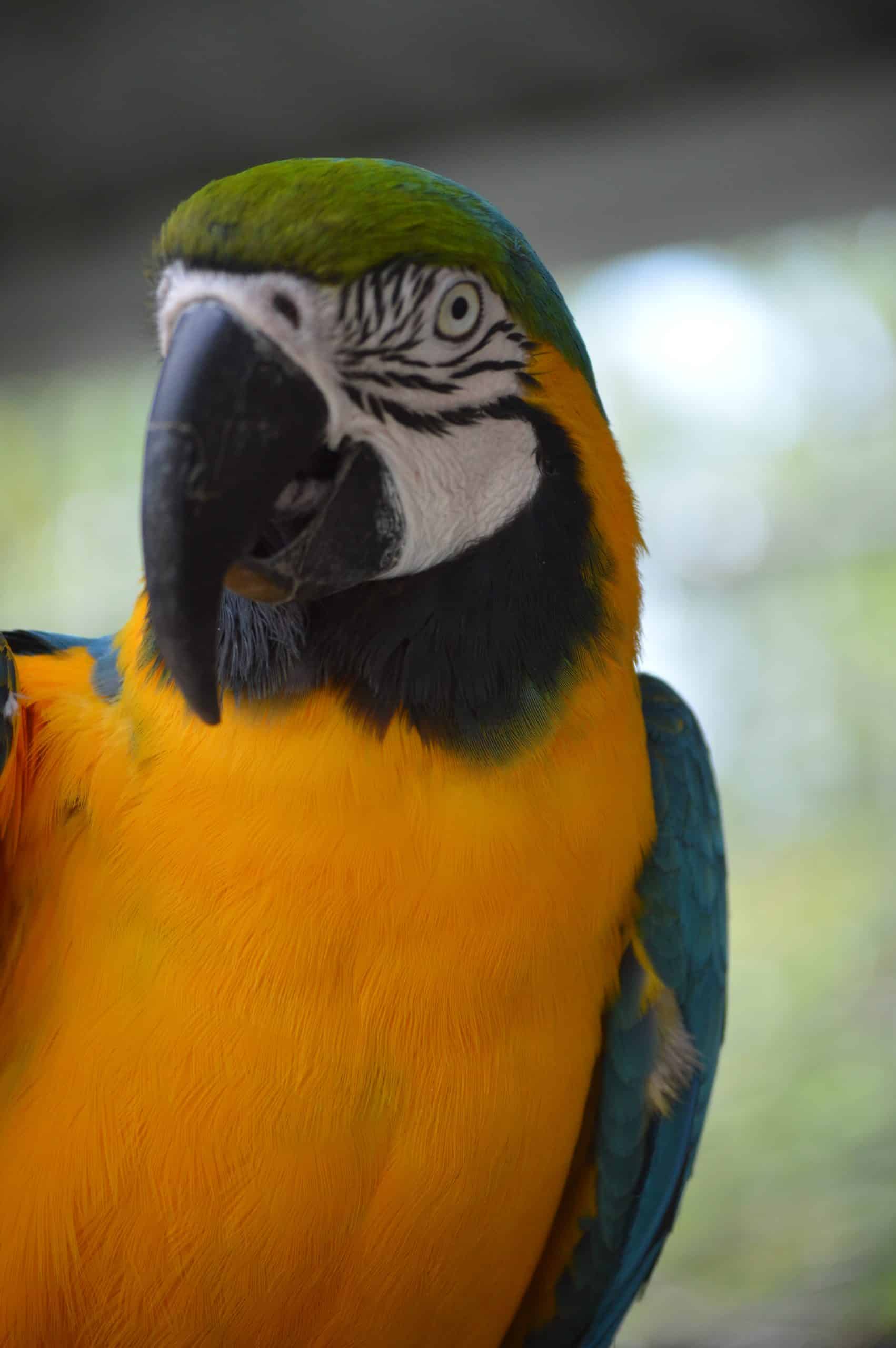
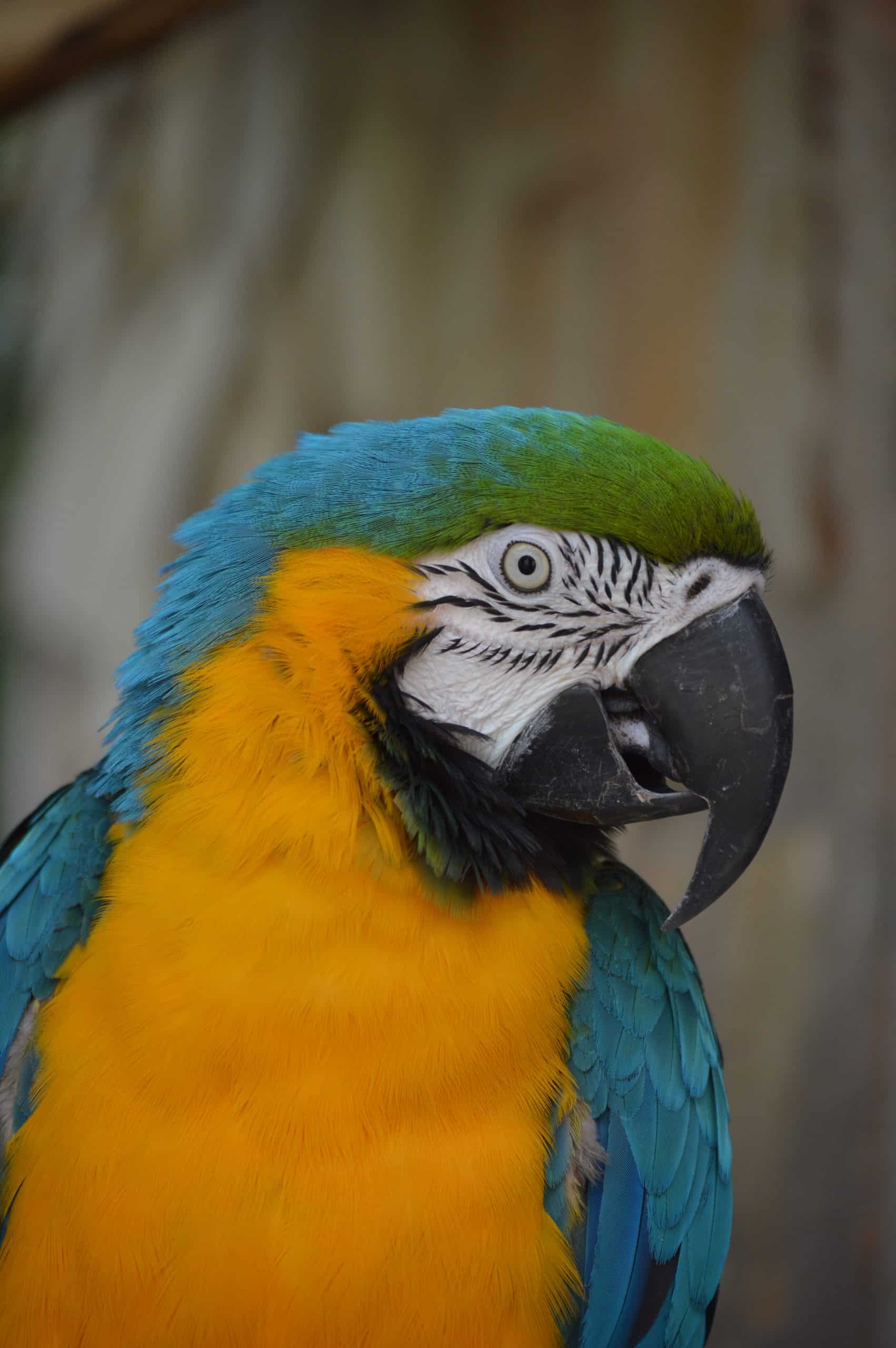
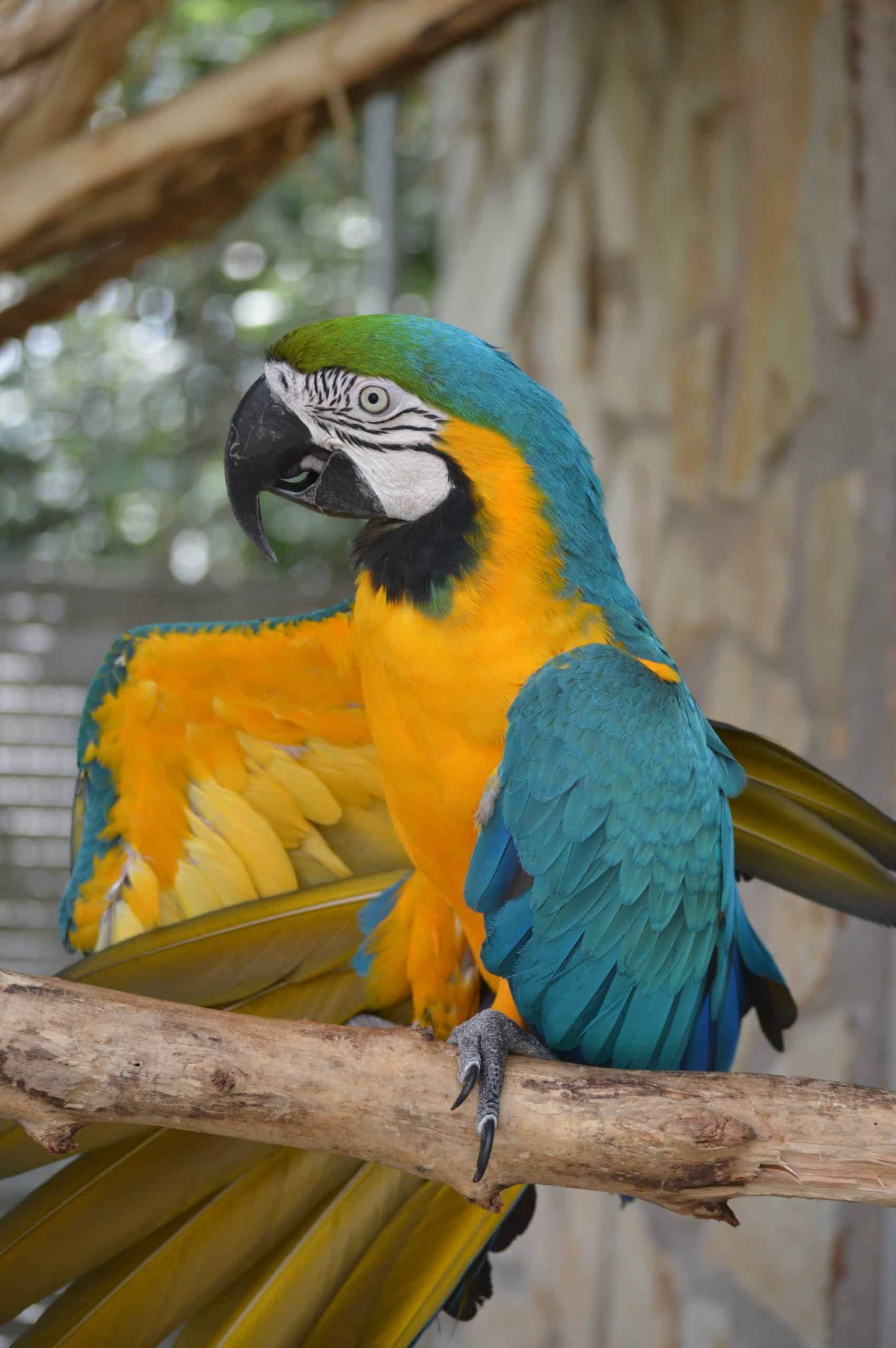
Macaws are the largest parrots in the world. At first glance, the striking yellow-blue coloring serves in sunlit tree branches as a perfect camouflage from birds of prey. They are lively in appearance with bright aquamarine feathers on top of the body except for the head which is lime colored. However, the underside is a deep deep yellow/light orange. Their beak is black, as are the feathers under their chin. His legs are grey, except for his black claws. The bird has white skin, almost no feathers on its face except for a few black ones that are spaced apart to form a striped pattern around the eyes. The irises are light yellow.
The strong beak allows them to crack nuts, but they often use it as a third foothold when climbing branches. Strong feet have two toes facing forward and two facing backwards. Thanks to this, parrots can better grip a tree branch or keep food.
It occurs in forests growing on marshy ground or on riverbanks. They are shy and wary. They live in permanent pairs, gather at night in places where they spend the night together in a flock.
They nest in treetop cavities, often inhabiting palm trees. Both birds react aggressively if an intruder approaches the nesting tree. Cubs are born naked and blind. After ten weeks, their feathers grow. Even if they learn to fly, they usually stay with their parents for several months.
They can fly at a speed of up to 56 km/h.
Thanks to their striking coloring and ability to reproduce human speech and sounds, they are attractive for breeding in homes. In the South American forests, the blue-yellow macaw was once a widespread species, but the deforestation of tropical forests, illegal trapping and trade for the purpose of breeding have recently reduced its numbers greatly.
It sometimes flies up to 25 km for food
Ara blue-yellow
Ara ararauna
Lili, Paulo, Majo a Joja
Date of hatching
Paulo: 04.06.2014
Majo: 20.06.2011
Joja: 15.06.2011
Ara: 01.08.2020
Order
Family
Distribution
BODY LENGTH
85 cm, plus tail also 50 cm
Weight
0,9-1,5 kg
LIFE EXPECTANCY
30 years, even 50 years in captivity
INCUBATION PERIOD
about 25 days
NUMBER OF EGGS
2 white eggs
CARE OF THE YOUNG
3 months
Occurrence
South America
Food
nuts, fruits, seeds
Lili, Paulo, Majo a Joja
The blue-yellow macaws came to us from breeders who could no longer take care of them for various reasons. Macaws are noisy companions and require a lot of care and mental distraction.
Not yet adopted
Macaws are the largest parrots in the world. At first glance, the striking yellow-blue coloring serves in sunlit tree branches as a perfect camouflage from birds of prey. They are lively in appearance with bright aquamarine feathers on top of the body except for the head which is lime colored. However, the underside is a deep deep yellow/light orange. Their beak is black, as are the feathers under their chin. His legs are grey, except for his black claws. The bird has white skin, almost no feathers on its face except for a few black ones that are spaced apart to form a striped pattern around the eyes. The irises are light yellow.
The strong beak allows them to crack nuts, but they often use it as a third foothold when climbing branches. Strong feet have two toes facing forward and two facing backwards. Thanks to this, parrots can better grip a tree branch or keep food.
It occurs in forests growing on marshy ground or on riverbanks. They are shy and wary. They live in permanent pairs, gather at night in places where they spend the night together in a flock.
They nest in treetop cavities, often inhabiting palm trees. Both birds react aggressively if an intruder approaches the nesting tree. Cubs are born naked and blind. After ten weeks, their feathers grow. Even if they learn to fly, they usually stay with their parents for several months.
They can fly at a speed of up to 56 km/h.
Thanks to their striking coloring and ability to reproduce human speech and sounds, they are attractive for breeding in homes. In the South American forests, the blue-yellow macaw was once a widespread species, but the deforestation of tropical forests, illegal trapping and trade for the purpose of breeding have recently reduced its numbers greatly.
It sometimes flies up to 25 km for food