Black-and-white ruffed lemur
Varecia variegata
Matias, Paty and Tweety
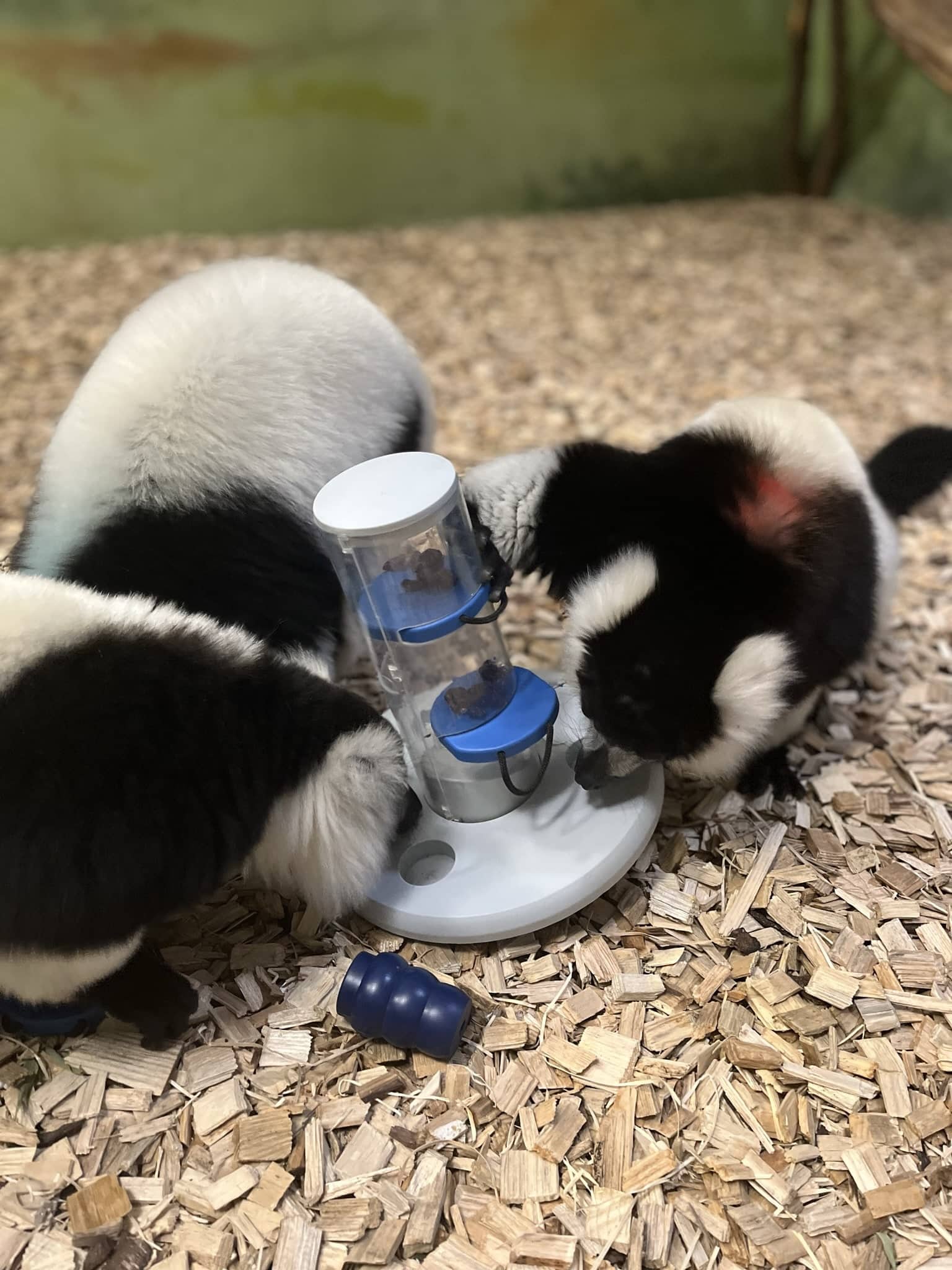

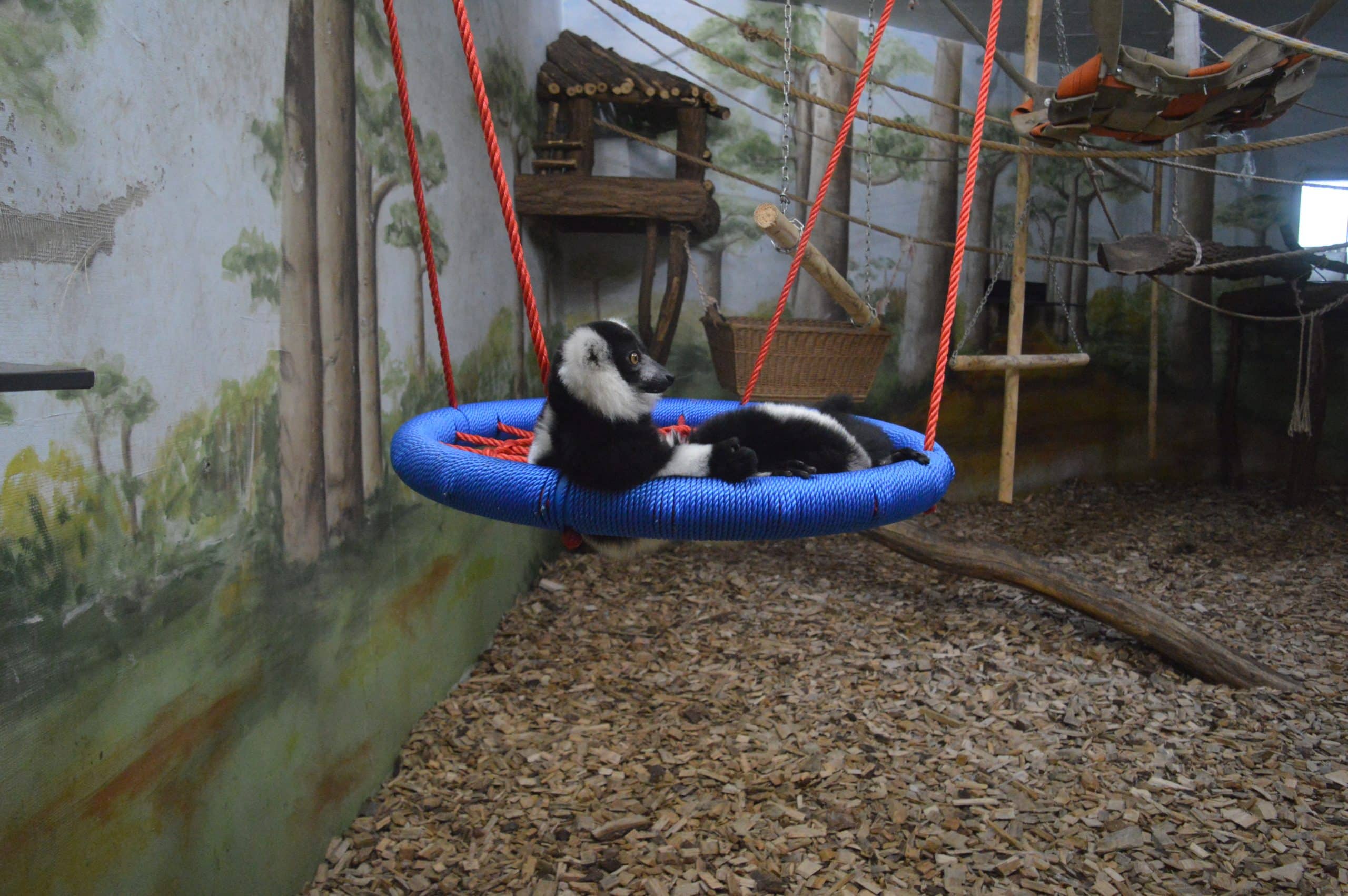
They come from private zoos where they have been overpopulated and from unsuitable conditions from private individuals, where they often serve as pets or as entertainment attractions for people. These fascinating creatures enjoy a varied diet and a spacious enclosure with an indoor heated room.
Not yet adopted
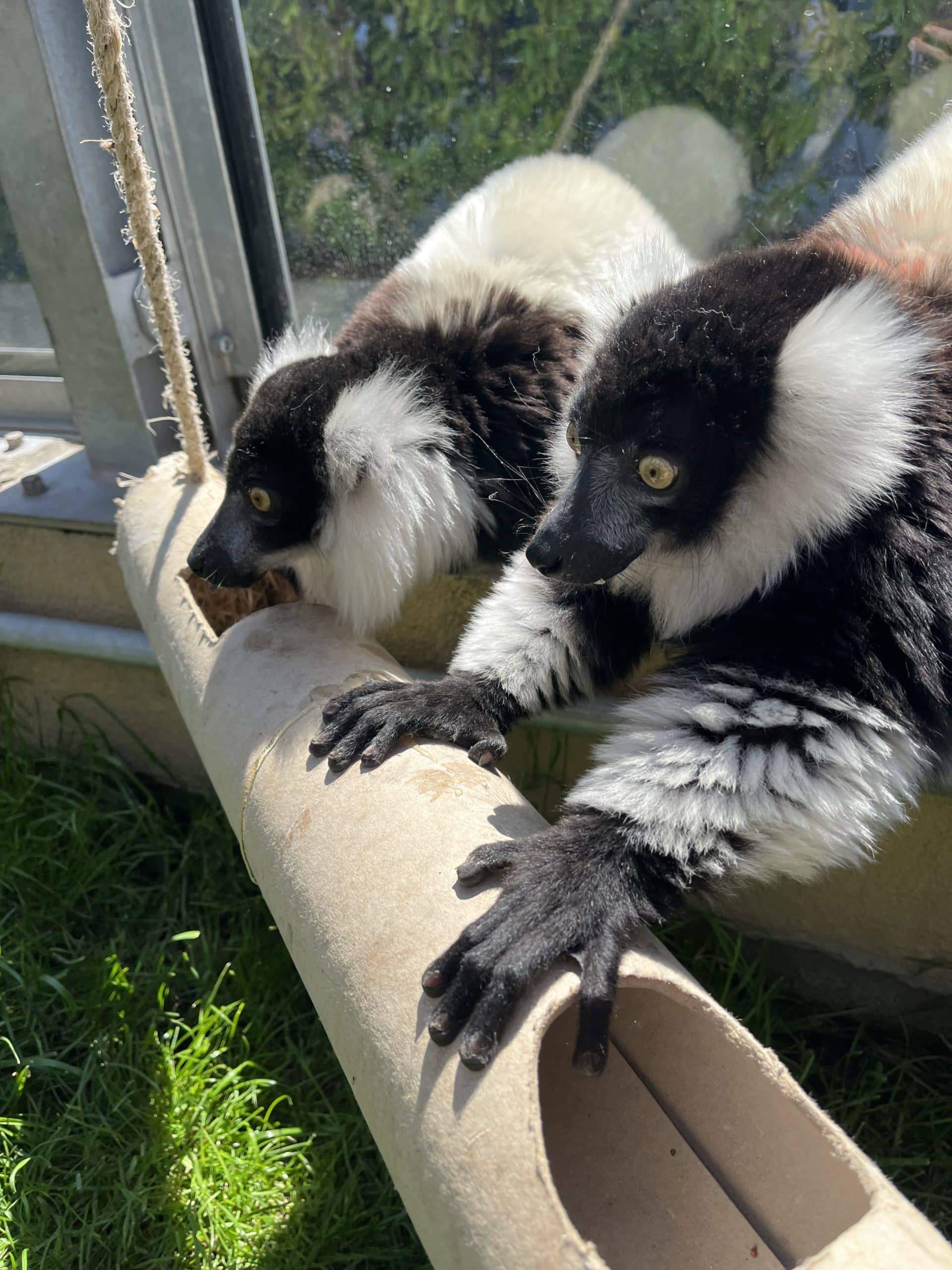
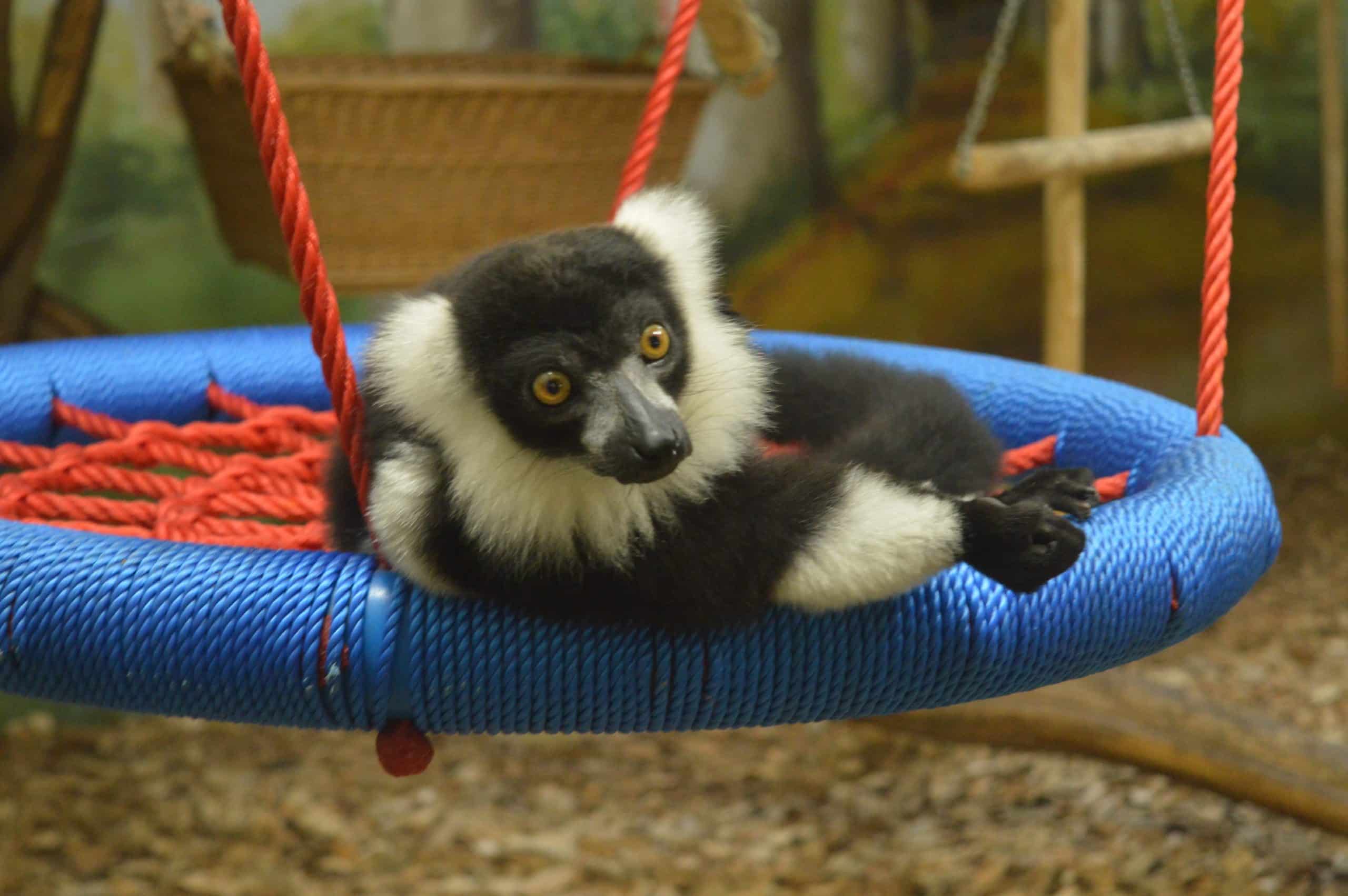
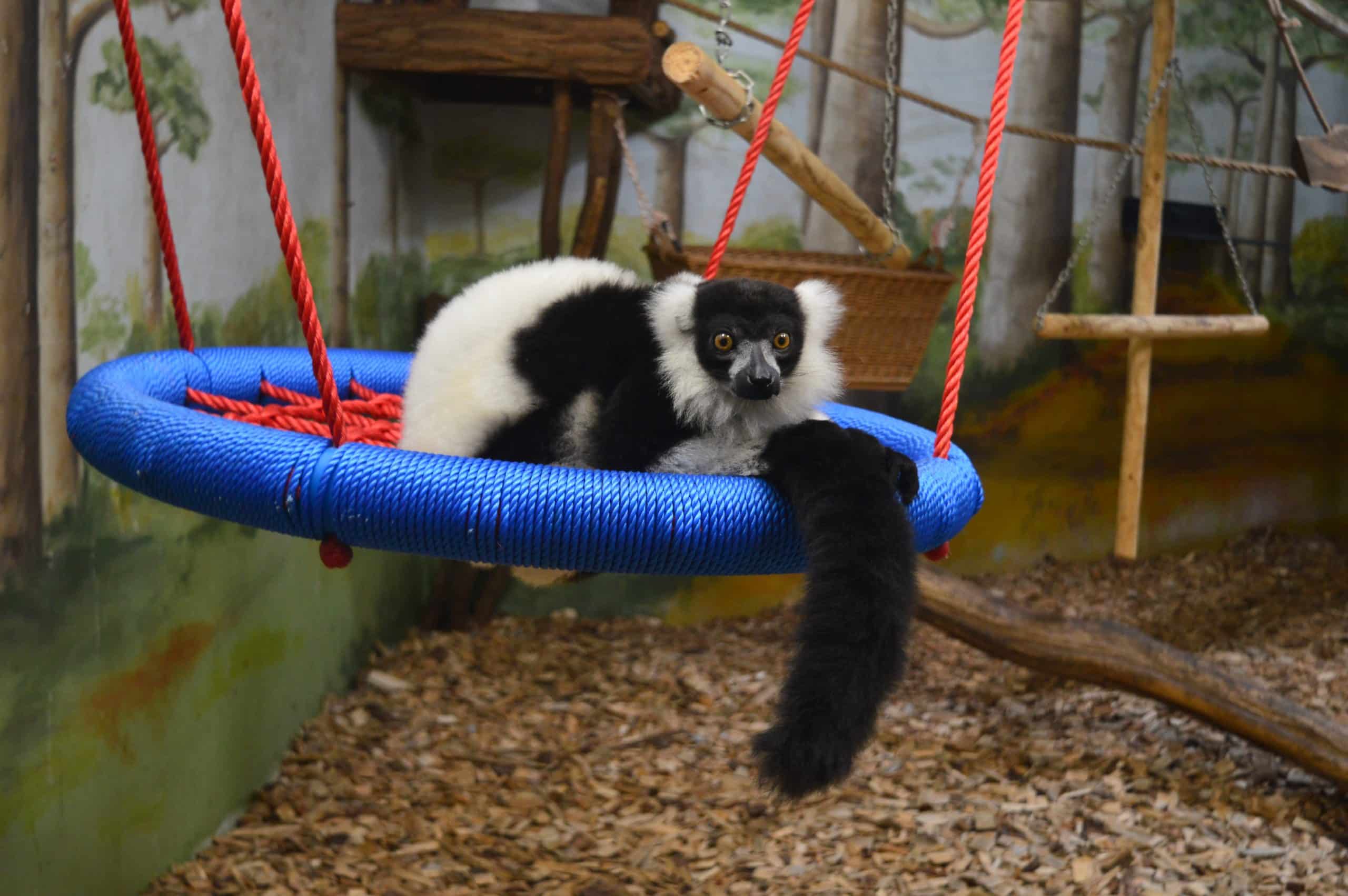
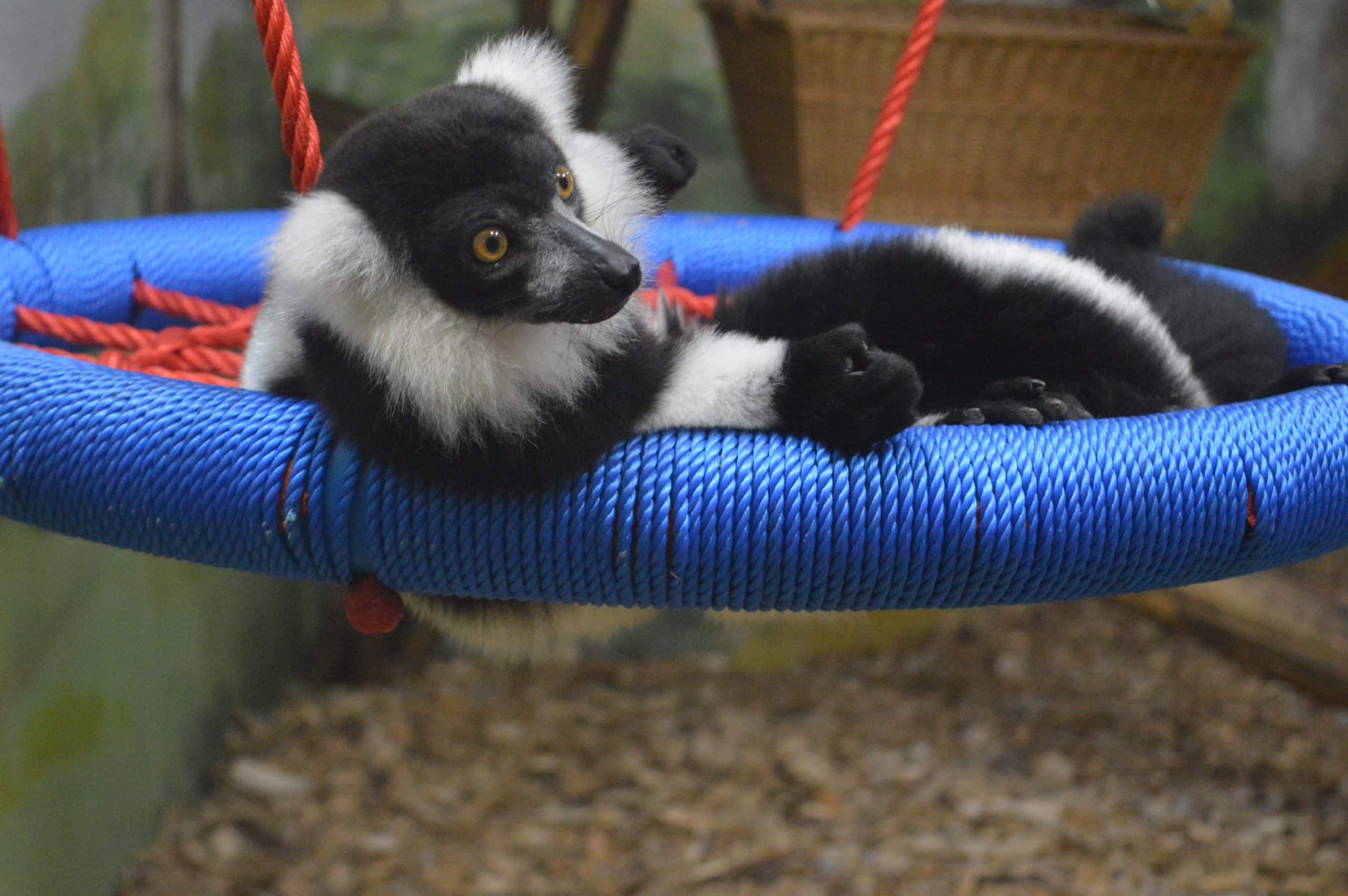
Together with the red ruffed lemur, this species is the largest living member of the Lemuridae family. Black-and-white ruffed lemur is always both black and white; the general colour patterns usually do not vary. The belly, tail, arms and legs, inner side of legs, forehead, face, and back of the neck are black. The coat is white on the sides, back, hind legs, and hind feet. Both males and females are very similar to each other.
A lemur group can contain up to 10 individuals and has a complex social structure. It is dominated by females, who also defend their territory most actively. Females are more aggressive than males, sometimes females even attack males in order to be at the food earlier – the energy expenditure of females is much higher than that of males due to the shortened gestation period and the care of the young.
Both males and females reach sexual maturity between 1.5 and 3 years of age. The female builds a nest in which the young stay until they are able to leave it on their own. For the first two weeks after giving birth, the female stays with her young almost 24 hours a day. Both males and females guard the nest. Scientists have observed that females sometimes deposit their young in communal nests and share parental care together while the rest of the group searches for food. This increases the survival rate of the young.
The trend in black-and-white ruffed lemur number has been on a downward trend for the last 27 years, declining by up to 80%.
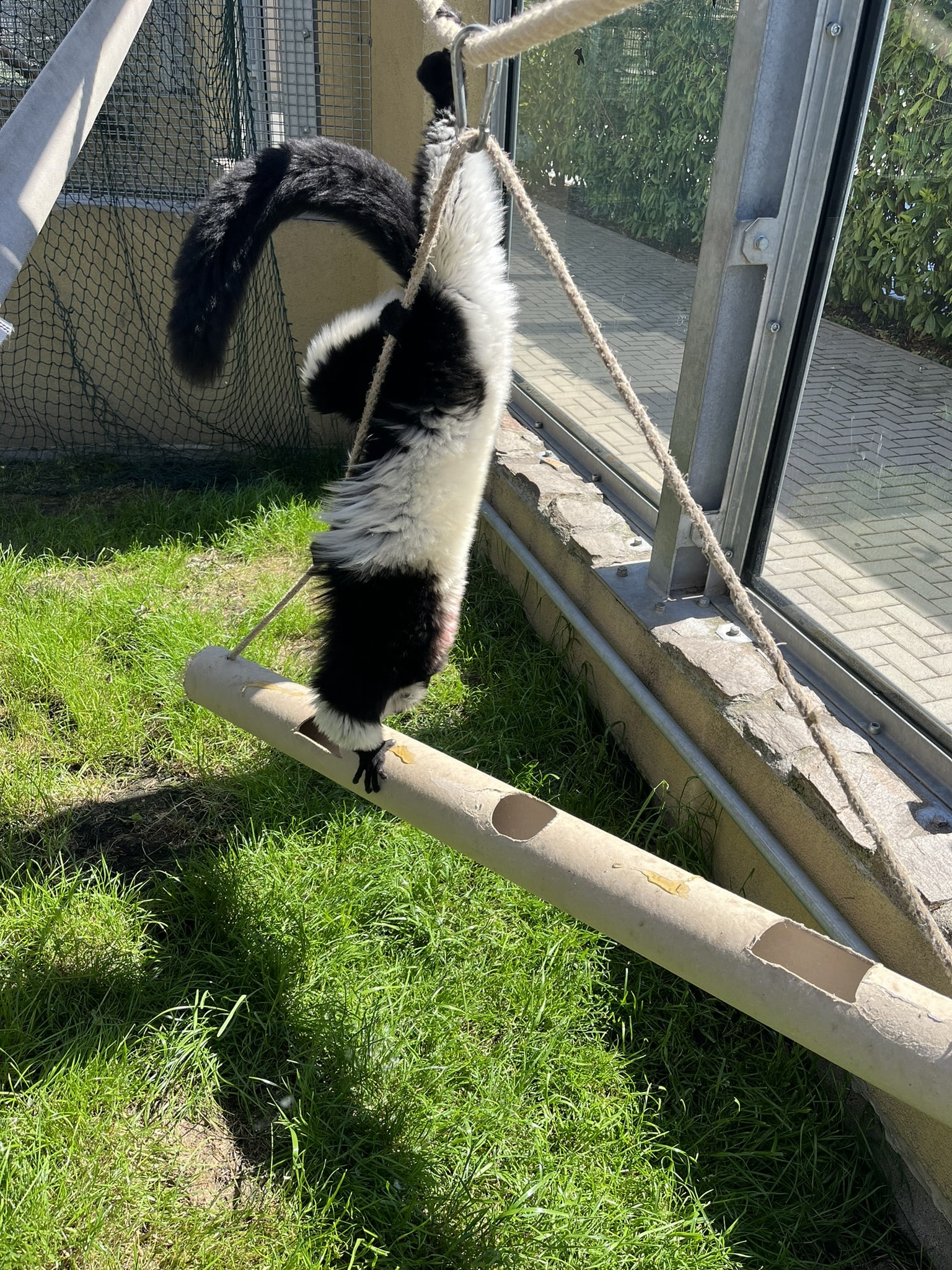
When foraging for food – fruit or flowers – lemurs can hang onto a tree branch with their hind paws, lower their heads, and use their front paws to pluck flowers or sweet fruits.
Lemurs got their name from the Roman “lemuros” – spirits of the dead who echoed at night with infernal wailing, screaming, and crying.
Most baby primates cling tightly to their mothers during growing up. However, young lemurs are kept in a nest.
Black-and-white ruffed lemur
Varecia variegata
Matias, Paty and Tweety
Date of birth
Matias: 08.05.2016
Paty: 07.05.2014
Tweety: 16.04.2018
Order
Family
BODY LENGTH
100-120 cm
Weight
3,1-4,1 kg
LIFE EXPECTANCY
up to 20 years
LENGTH OF PREGNANCY
99 days
NUMBER OF YOUTHS
2-6
Occurrence
Madagascar
Food
fruits, flowers, insect
Matias, Paty a Tweety
They come from private zoos where they have been overpopulated and from unsuitable conditions from private individuals, where they often serve as pets or as entertainment attractions for people. These fascinating creatures enjoy a varied diet and a spacious enclosure with an indoor heated room.
Not yet adopted
Together with the red ruffed lemur, this species is the largest living member of the Lemuridae family. Black-and-white ruffed lemur is always both black and white; the general colour patterns usually do not vary. The belly, tail, arms and legs, inner side of legs, forehead, face, and back of the neck are black. The coat is white on the sides, back, hind legs, and hind feet. Both males and females are very similar to each other.
A lemur group can contain up to 10 individuals and has a complex social structure. It is dominated by females, who also defend their territory most actively. Females are more aggressive than males, sometimes females even attack males in order to be at the food earlier – the energy expenditure of females is much higher than that of males due to the shortened gestation period and the care of the young.
Both males and females reach sexual maturity between 1.5 and 3 years of age. The female builds a nest in which the young stay until they are able to leave it on their own. For the first two weeks after giving birth, the female stays with her young almost 24 hours a day. Both males and females guard the nest. Scientists have observed that females sometimes deposit their young in communal nests and share parental care together while the rest of the group searches for food. This increases the survival rate of the young.
The trend in black-and-white ruffed lemur number has been on a downward trend for the last 27 years, declining by up to 80%.
When foraging for food – fruit or flowers – lemurs can hang onto a tree branch with their hind paws, lower their heads, and use their front paws to pluck flowers or sweet fruits.
Lemurs got their name from the Roman “lemuros” – spirits of the dead who echoed at night with infernal wailing, screaming, and crying.
Most baby primates cling tightly to their mothers during growing up. However, young lemurs are kept in a nest.