Cameroon sheep
Ovis aries
Kamerunky
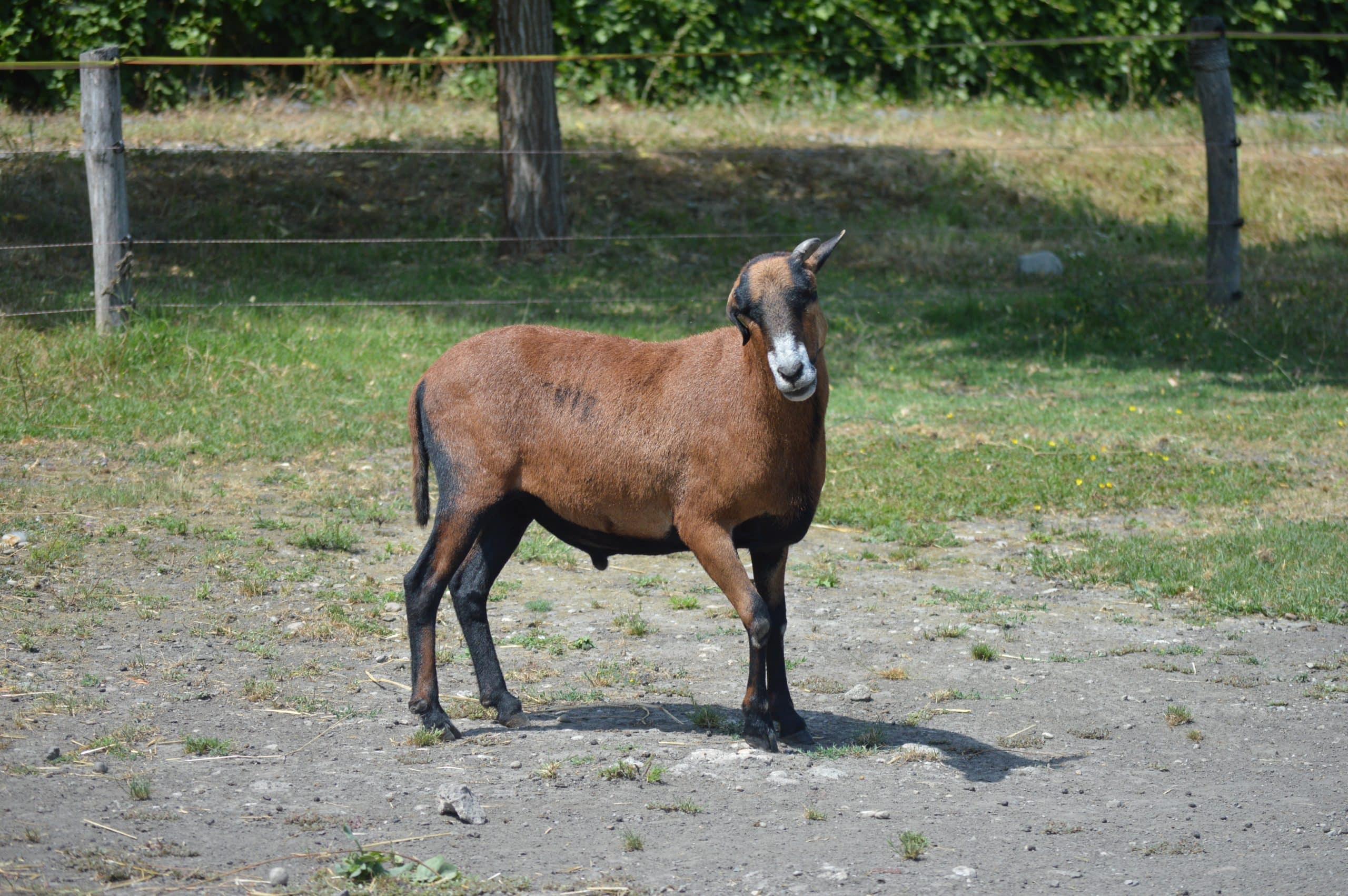
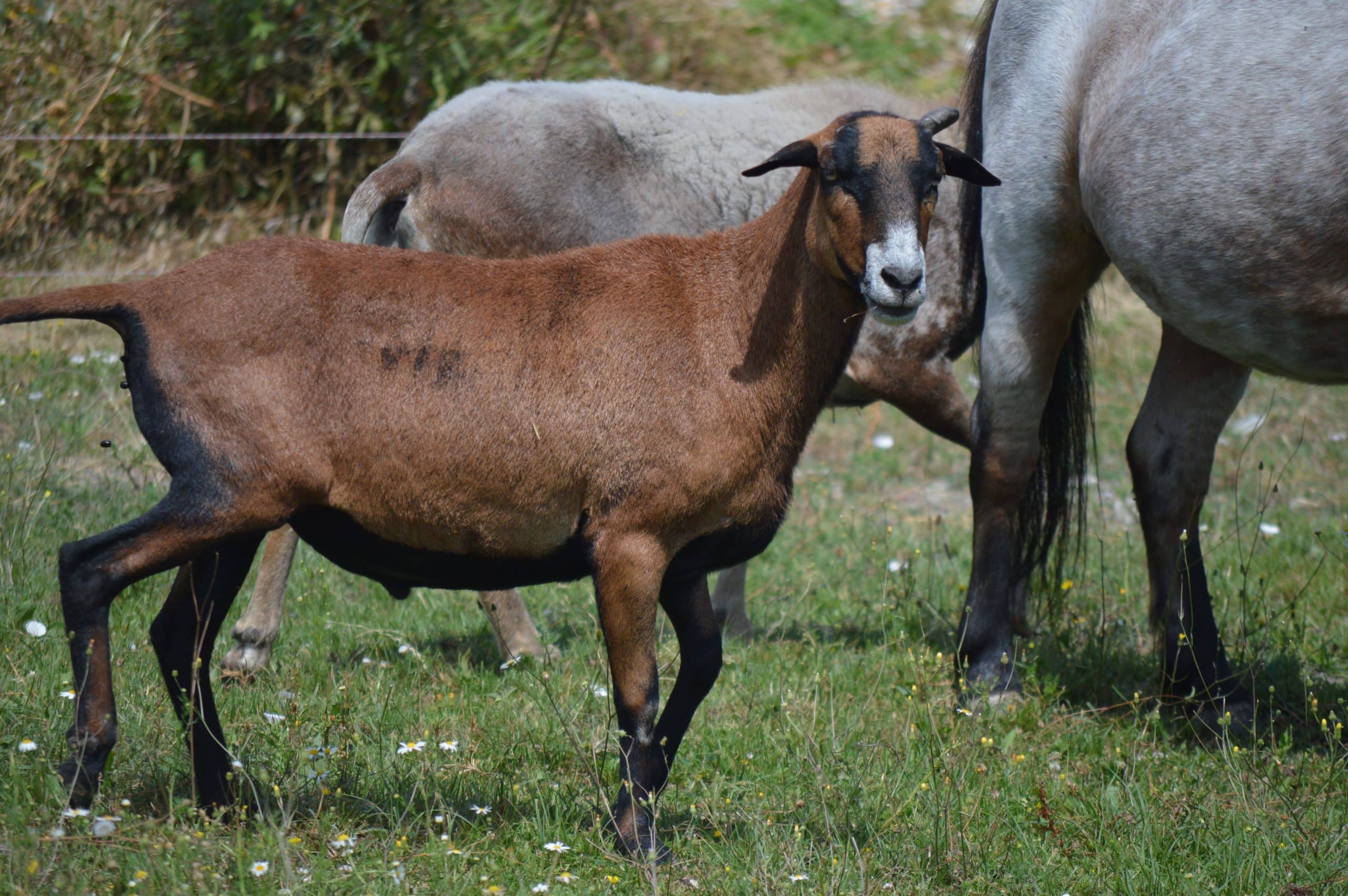

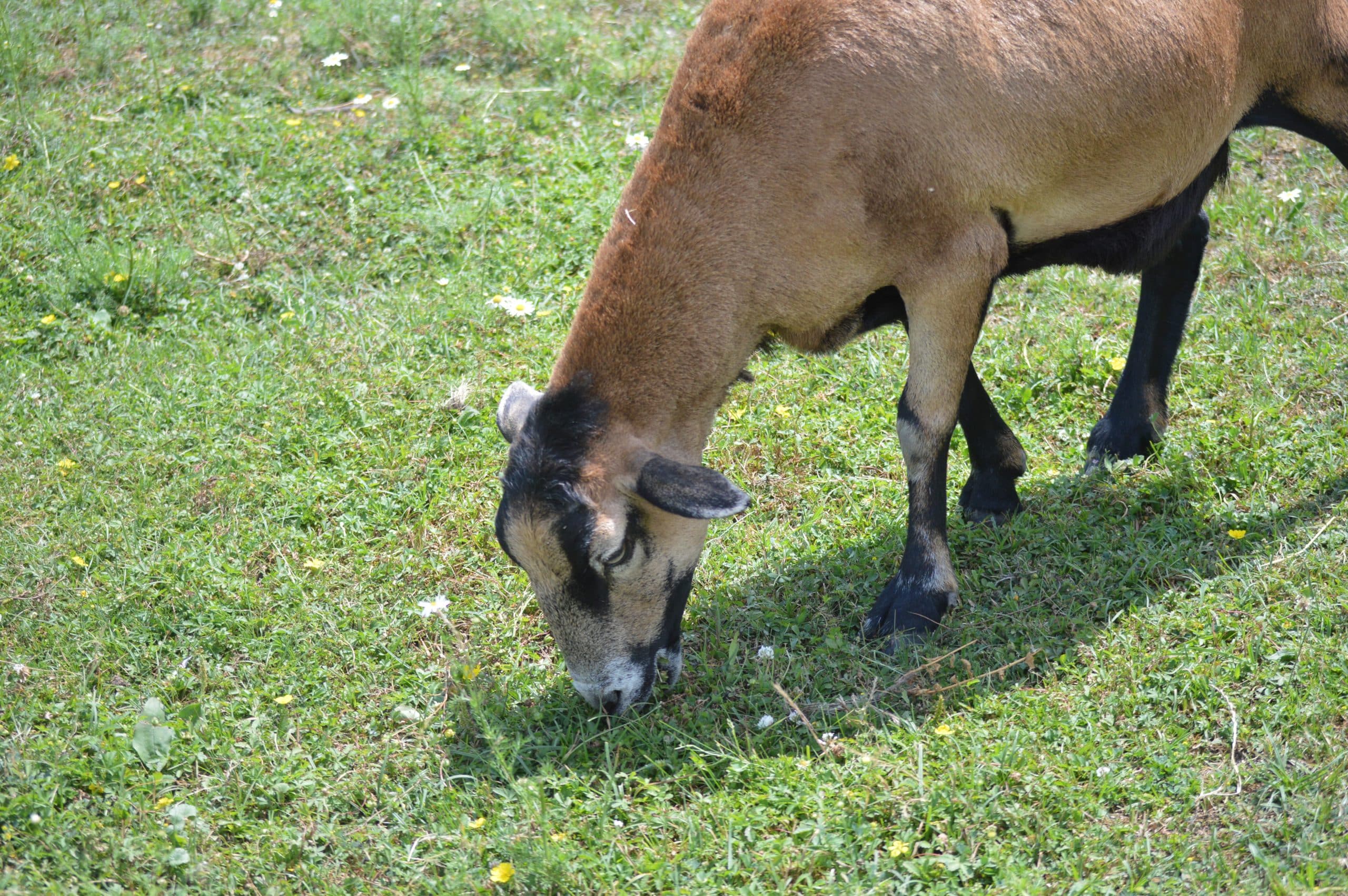


Domestic Cameroonian sheep have also found their refuge in Malkia Park, where they seasonally help us graze the vegetation in our Safari enclosure. Their smells then serve as enrichment for our big cats, which are alternately released into this enclosure. Of course, only one group of animals is ever released into the enclosure, which lives together in another enclosure, so that there are no unnecessary fights. Also, the whole group of ungulates, which was grazed by the Safari enclosure, is back in the safety of its own enclosure before the release of the beasts.
Not yet adopted
Cameroon sheep belong to a group of West African sheep breeds. It has hair instead of wool, so there is no need to cut it. It is often confused with the Cameroon goat because of the similarity in coat and colour.
The coat is short and shiny, with a thick collar on rams. There are two colour variants: black and white and brown deer. The brown deer variant is smaller and has black colour on the belly and inner side of the legs. Sheep are usually hornless; rams have curled black horns.
Cameroon sheep are one of the primitive breeds that usually manage to give birth without any problems and do not need any human intervention. They can have young twice a year, but only one young a year is preferred, and it is common for relatives from the herd to take the young in the event of the mother’s death. The young are usually born in early spring, while the snow is still falling.
It is a rather shy breed, but one that can be easily tamed. The herd is led to pasture by the head female and closed in by the ram. There is always at least one sheep in the group keeping an eye out for approaching danger. Rams are not aggressive.
The breed is bred for grazing grass and for tasty game-like meat.
Cameroon sheep
Ovis aries
Kamerunky
Date of birth
Unknown
Order
Family
Distribution
BODY LENGTH
80-85 cm
HEIGHT
45-60 cm at shoulder
Weight
30-40 kg
LIFE EXPECTANCY
20-30 years
LENGTH OF PREGNANCY
140-150 days
NUMBER OF YOUTHS
1-2
Food
grass, plants, leaves of trees and bushes
Kamerunky
Domestic Cameroonian sheep have also found their refuge in Malkia Park, where they seasonally help us graze the vegetation in our Safari enclosure. Their smells then serve as enrichment for our big cats, which are alternately released into this enclosure. Of course, only one group of animals is ever released into the enclosure, which lives together in another enclosure, so that there are no unnecessary fights. Also, the whole group of ungulates, which was grazed by the Safari enclosure, is back in the safety of its own enclosure before the release of the beasts.
Not yet adopted
Cameroon sheep belong to a group of West African sheep breeds. It has hair instead of wool, so there is no need to cut it. It is often confused with the Cameroon goat because of the similarity in coat and colour.
The coat is short and shiny, with a thick collar on rams. There are two colour variants: black and white and brown deer. The brown deer variant is smaller and has black colour on the belly and inner side of the legs. Sheep are usually hornless; rams have curled black horns.
Cameroon sheep are one of the primitive breeds that usually manage to give birth without any problems and do not need any human intervention. They can have young twice a year, but only one young a year is preferred, and it is common for relatives from the herd to take the young in the event of the mother’s death. The young are usually born in early spring, while the snow is still falling.
It is a rather shy breed, but one that can be easily tamed. The herd is led to pasture by the head female and closed in by the ram. There is always at least one sheep in the group keeping an eye out for approaching danger. Rams are not aggressive.
The breed is bred for grazing grass and for tasty game-like meat.