Chiloé wigeon
Anas sibilatrix
Chiloé wigeon

Wavy ducks can be seen on our lake located at the beginning of the park, where waterfowl are kept more or less freely. From the bridge there is a view of the entire water area, where the animals show their natural behavior.
These animals cannot be adopted.
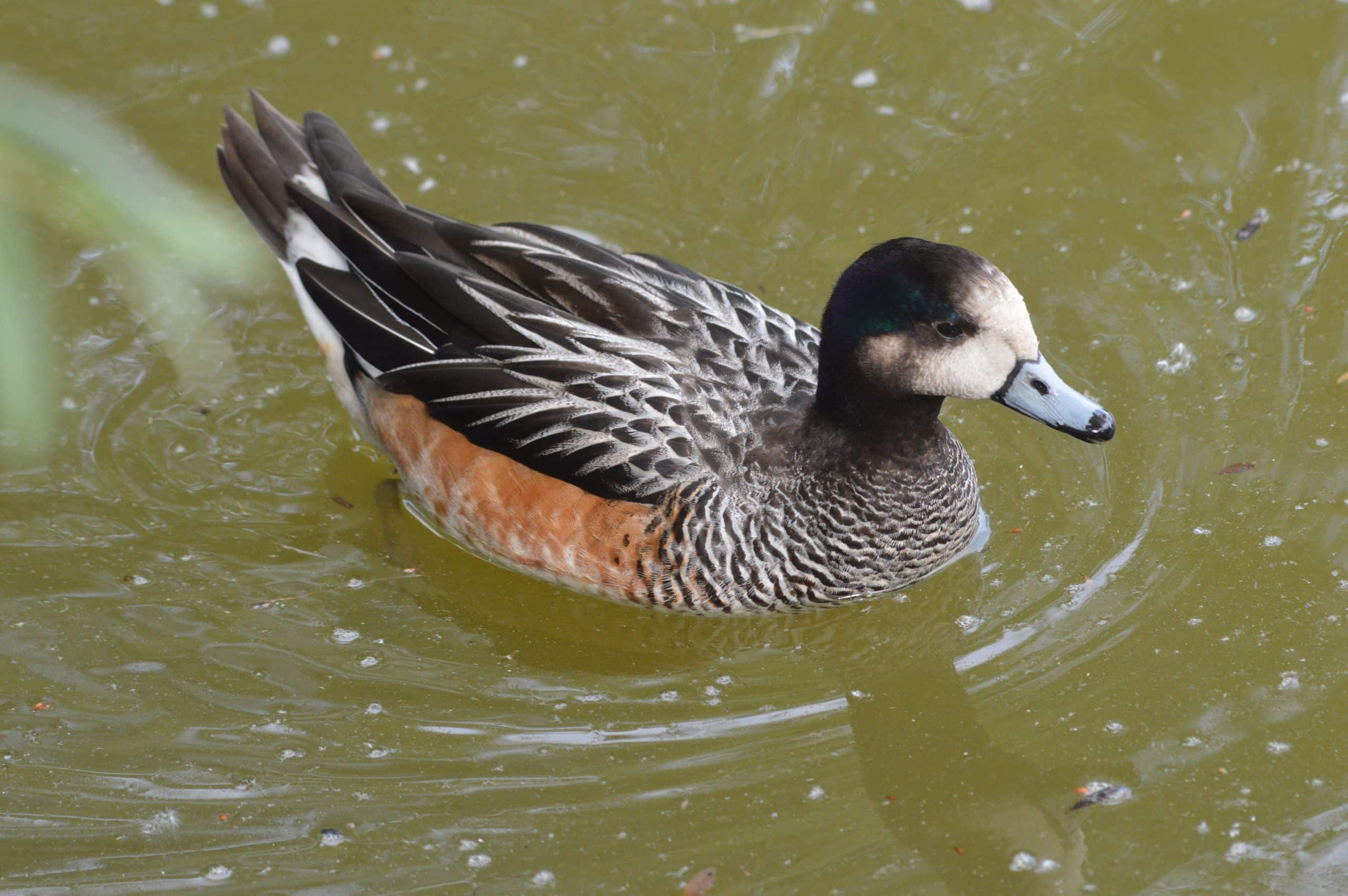
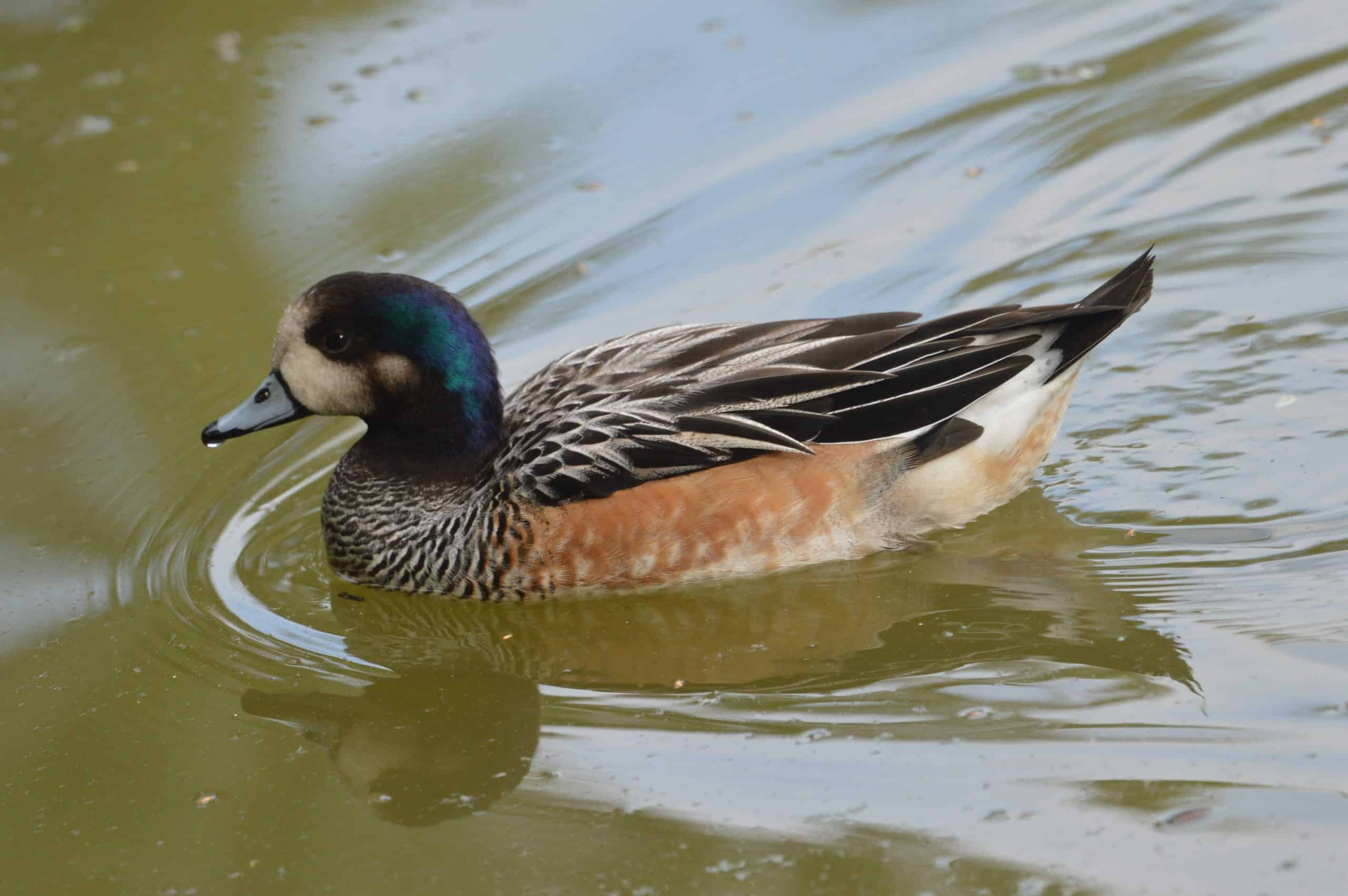
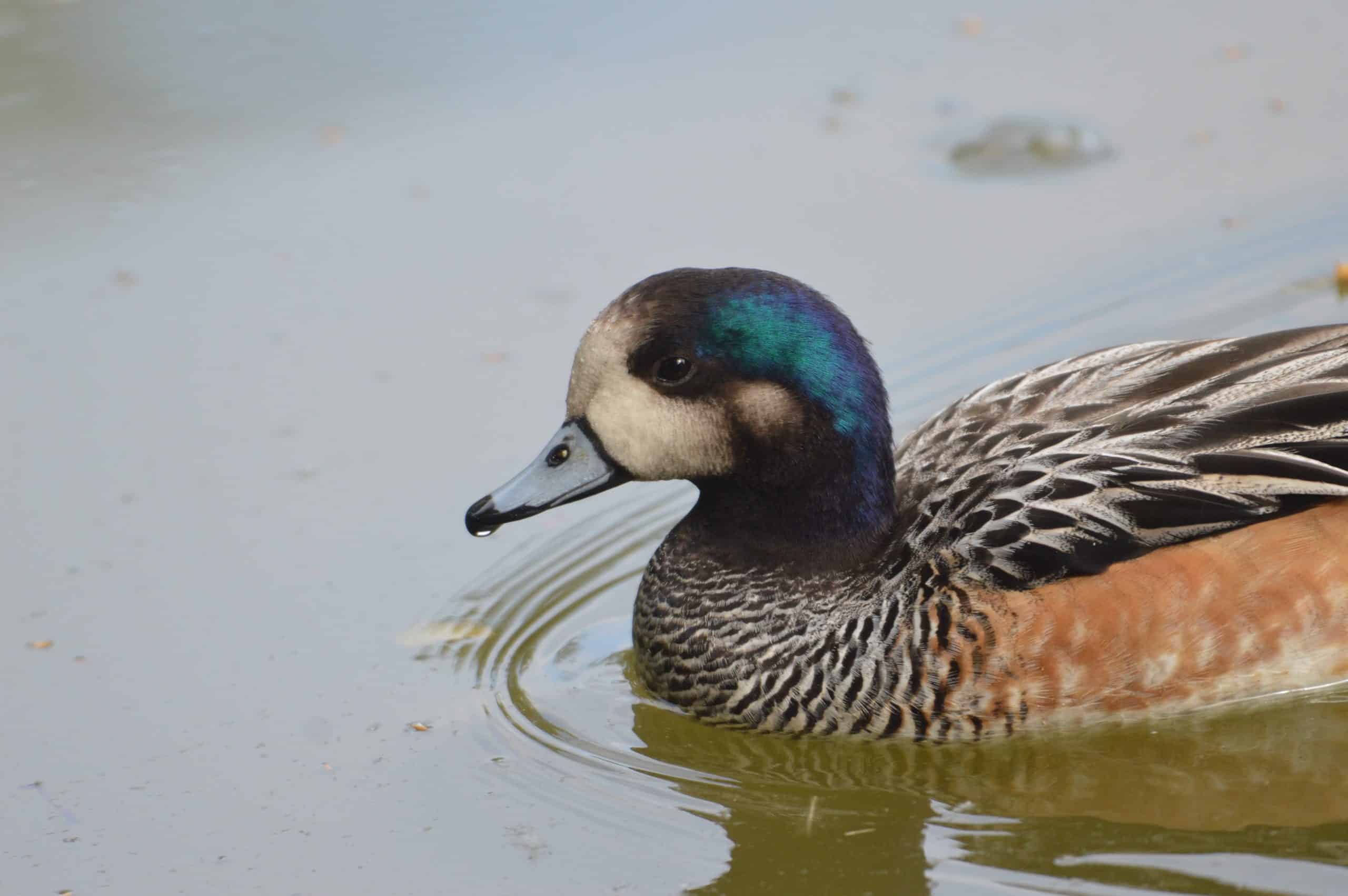
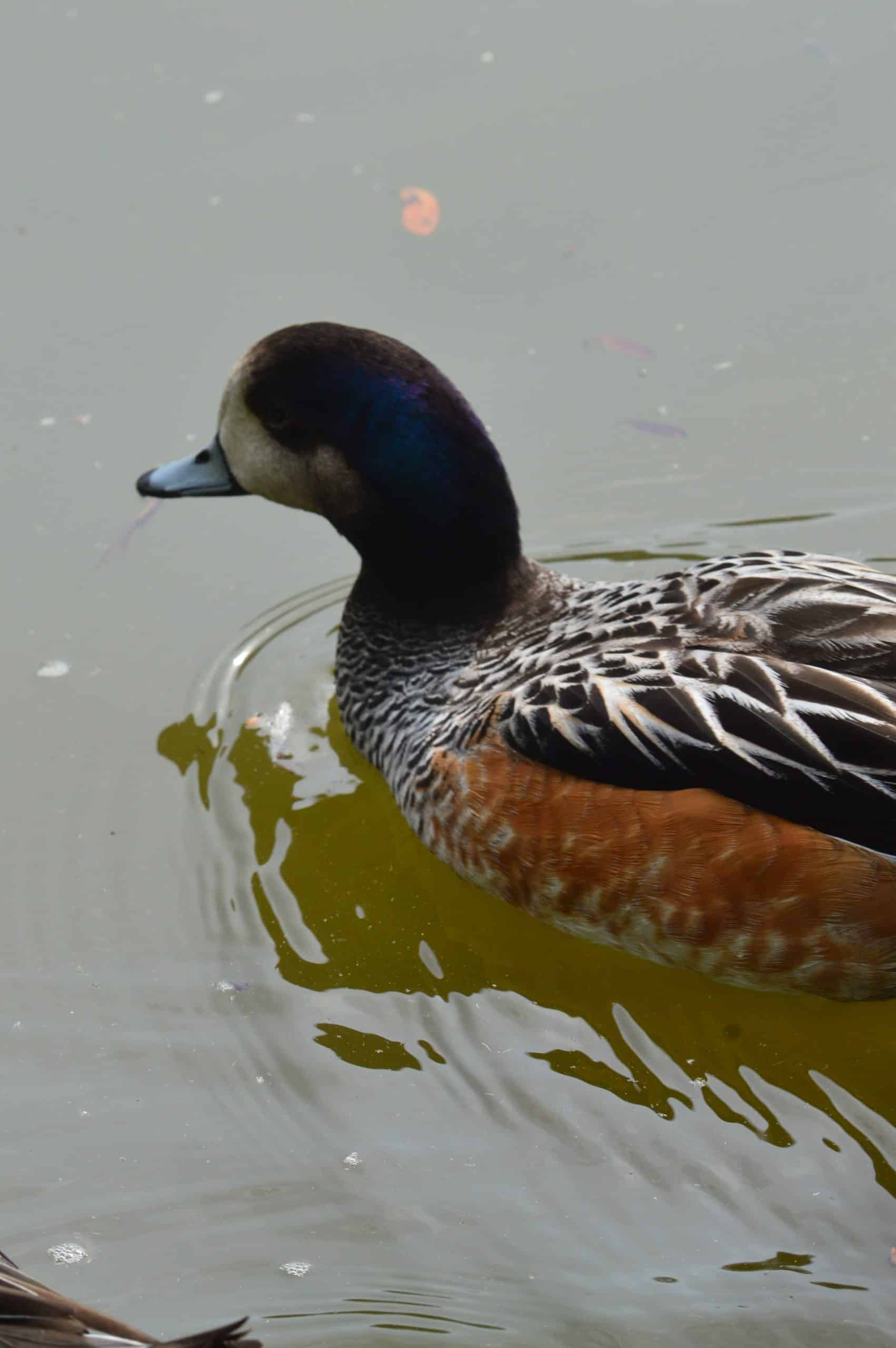
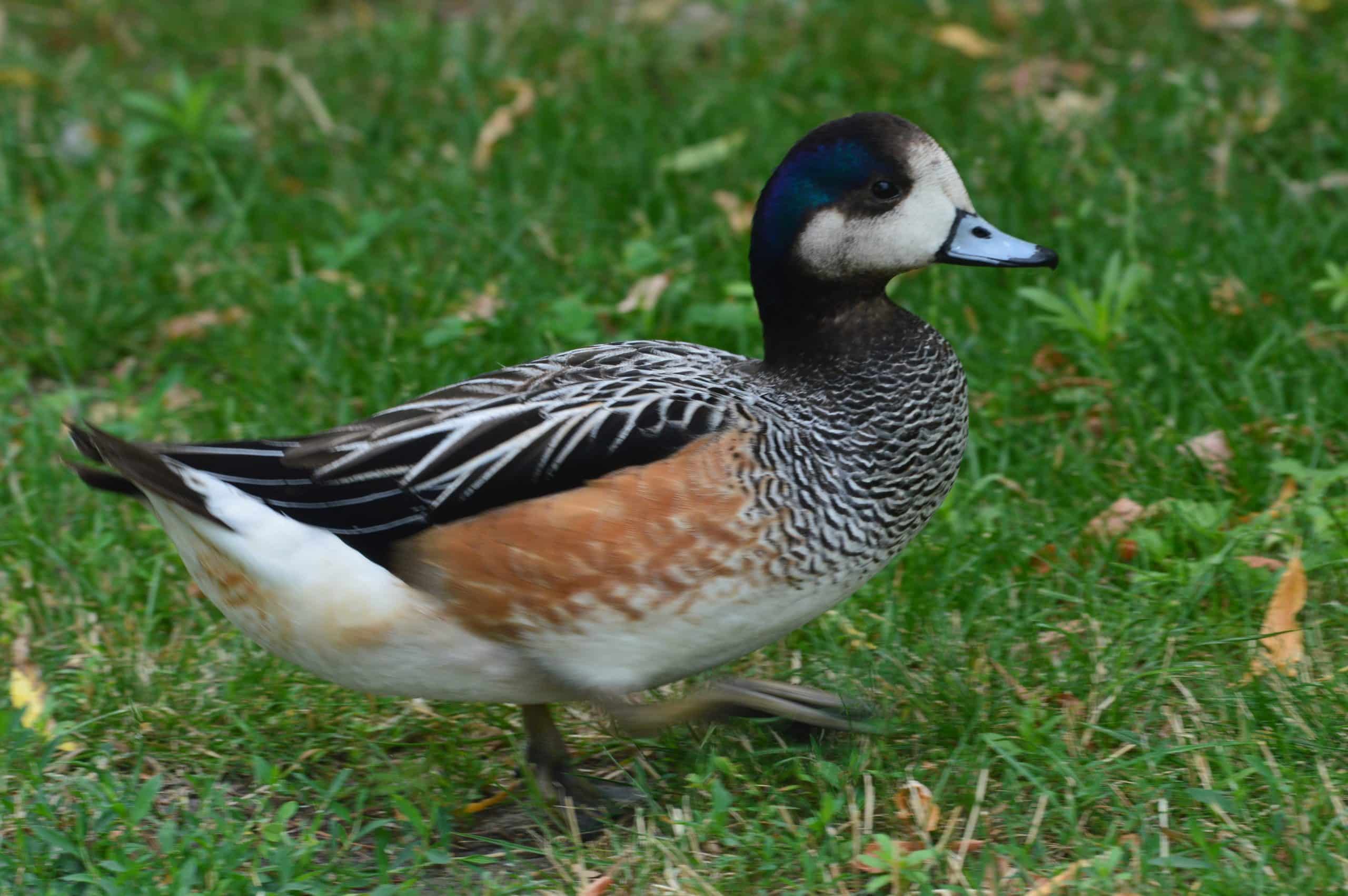
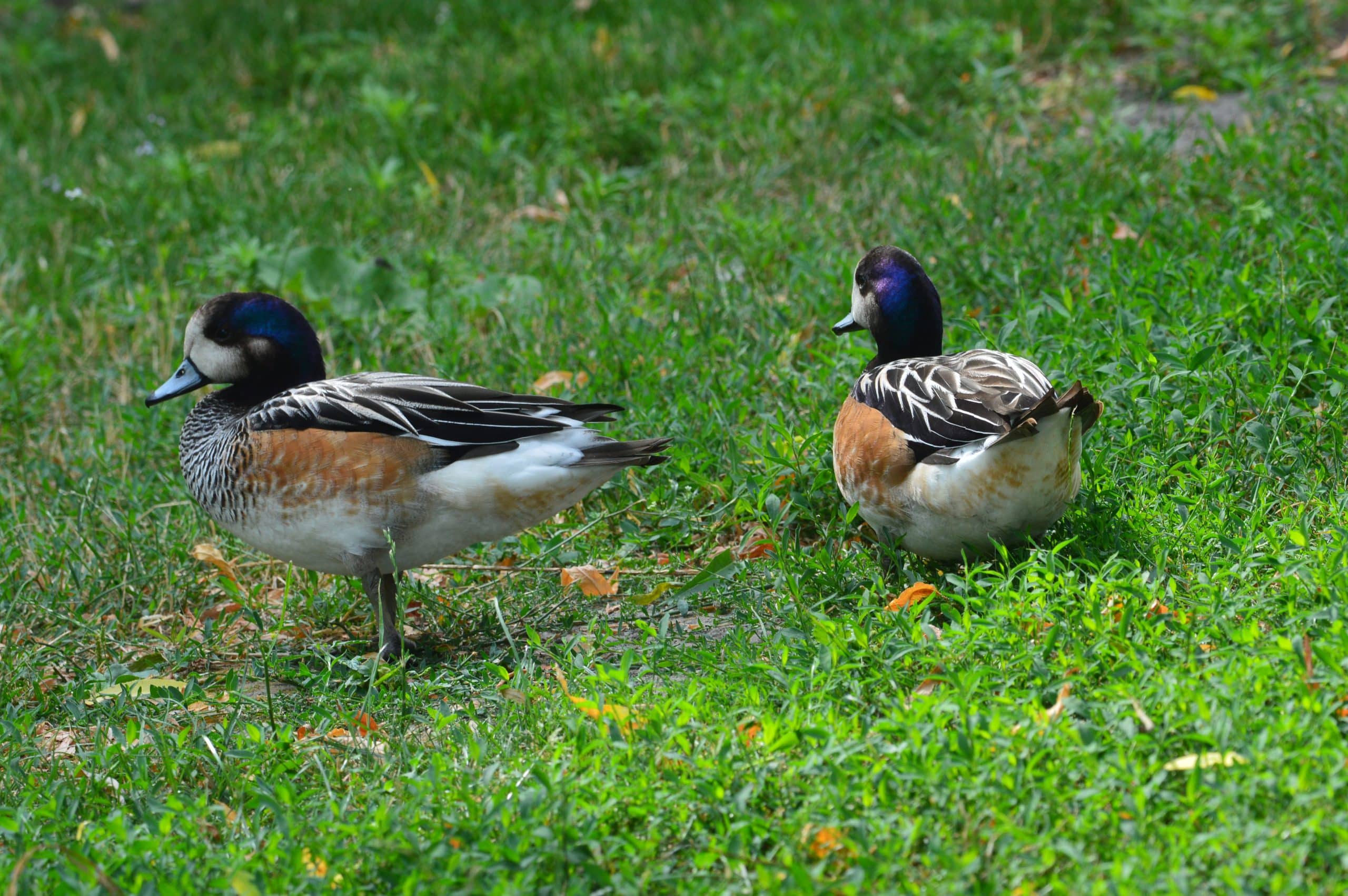
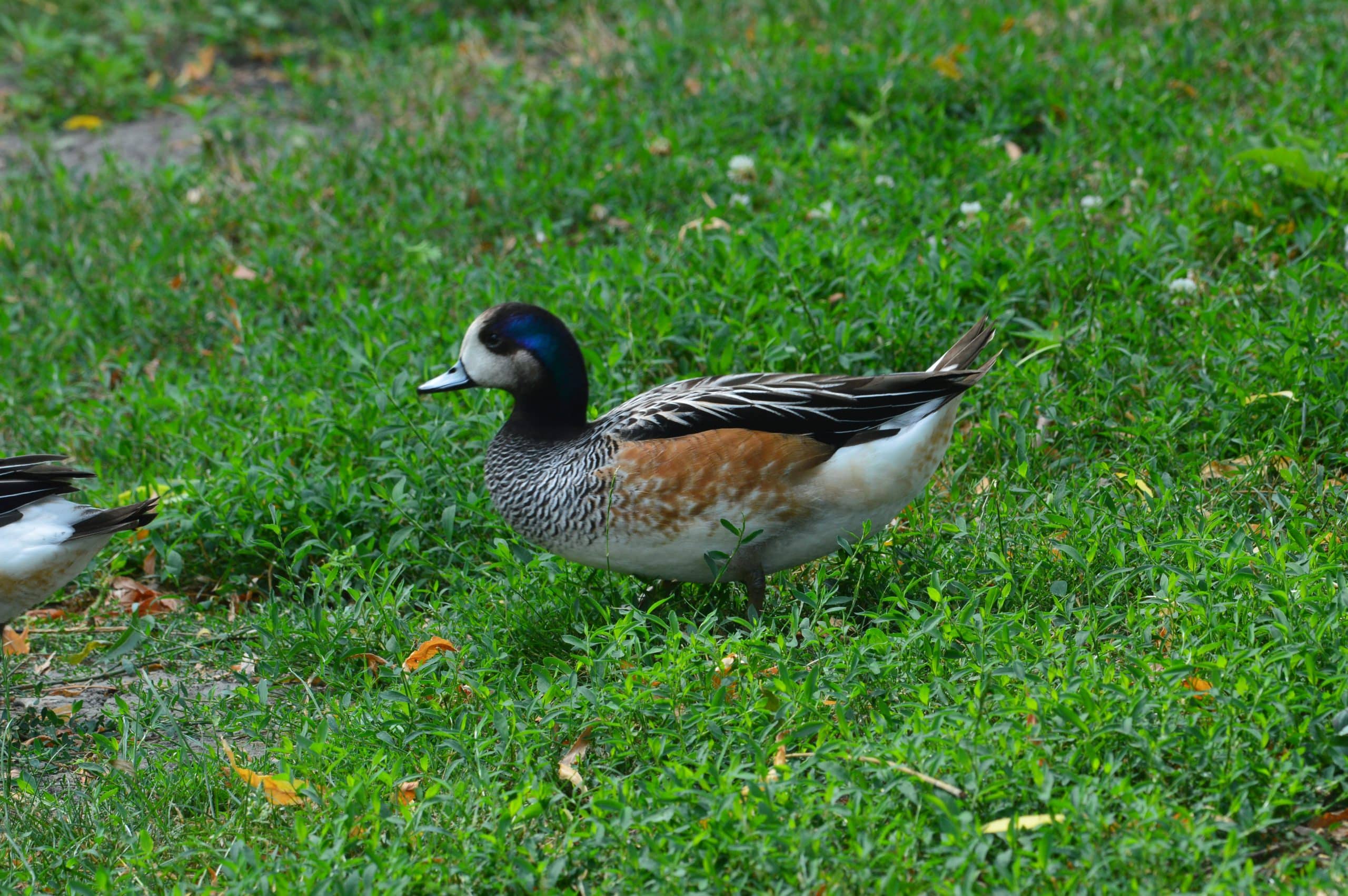
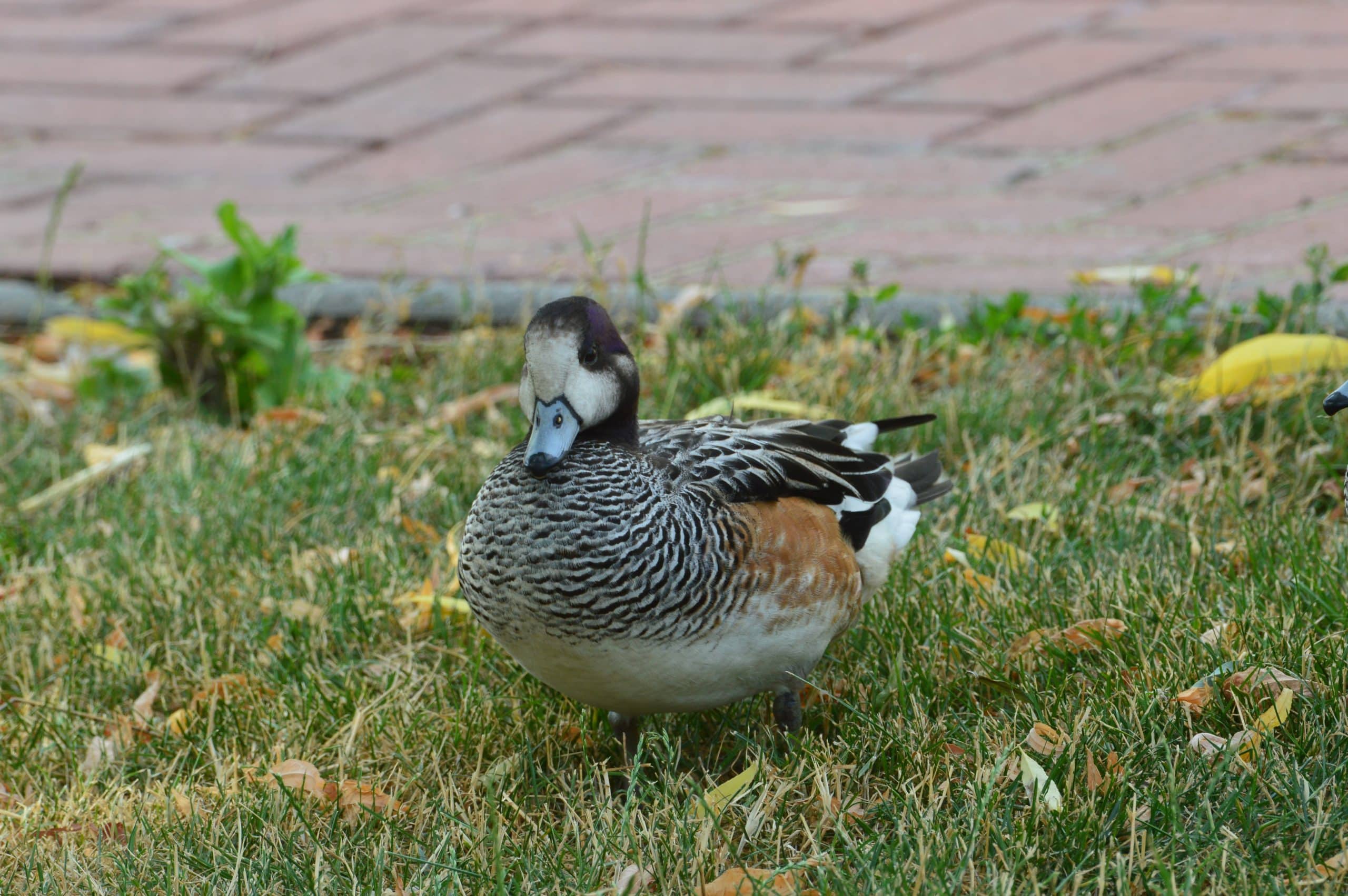
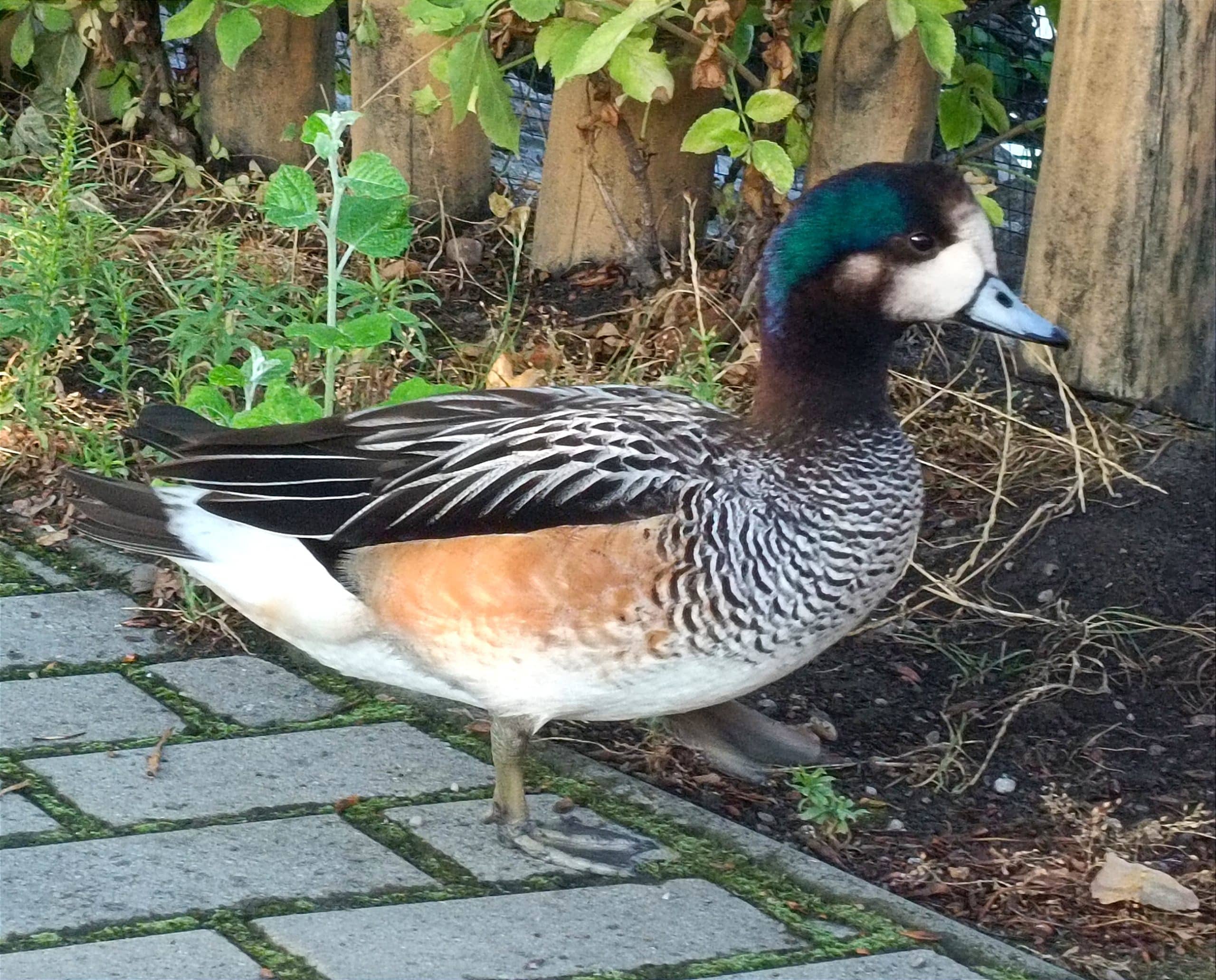
This bird has an iridescent green-blue cap on its head and a blue-grey beak with a black tip. The cheeks and forehead are white, the eyes are dark brown, and it has a white ear patch. The neck and back of the head are black. The breast is black and white, and the wing feathers are grey white. The sides of males are rusty and those of females are light brown. The legs and feet are grey.
Sexual dimorphism is quite subtle in this species. Males are usually slightly larger and heavier and have slightly brighter and more pronounced head plumage.
The young resemble adult birds, but the rust colouration on the sides is reduced or absent.
It inhabits freshwater lakes, marshes, shallow lagoons, and slow-moving rivers. It migrates for the winter. They gather and feed in small groups. Males and females form pairs for the breeding season. Pairs inhabit very small territories and are territorial during the breeding season, guarding their territory. They build their nests in grass and under bushes. The male participates in the upbringing of the ducklings, but leaves the family after the offspring have hatched. After the breeding season, when the ducks moult, up to 5,000 ducks can be found on some lakes.
Like other Anatidae, it puts its head underwater to find aquatic plants and small live prey. Its short beak is well adapted, allowing it to “mow” favourite grasses and greener parts of aquatic vegetation. However, it can also eat worms, larvae, and fish during the summer.
It is very difficult to approach this duck. To keep away from the intruders, it swims to the middle of the lake or takes off and goes to the other shore.
Chiloé wigeon
Anas sibilatrix
Chiloé wigeon
Date of hatching
Unknown
Order
Family
BODY LENGTH
46-56 cm
Weight
ca 800 g
LIFE EXPECTANCY
up to 15 years
WINGSSPAN
75-86 cm
INCUBATION PERIOD
24-25 days
NUMBER OF EGGS
8-10 white to creamy eggs
Occurrence
south of the South America
Food
aquatic plants and grasses, sometimes algae, small aquatic animals
Wavy ducks can be seen on our lake located at the beginning of the park, where waterfowl are kept more or less freely. From the bridge there is a view of the entire water area, where the animals show their natural behavior.
These animals cannot be adopted.
This bird has an iridescent green-blue cap on its head and a blue-grey beak with a black tip. The cheeks and forehead are white, the eyes are dark brown, and it has a white ear patch. The neck and back of the head are black. The breast is black and white, and the wing feathers are grey white. The sides of males are rusty and those of females are light brown. The legs and feet are grey.
Sexual dimorphism is quite subtle in this species. Males are usually slightly larger and heavier and have slightly brighter and more pronounced head plumage.
The young resemble adult birds, but the rust colouration on the sides is reduced or absent.
It inhabits freshwater lakes, marshes, shallow lagoons, and slow-moving rivers. It migrates for the winter. They gather and feed in small groups. Males and females form pairs for the breeding season. Pairs inhabit very small territories and are territorial during the breeding season, guarding their territory. They build their nests in grass and under bushes. The male participates in the upbringing of the ducklings, but leaves the family after the offspring have hatched. After the breeding season, when the ducks moult, up to 5,000 ducks can be found on some lakes.
Like other Anatidae, it puts its head underwater to find aquatic plants and small live prey. Its short beak is well adapted, allowing it to “mow” favourite grasses and greener parts of aquatic vegetation. However, it can also eat worms, larvae, and fish during the summer.
It is very difficult to approach this duck. To keep away from the intruders, it swims to the middle of the lake or takes off and goes to the other shore.