Domestic duck - Indian runner
Anas platyrhynchos domesticus
Indian runner
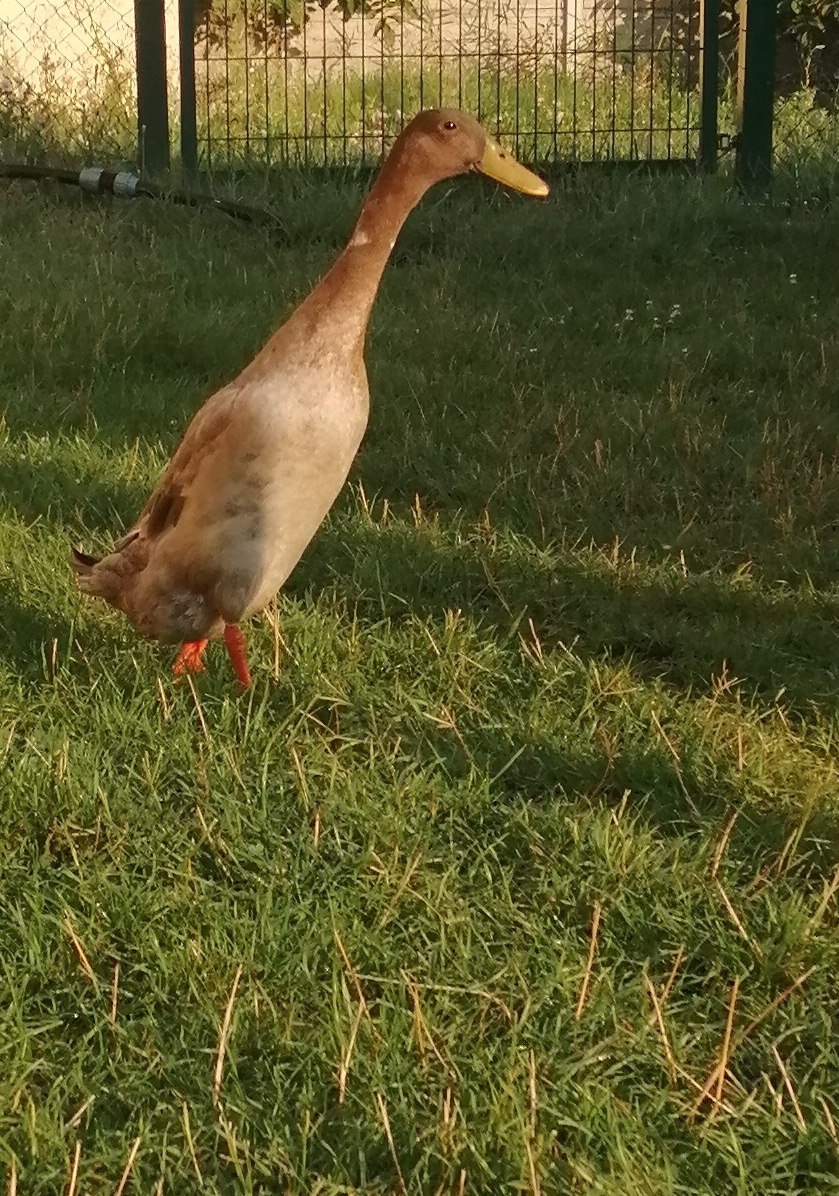

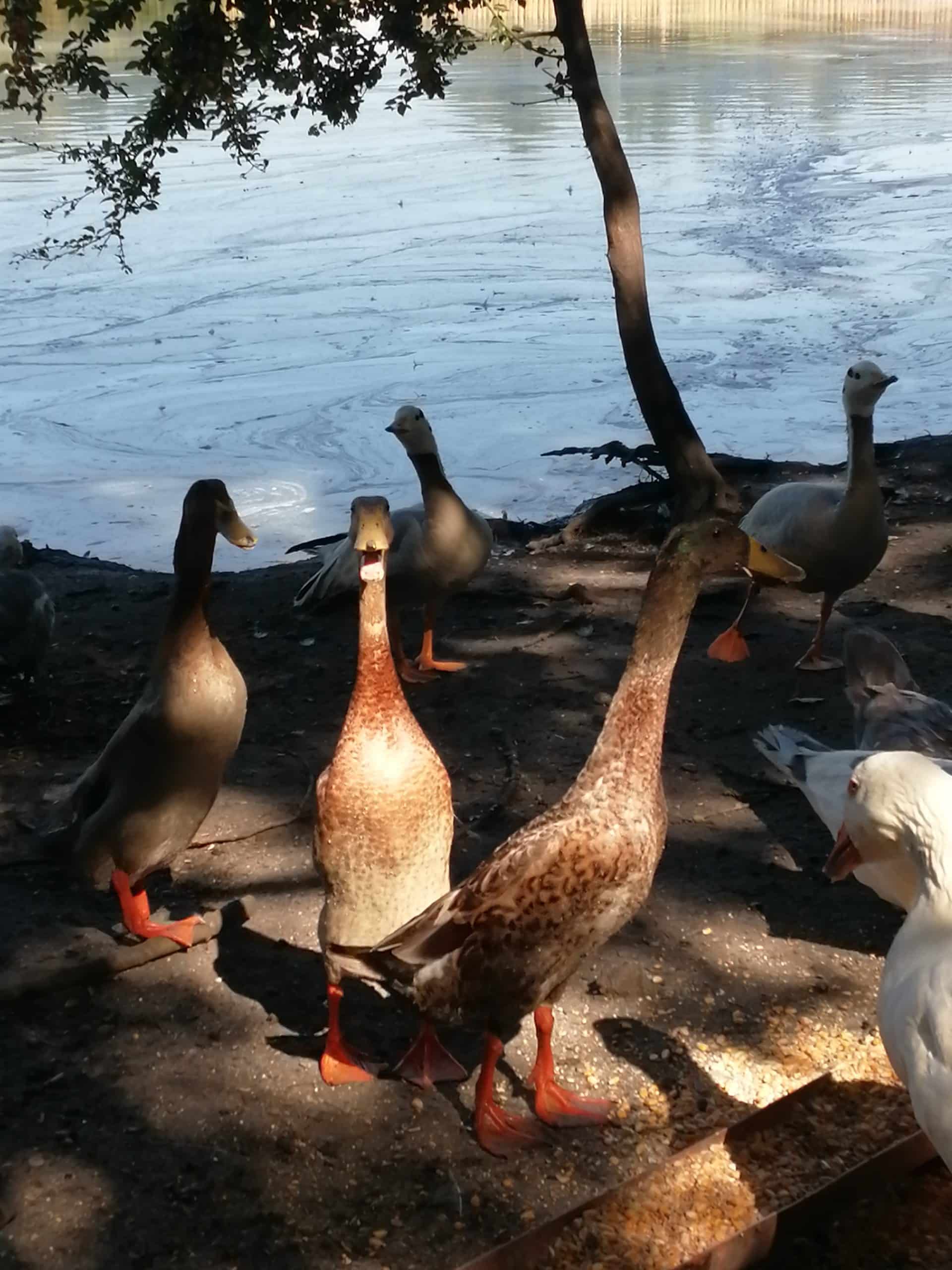
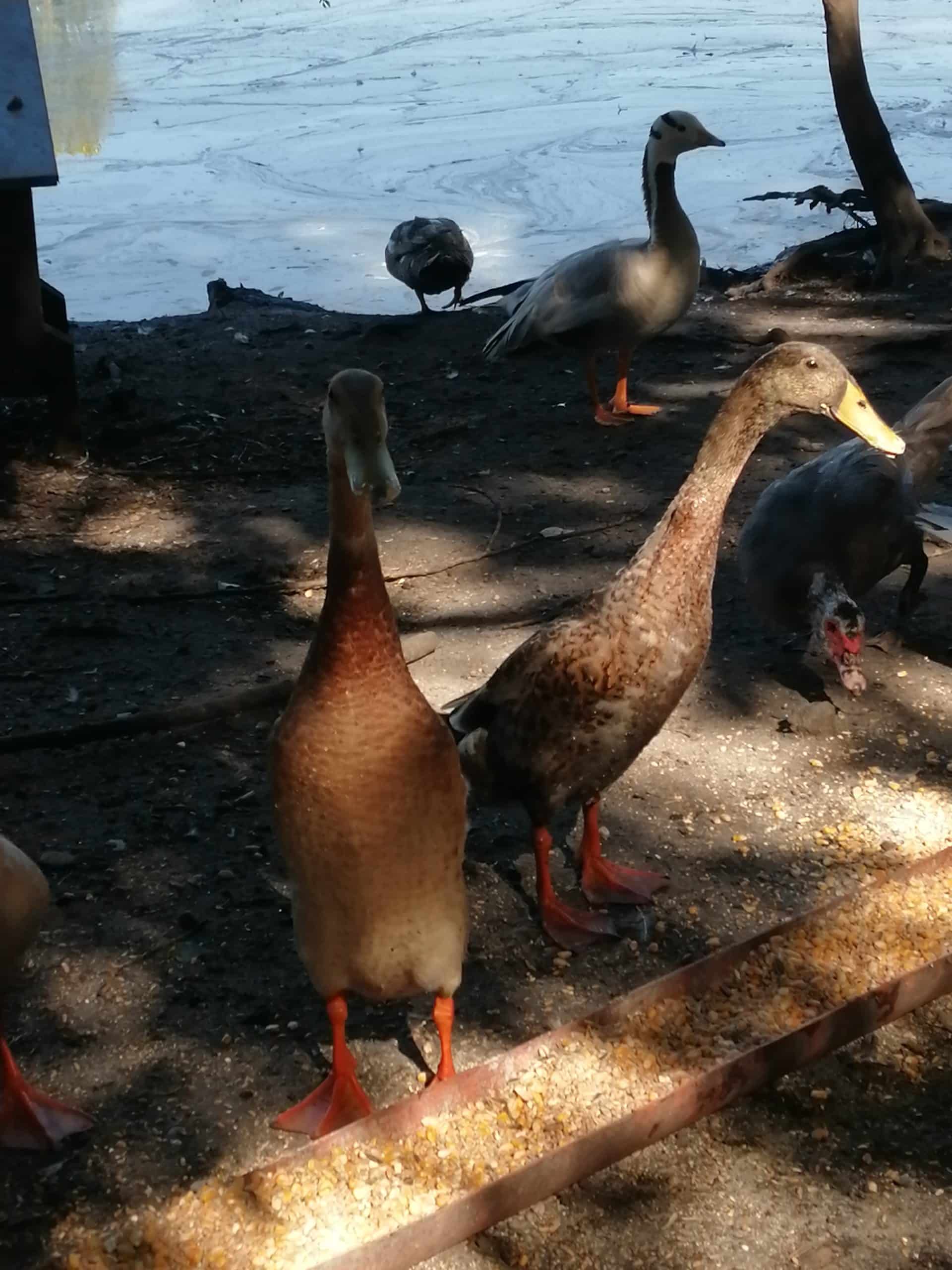

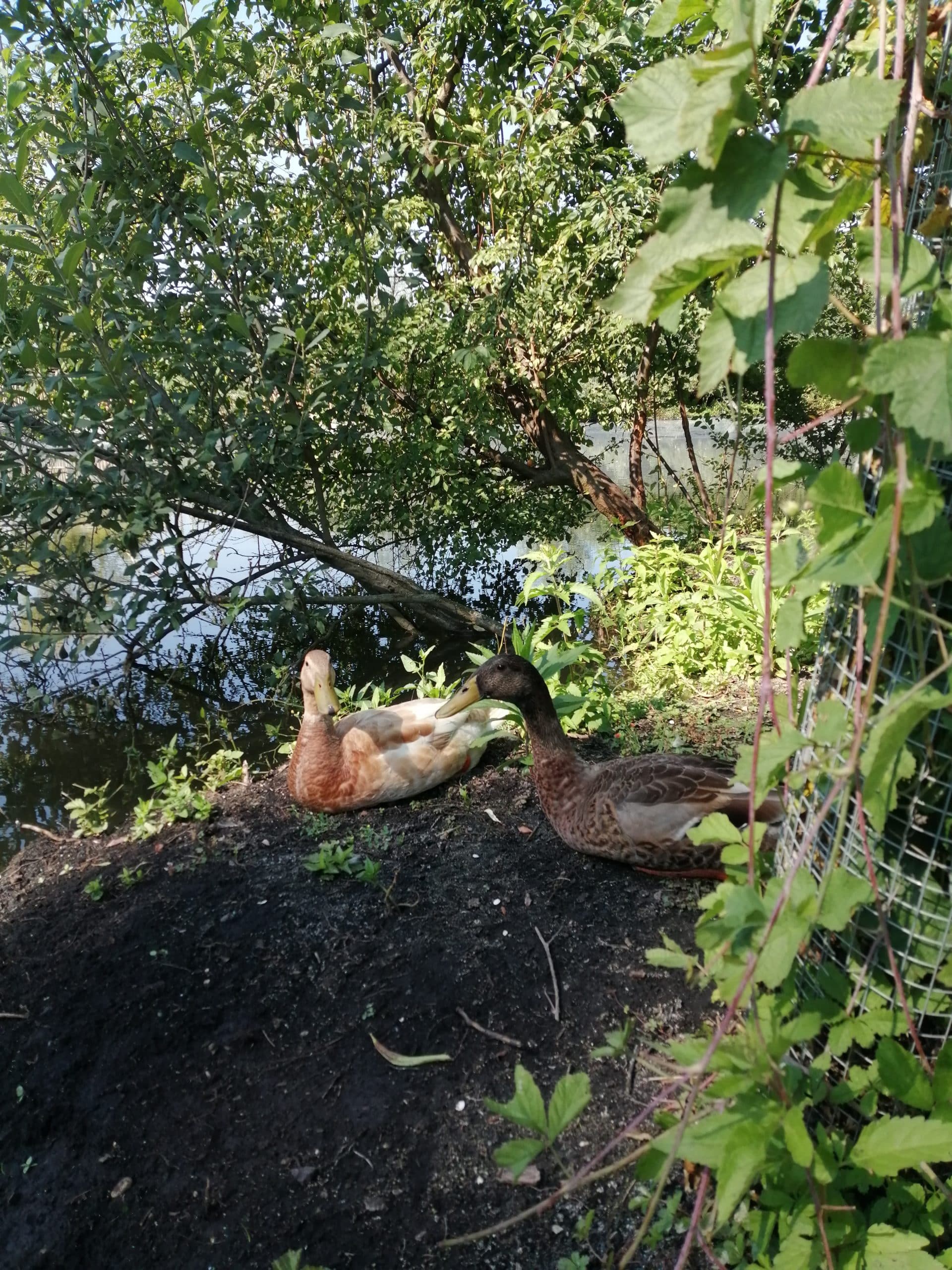
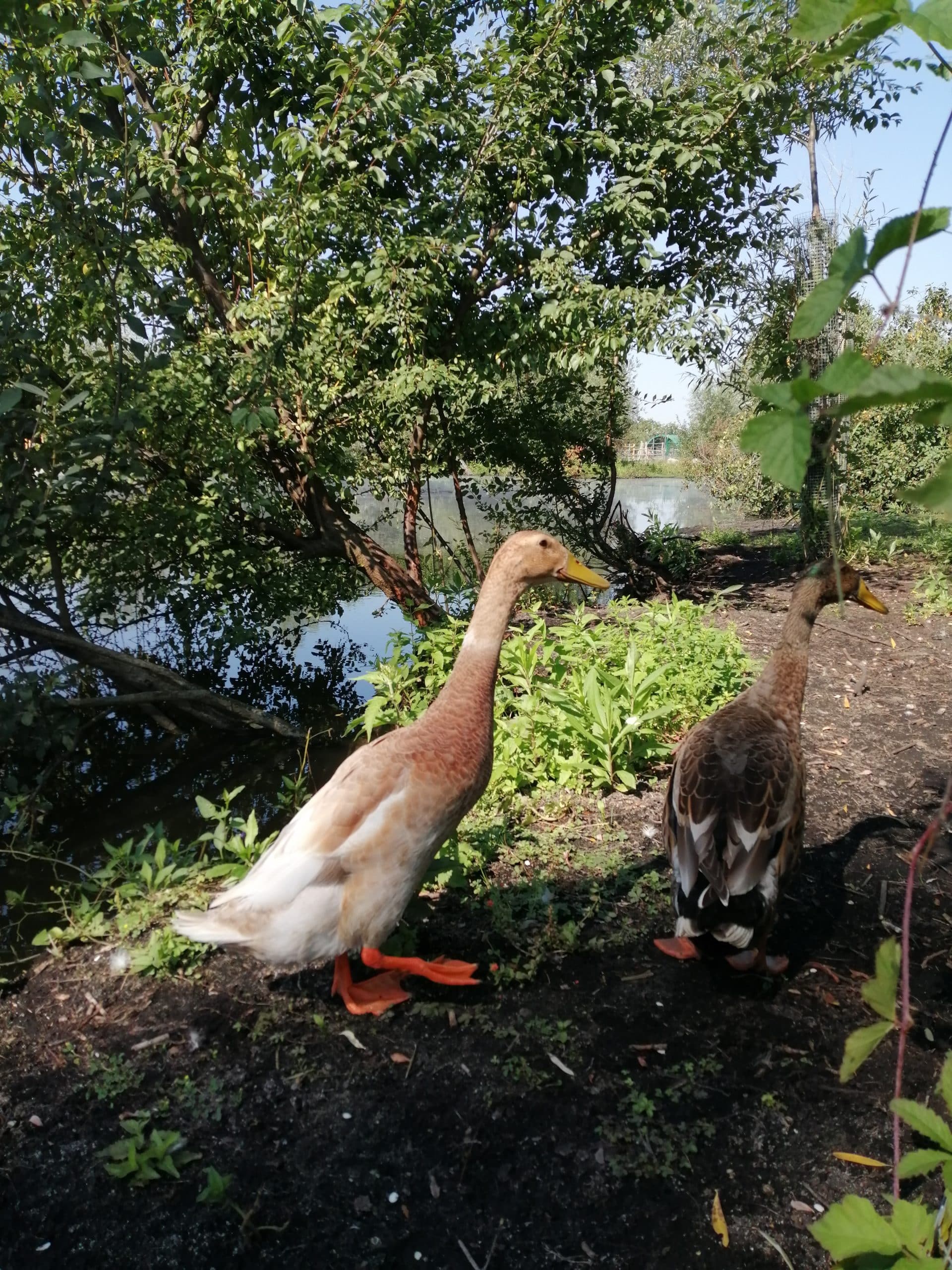
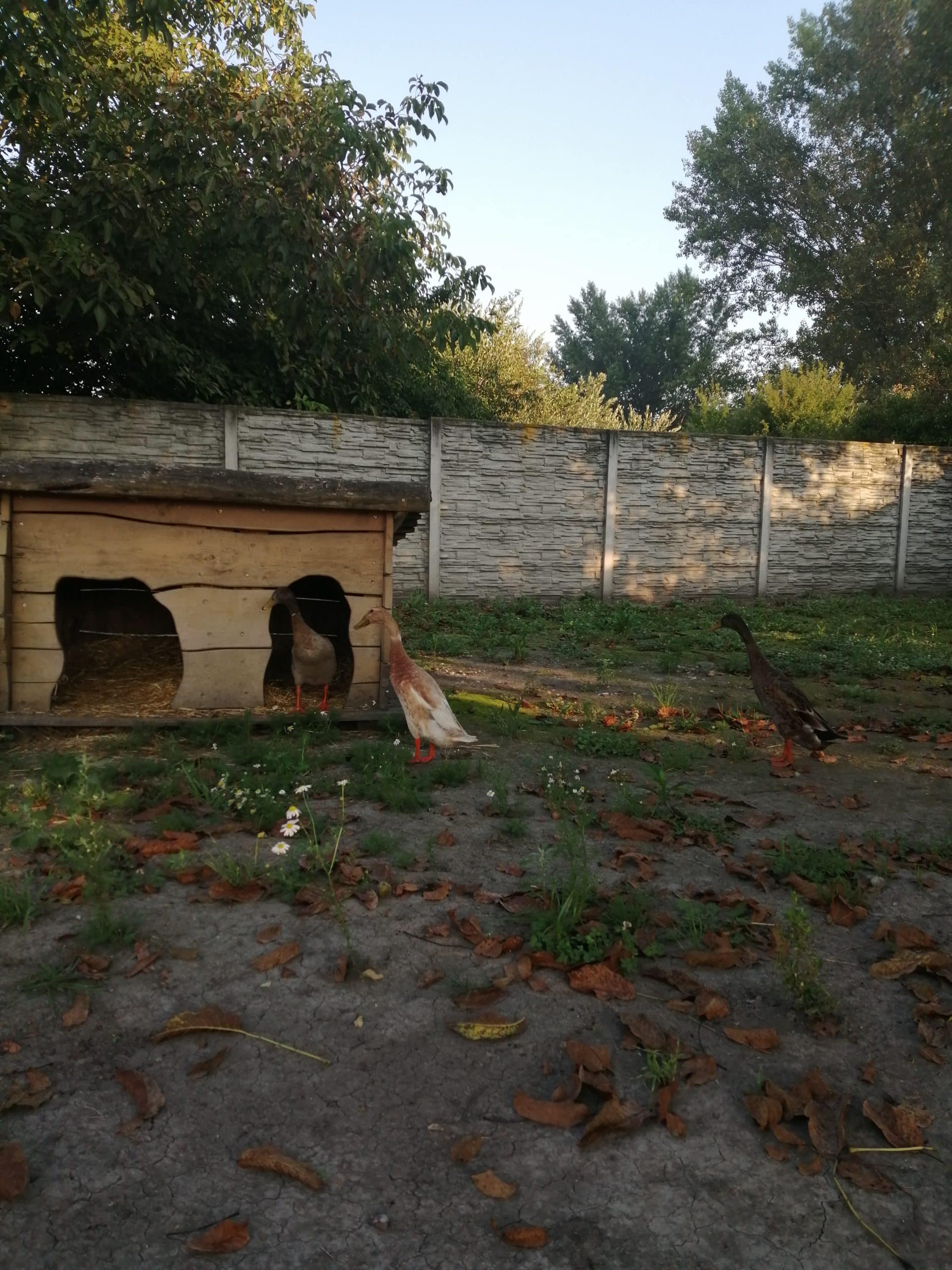

We keep Indian Runners on our lake along with other different species of birds. They have the opportunity to move along the entire territory. You can easily distinguish them from other inhabitants of the lake by their typical upright posture, thanks to which they can move relatively quickly and easily on land.
These animals cannot be adopted.
It is an egg-laying breed of a domesticated form of mallard from East Asia. Typical is the upright posture of the torso and the shifting of the runners to the back of the body, thanks to which it can move on the ground quite quickly and easily. It is characterised by a tall, slender, and upright figure. There are many colour variations: fair and white, white, grey, black, brown, blue… Regardless of colour, they have pink skin.
It is an undemanding duck who can take care of itself. It is very lively and fast. It does not need as large a water surface as other ducks to live, but it does need plenty of room to run around.
The popularity of this breed with small farmers/gardeners has been increased not only by its interesting appearance, but also by the ability of this duck to eat snails, beetles, or other garden pests.
The record for eggs in a year is given for a single female Indian runner as high as 298 eggs.
Eating waterfowl eggs in our country does not have such a tradition as in Asian countries, where this breed was bred primarily as a laying breed.
Domestic duck - Indian runner
Anas platyrhynchos domesticus
Indian runner
Date of hatching
Unknown
Order
Family
Distribution
HEIGHT
50-76 cm
Weight
1.6-2.3 kg male
1.4-2 kg female
LIFE EXPECTANCY
10 years
INCUBATION PERIOD
28 days
NUMBER OF EGGS
100-200 eggs a year
Food
seeds, grass, snails, earthworms
We keep Indian Runners on our lake along with other different species of birds. They have the opportunity to move along the entire territory. You can easily distinguish them from other inhabitants of the lake by their typical upright posture, thanks to which they can move relatively quickly and easily on land.
These animals cannot be adopted.
It is an egg-laying breed of a domesticated form of mallard from East Asia. Typical is the upright posture of the torso and the shifting of the runners to the back of the body, thanks to which it can move on the ground quite quickly and easily. It is characterised by a tall, slender, and upright figure. There are many colour variations: fair and white, white, grey, black, brown, blue… Regardless of colour, they have pink skin.
It is an undemanding duck who can take care of itself. It is very lively and fast. It does not need as large a water surface as other ducks to live, but it does need plenty of room to run around.
The popularity of this breed with small farmers/gardeners has been increased not only by its interesting appearance, but also by the ability of this duck to eat snails, beetles, or other garden pests.
The record for eggs in a year is given for a single female Indian runner as high as 298 eggs.
Eating waterfowl eggs in our country does not have such a tradition as in Asian countries, where this breed was bred primarily as a laying breed.