Black swan
Cygnus atratus
Black swan
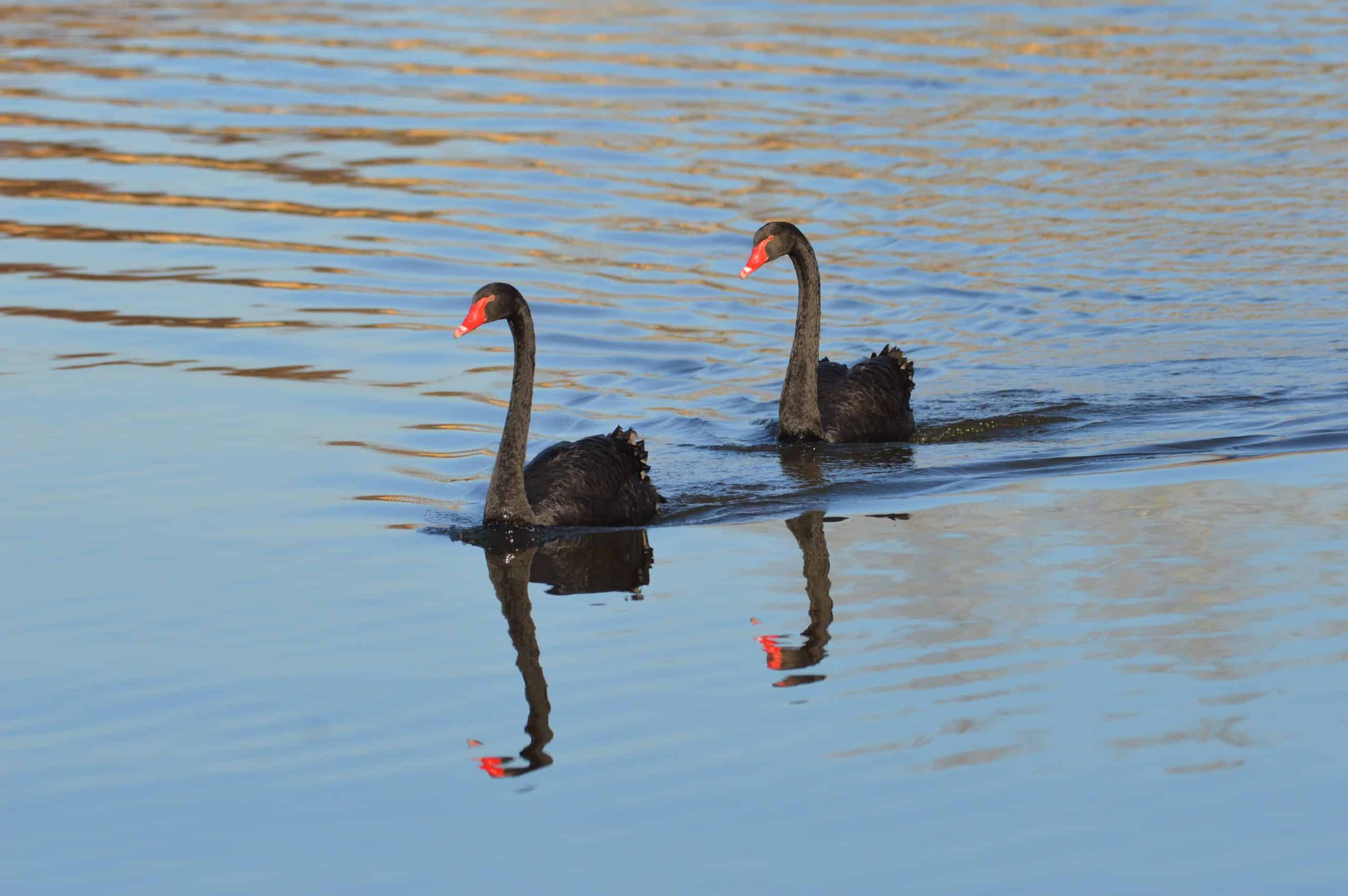
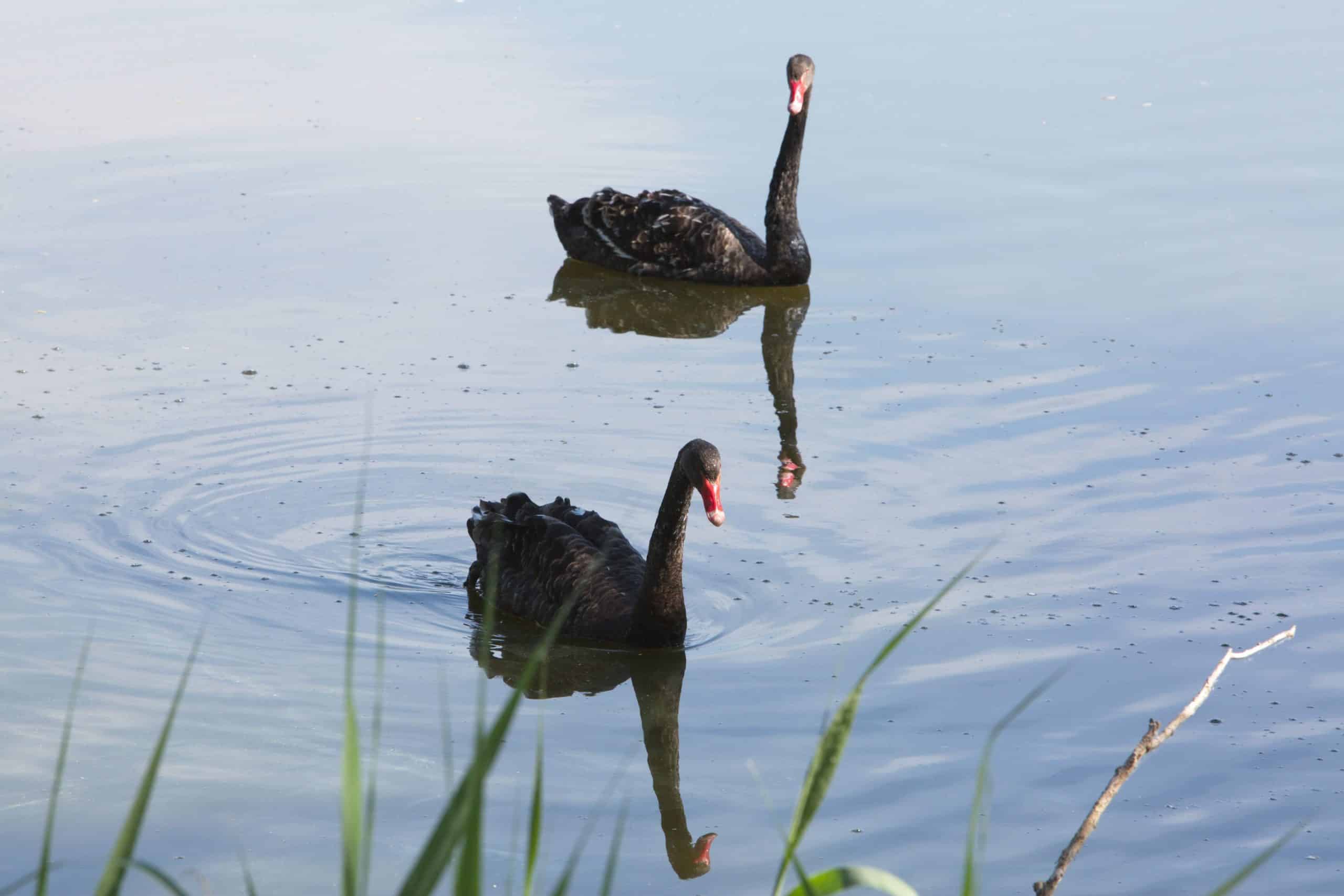
Beautiful black swans can be seen moving on our lake. These majestic birds inspire respect and admiration.
This animal can not be adopted
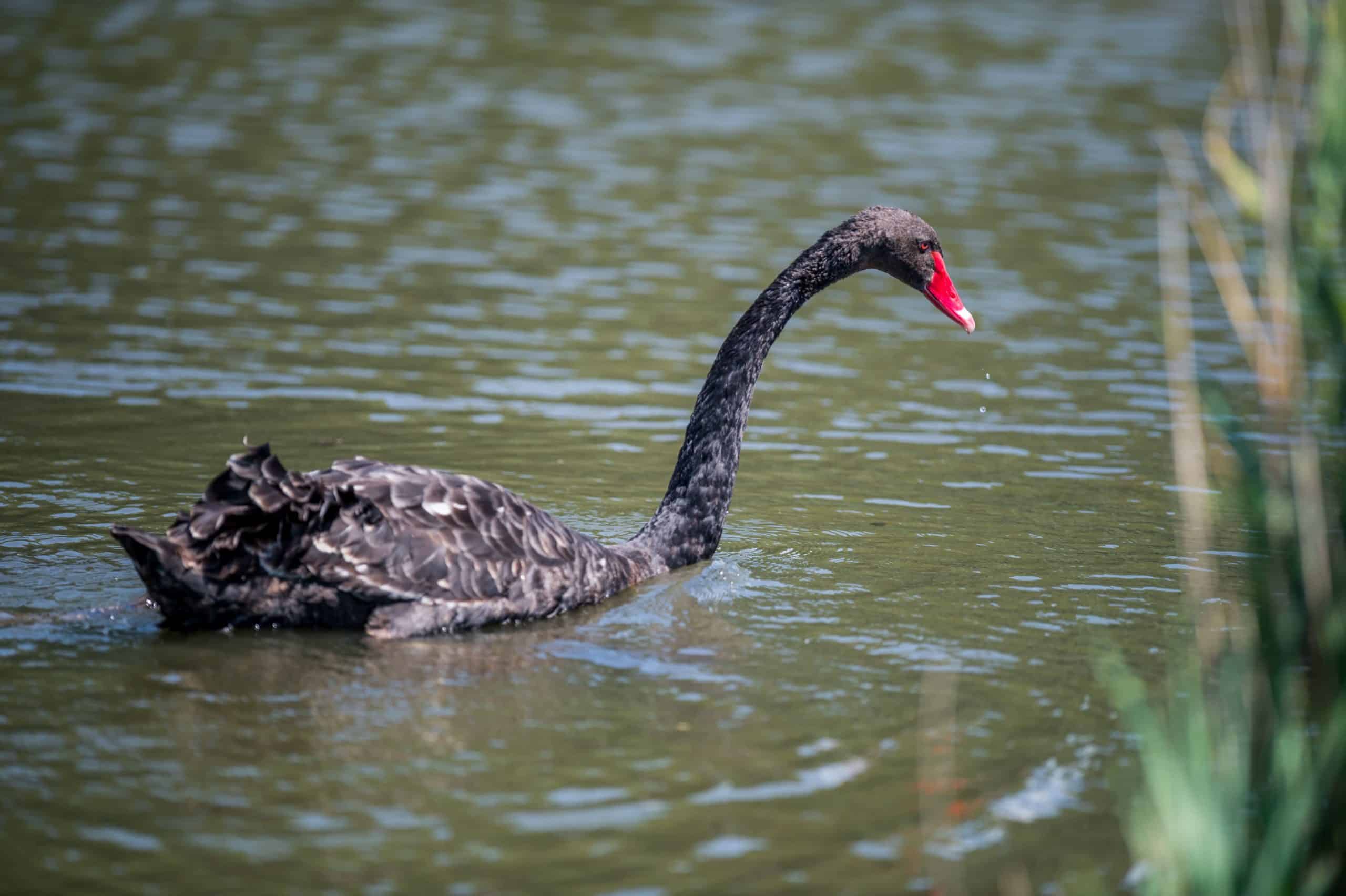
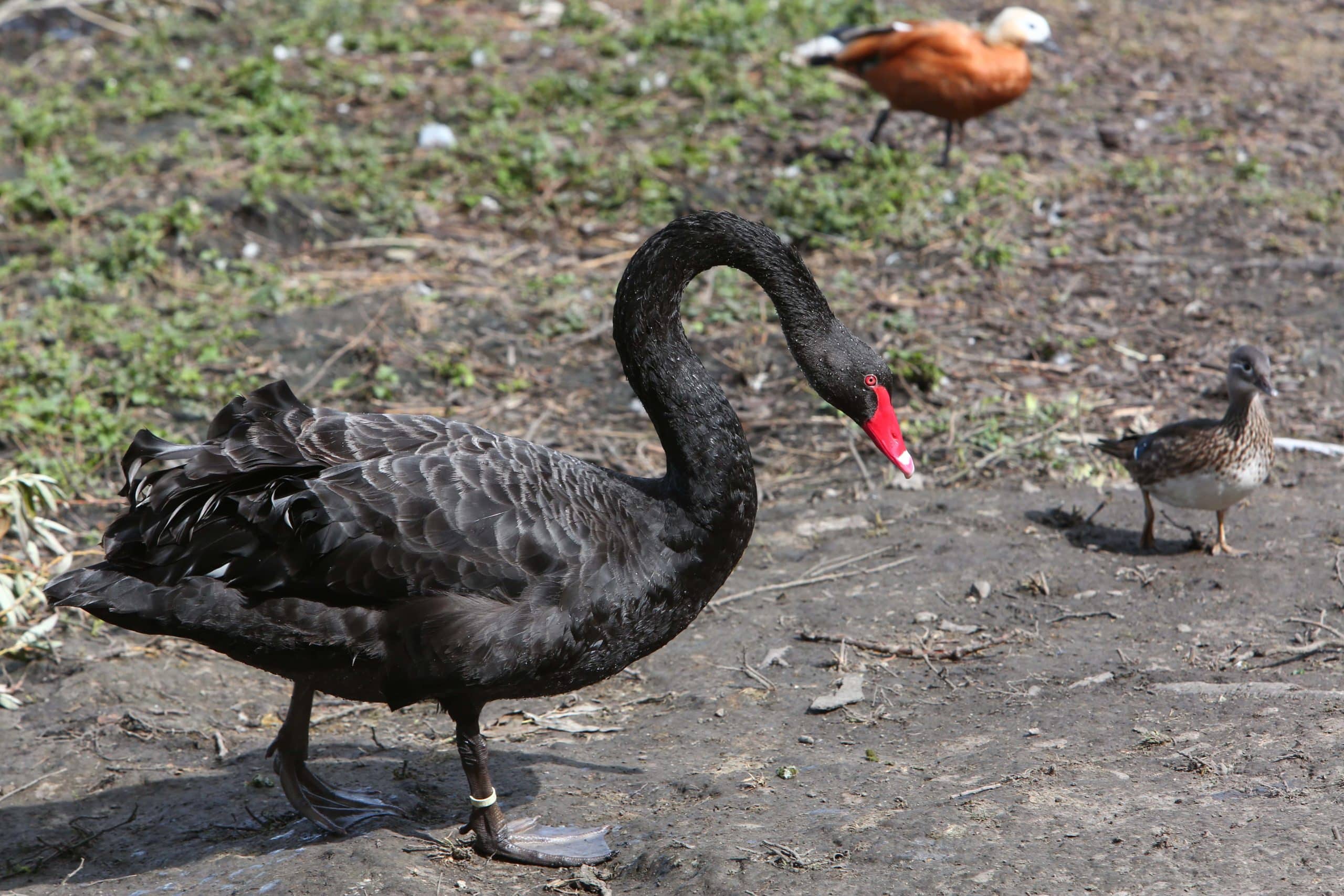
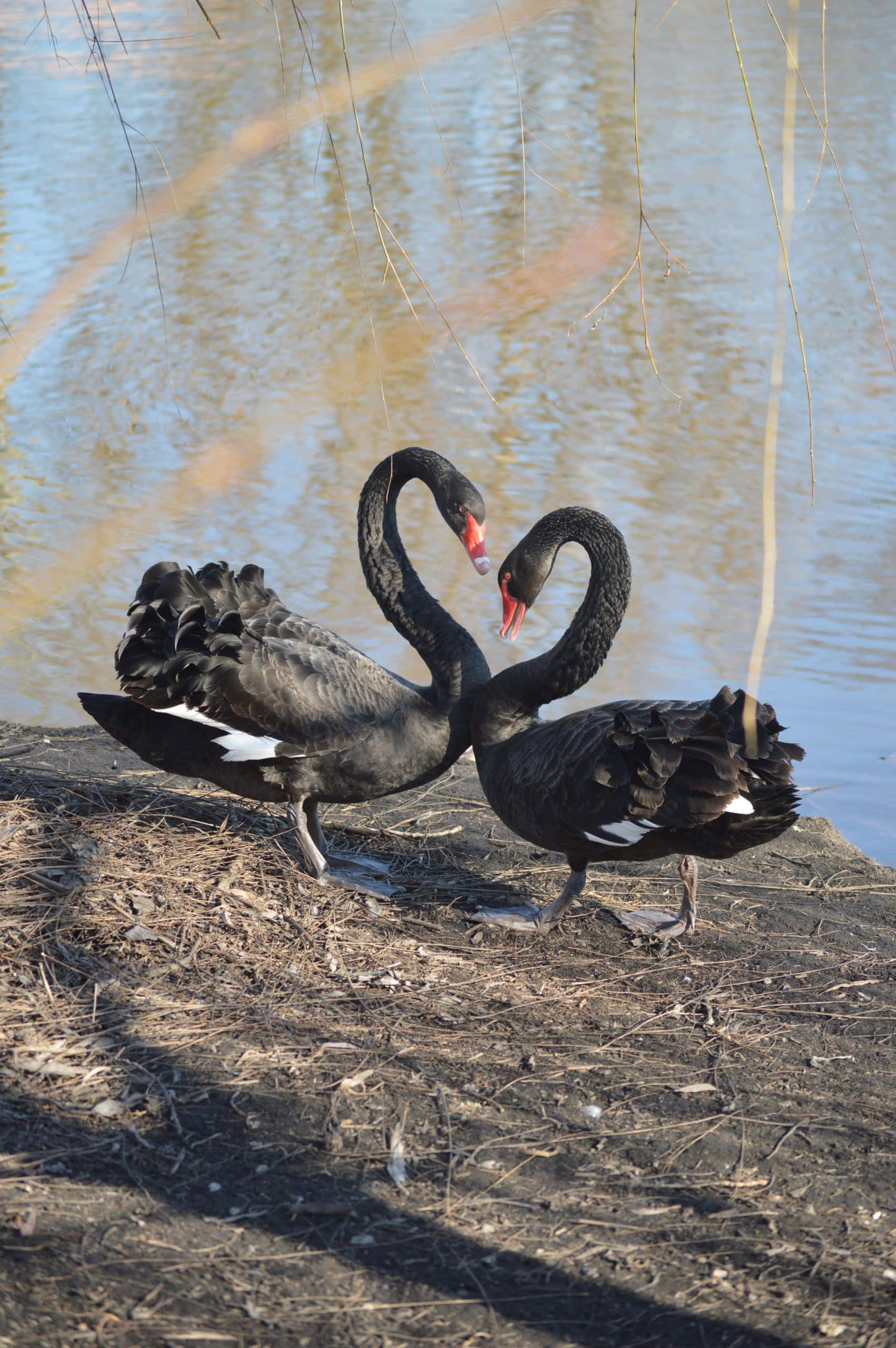
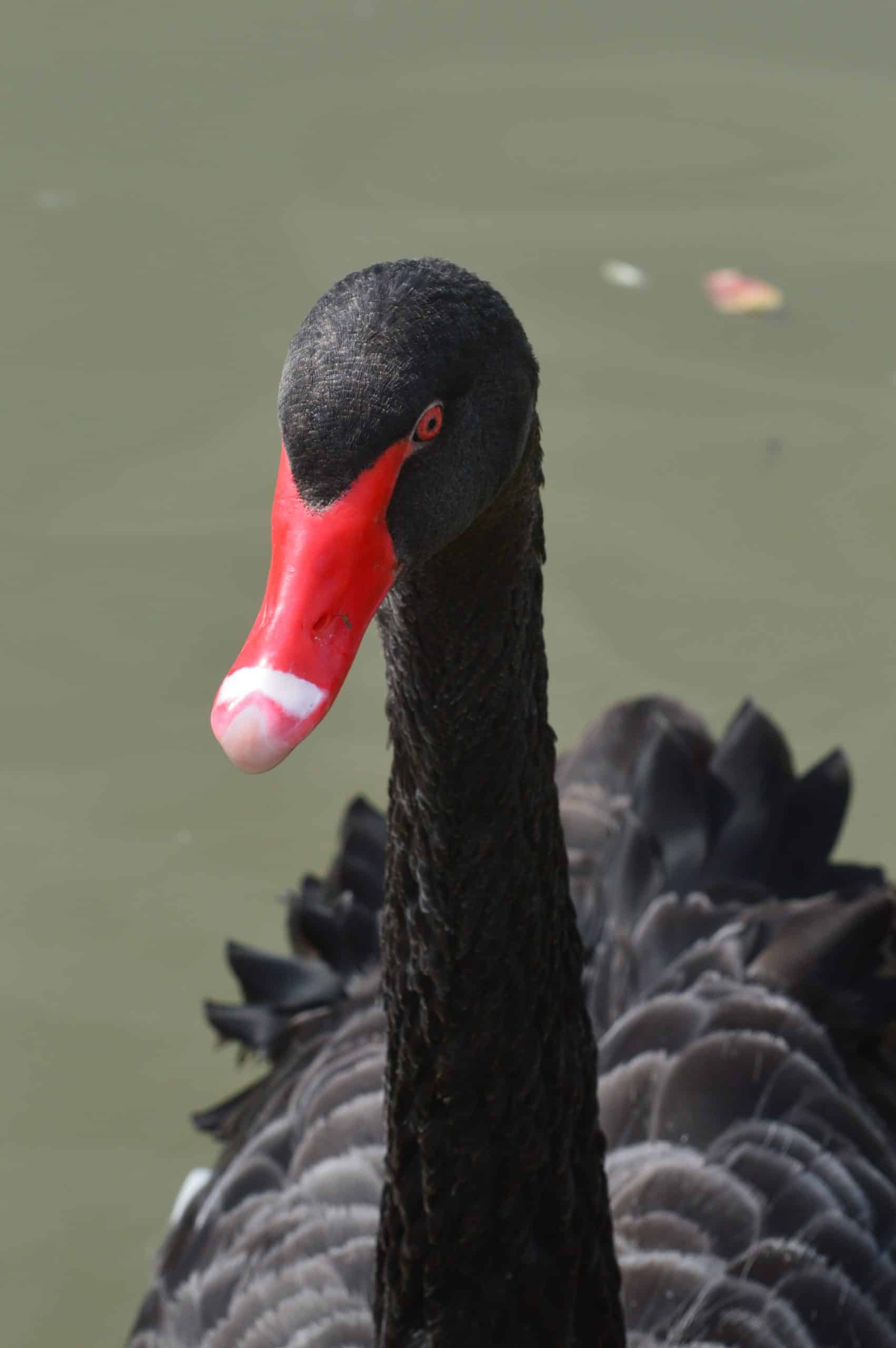
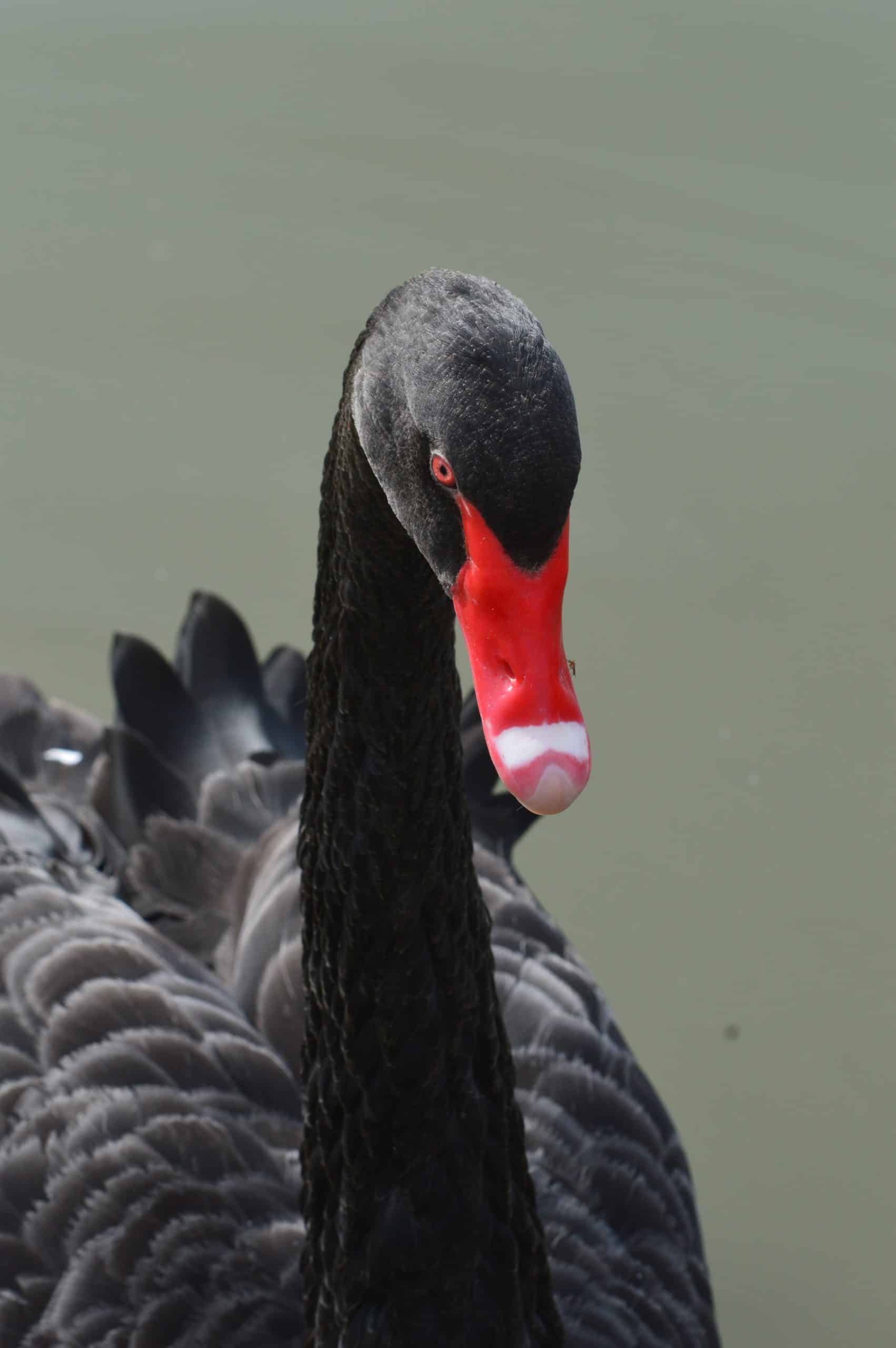
They are large, almost completely black birds with the longest necks of all swans compared to their body size. Their characteristic black feathers are edged with grey feathers and ruffled on the wings. The bright white flight feathers are only visible during the bird’s flight. The beak is large with an orange-red and white band at the tip.
It feels good almost anywhere that is sufficiently humid. It is an excellent flyer, capable of flying across the entire Australian continent with occasional stops where it only needs temporary water sources. In particularly favourable locations, swans can stay all year round. They are one of the most adaptable birds.
It builds a large nest so that one side of it almost touches the water. Occasionally, it nests in wetlands or builds its nest floating on water. It is less aggressive towards members of its own species than other swans and sometimes as many as 10,000 individuals nest in one place with regular nest spacing. The young are born at two- to three-day intervals. One parent leads them to the water while the other takes care of the rest of the clutch. When all the young hatch, the whole family meets on the water.
It is not rare to see a nest full of little swans floating on the surface of the lake during the breeding season. The black swan usually attaches its nest to plants on the shore, but it happens that the nest tears off.
The first black swans were introduced to Europe in the mid-18th century. In England, they were first regarded as a symbol of bad luck.
Black swans usually migrate at night, in regular formations and at high altitudes.
Black swan
Cygnus atratus
Black swan
Date of hatching
04. 07. 2017
Order
Family
BODY LENGTH
1.1-1.4 m male
female is a bit smaller
Weight
5,7 kg
LIFE EXPECTANCY
20-40 years
WINGSSPAN
1,6-2 m
INCUBATION PERIOD
35-45 days
NUMBER OF EGGS
5-6 light green eggs
CARE OF THE YOUNG
at the age of 100 days, they can fly
Occurrence
originally Australia, bred all over the world
Food
various plants, e.g., white water-crowfoot and duckweeds
Beautiful black swans can be seen moving on our lake. These majestic birds inspire respect and admiration.
This animal can not be adopted
They are large, almost completely black birds with the longest necks of all swans compared to their body size. Their characteristic black feathers are edged with grey feathers and ruffled on the wings. The bright white flight feathers are only visible during the bird’s flight. The beak is large with an orange-red and white band at the tip.
It feels good almost anywhere that is sufficiently humid. It is an excellent flyer, capable of flying across the entire Australian continent with occasional stops where it only needs temporary water sources. In particularly favourable locations, swans can stay all year round. They are one of the most adaptable birds.
It builds a large nest so that one side of it almost touches the water. Occasionally, it nests in wetlands or builds its nest floating on water. It is less aggressive towards members of its own species than other swans and sometimes as many as 10,000 individuals nest in one place with regular nest spacing. The young are born at two- to three-day intervals. One parent leads them to the water while the other takes care of the rest of the clutch. When all the young hatch, the whole family meets on the water.
It is not rare to see a nest full of little swans floating on the surface of the lake during the breeding season. The black swan usually attaches its nest to plants on the shore, but it happens that the nest tears off.
The first black swans were introduced to Europe in the mid-18th century. In England, they were first regarded as a symbol of bad luck.
Black swans usually migrate at night, in regular formations and at high altitudes.