Budgerigar
Melopsittacus undulatus
Andulky
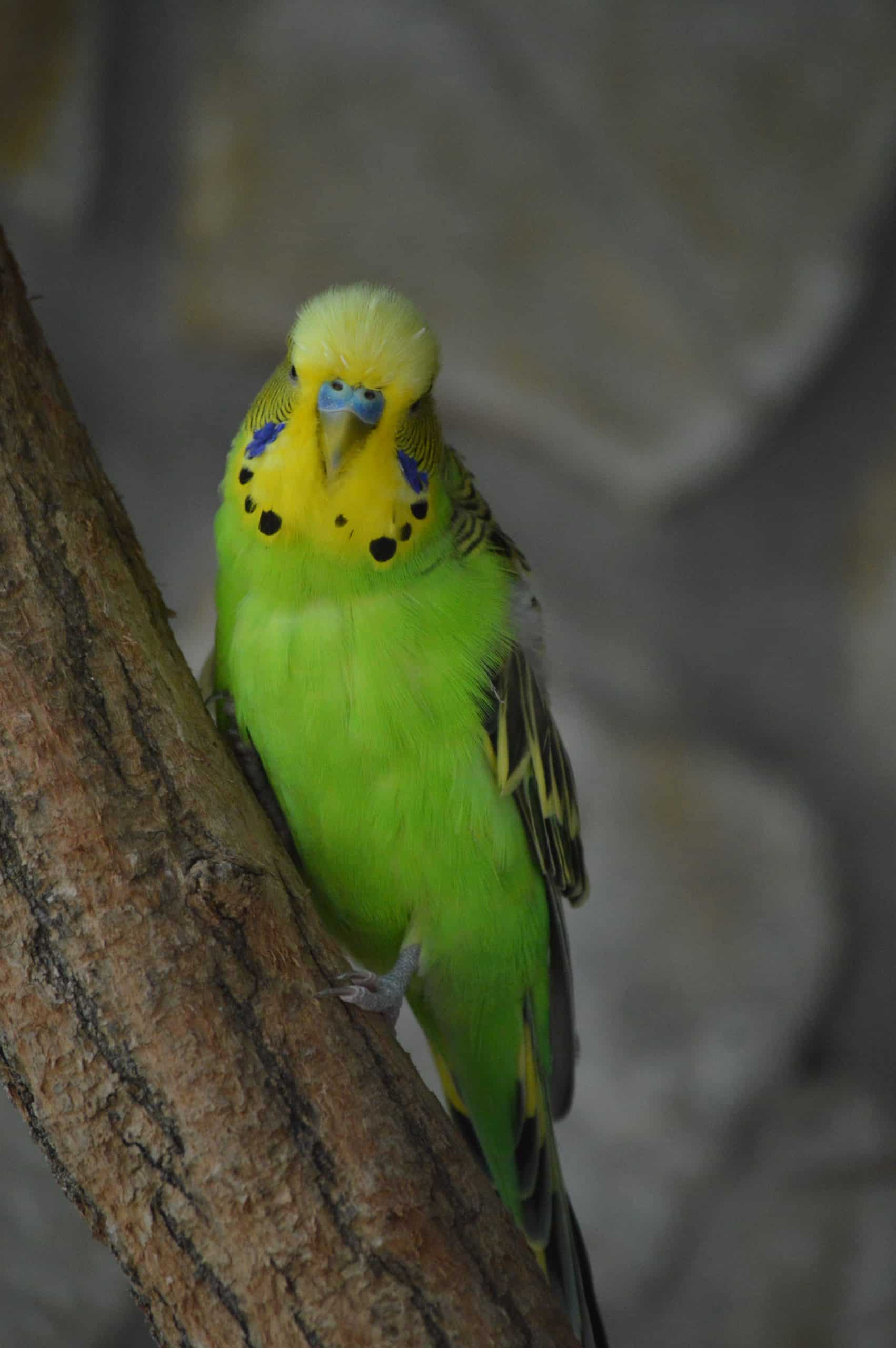

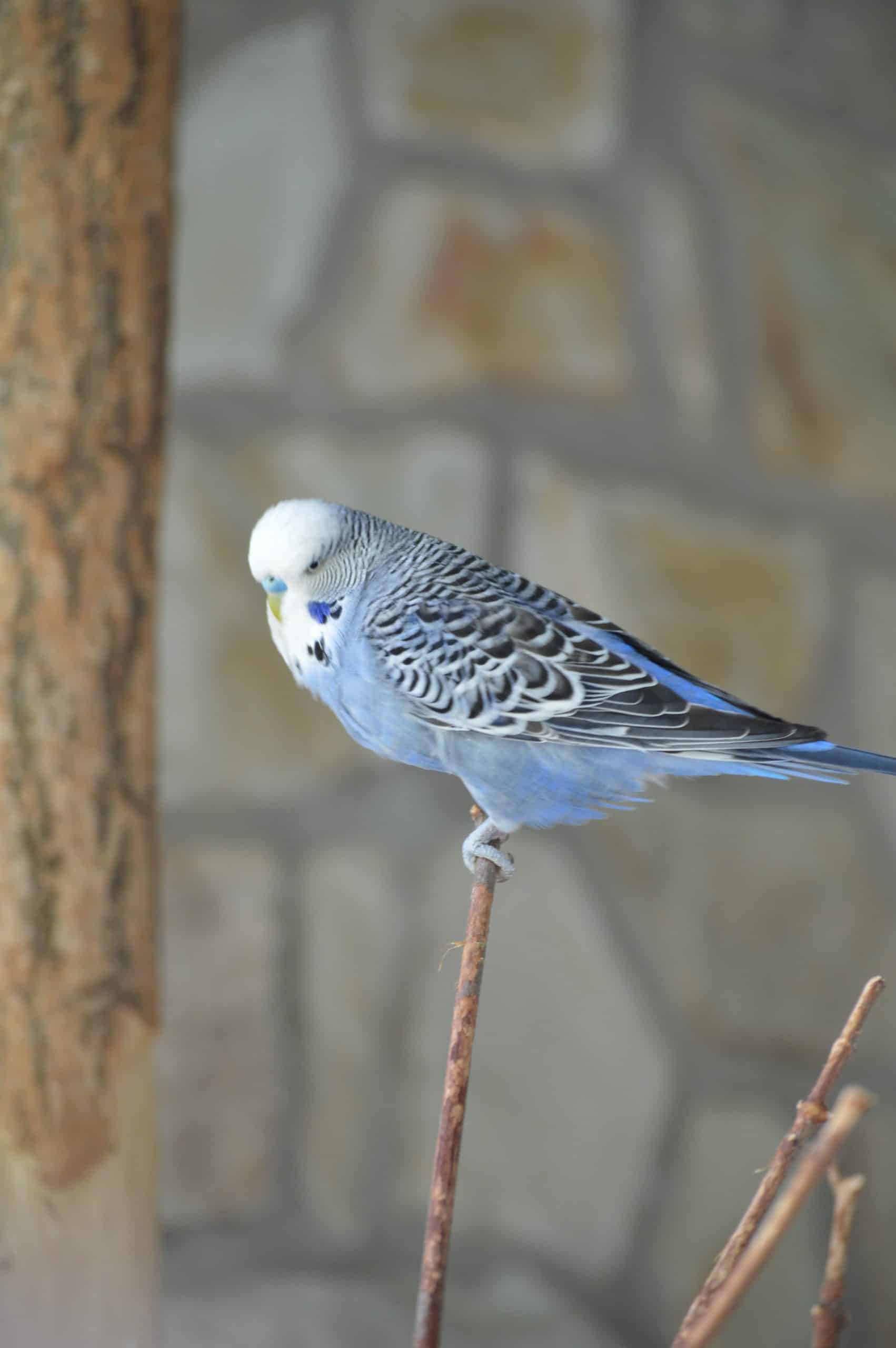
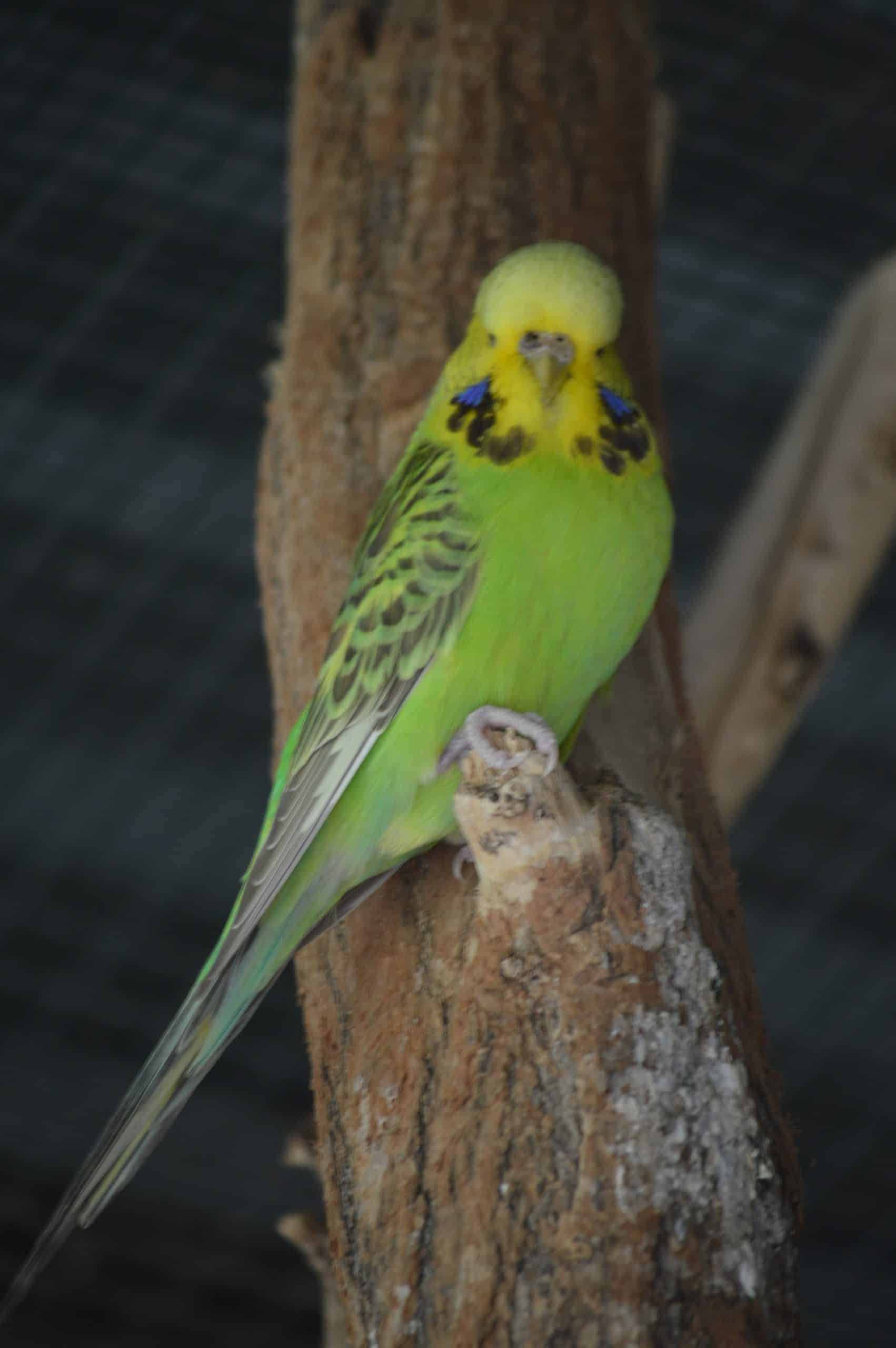

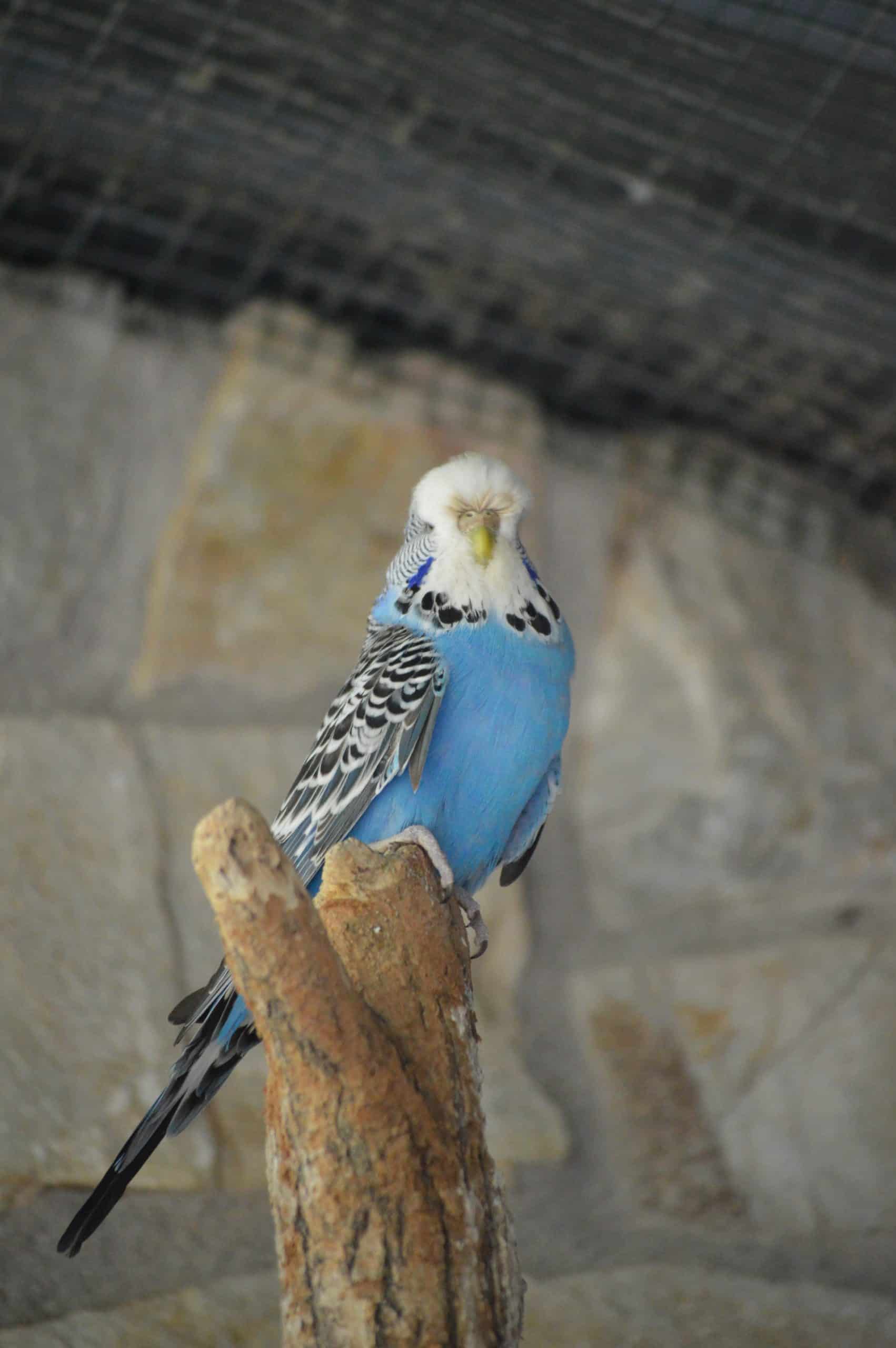
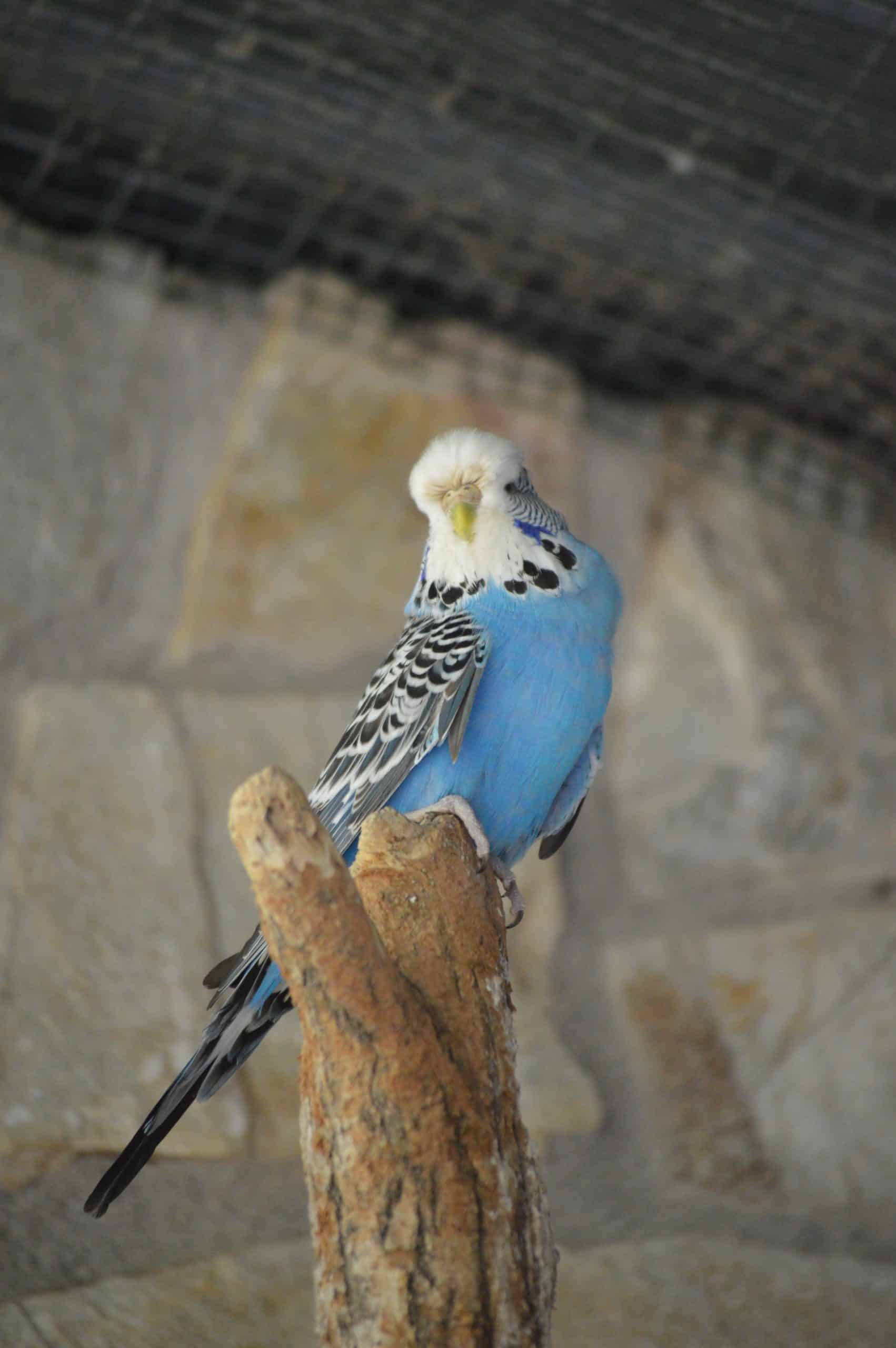

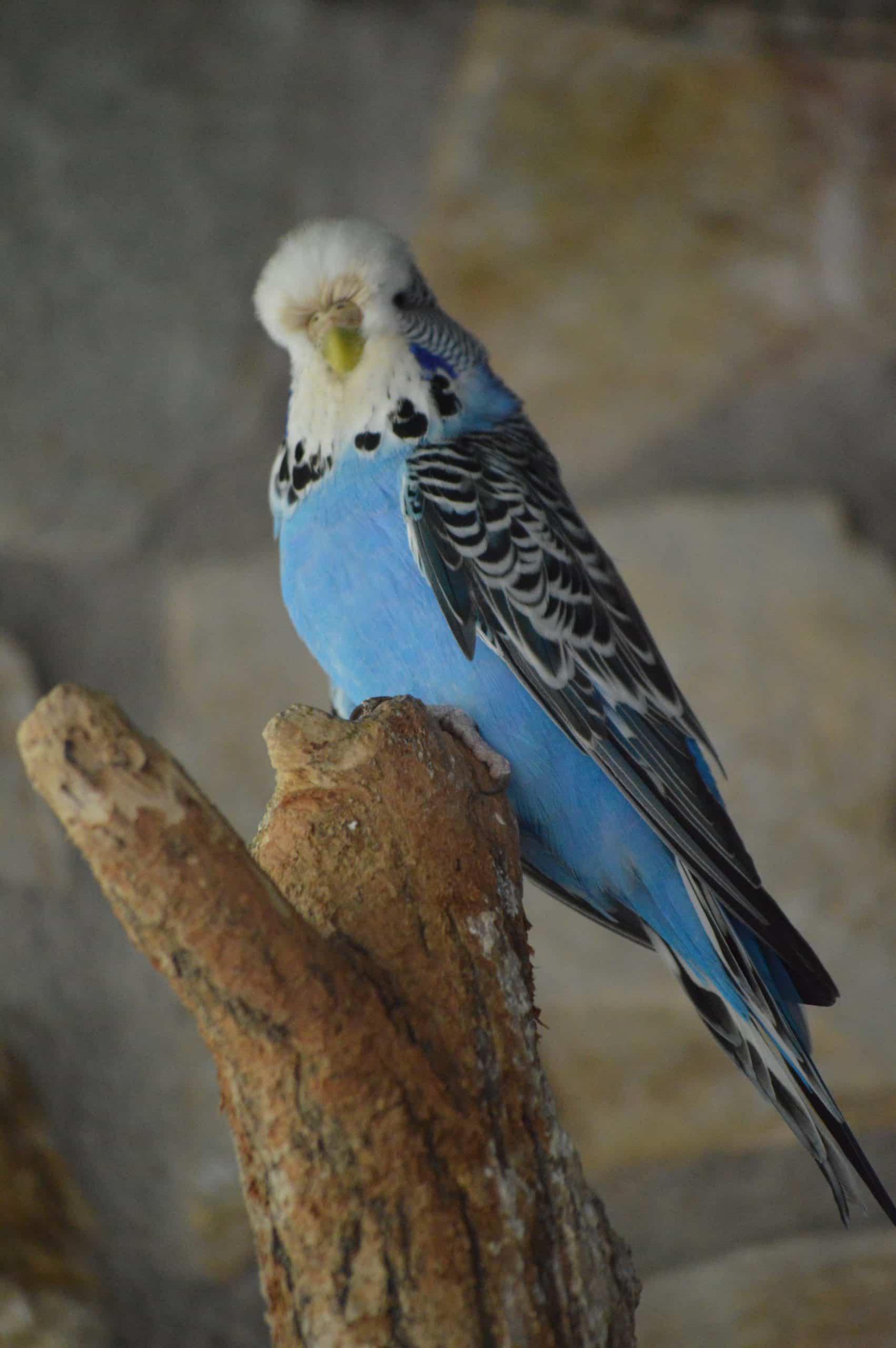
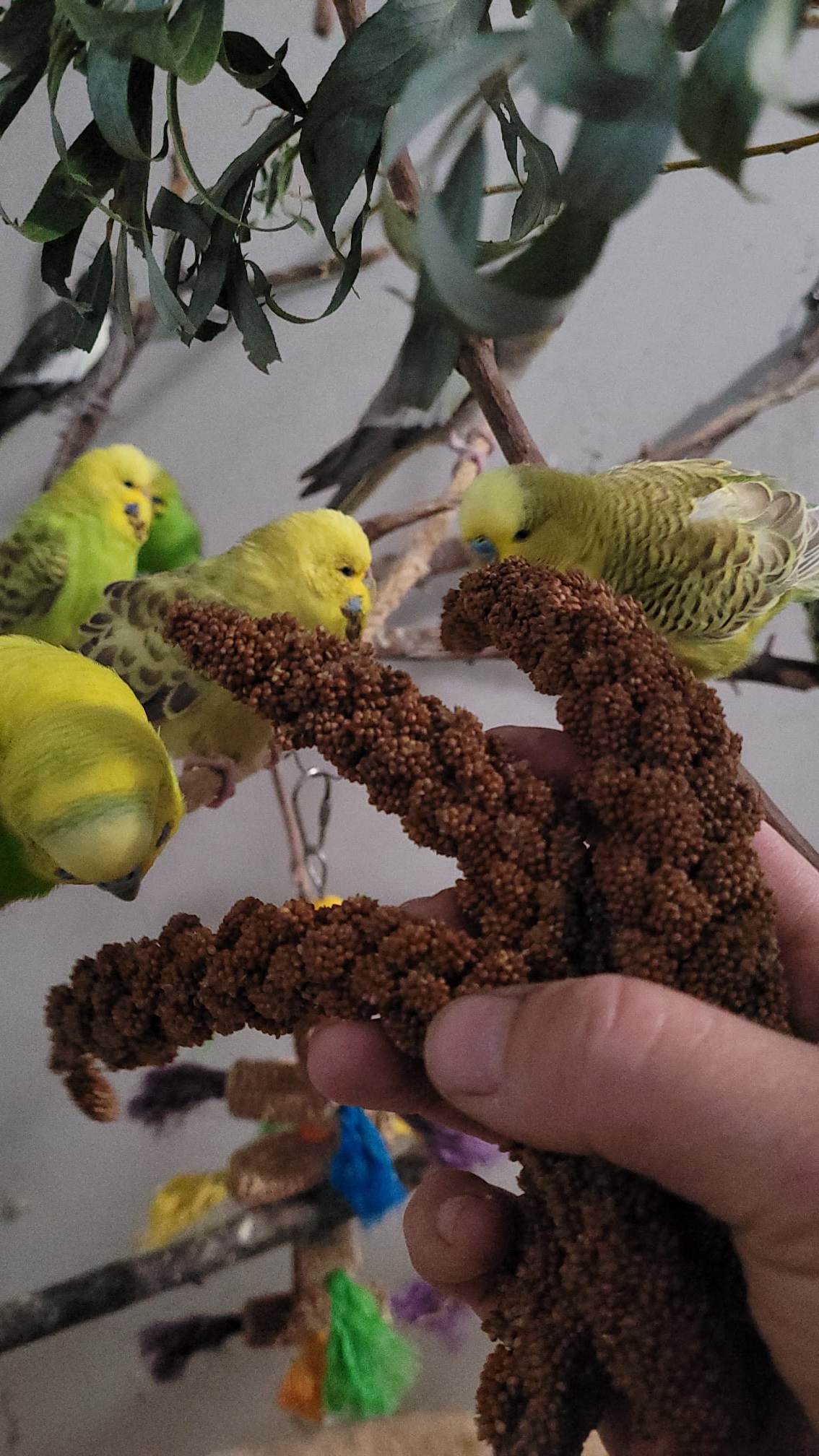

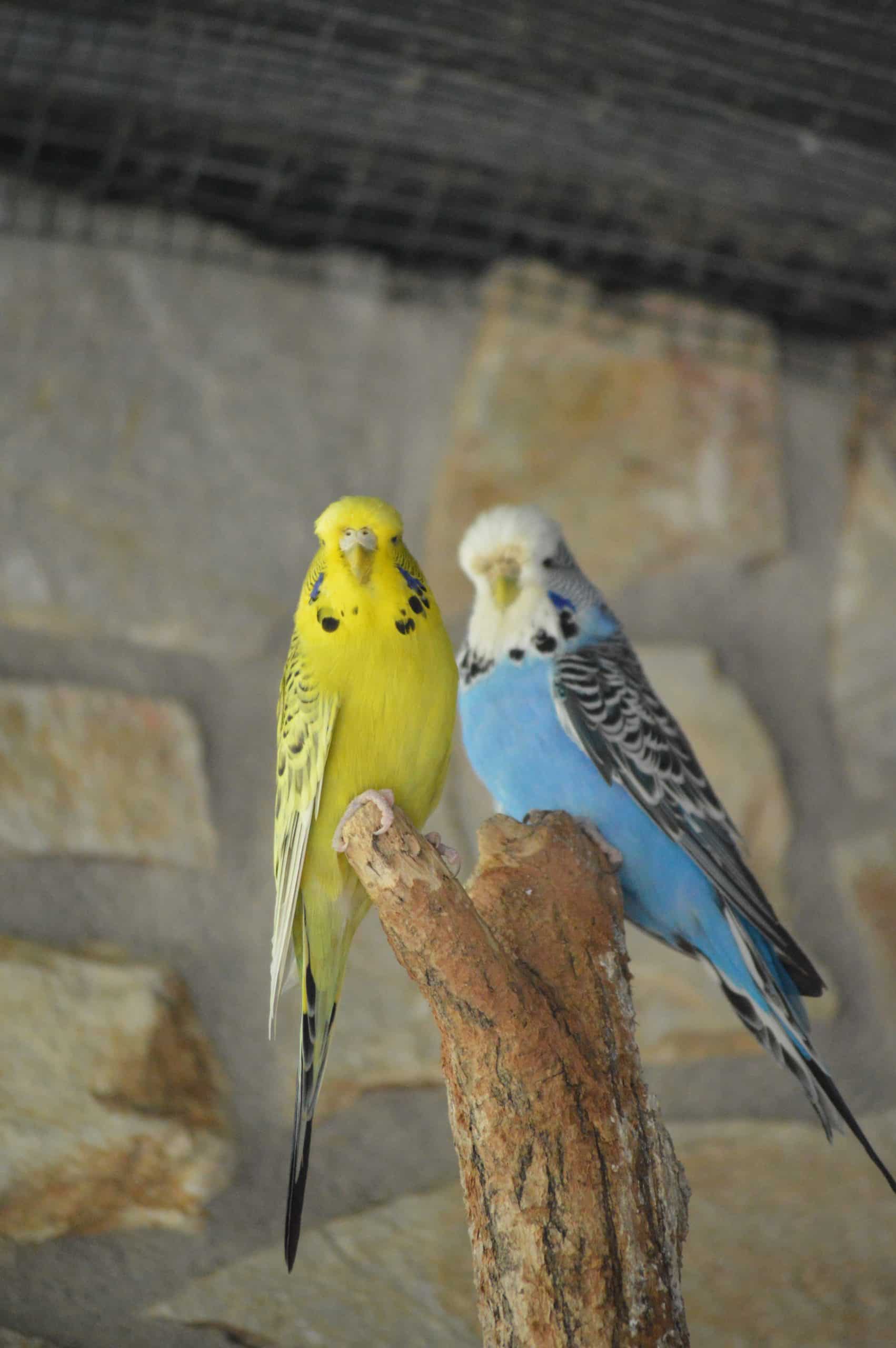
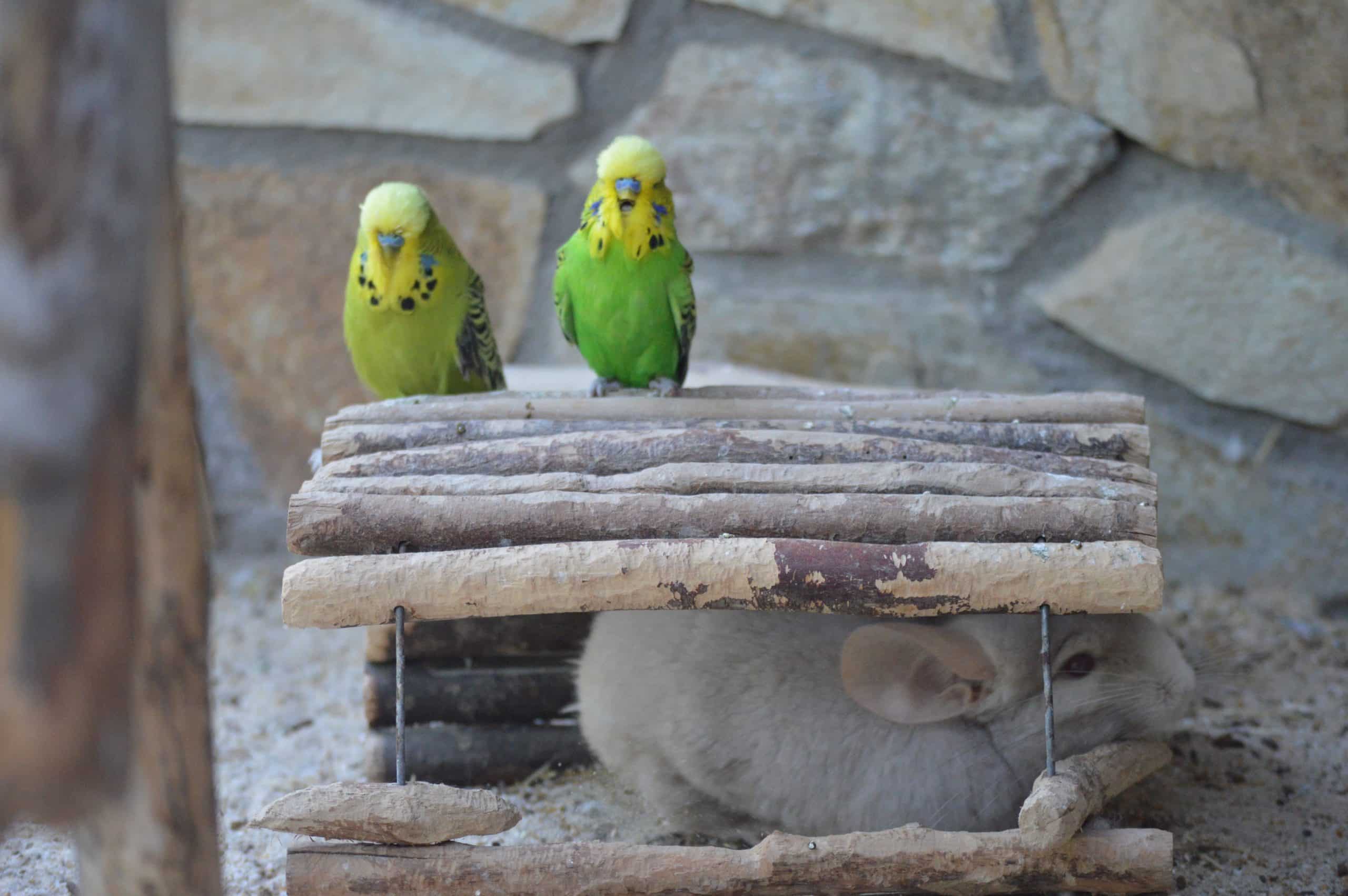
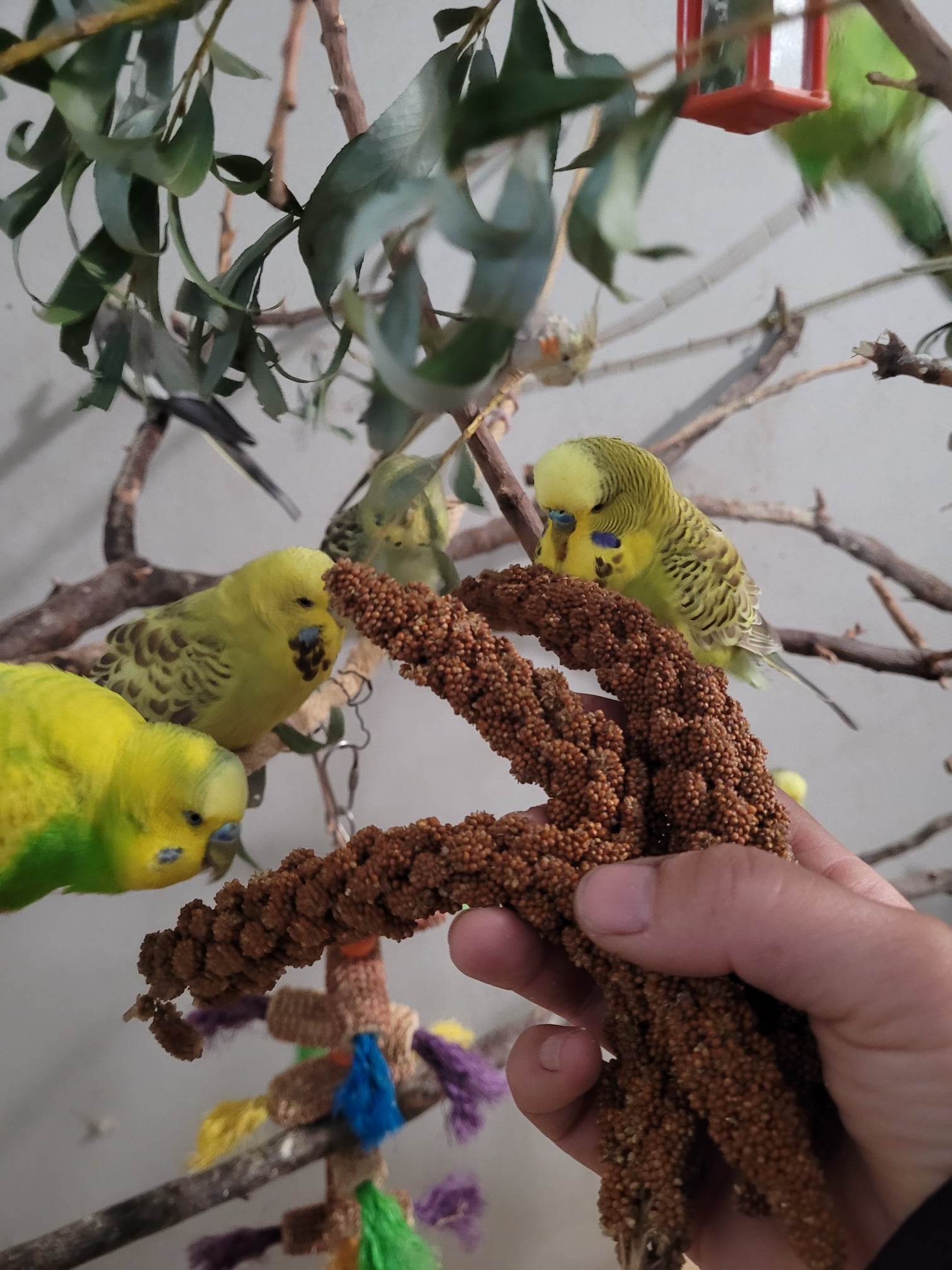
Budgerigars are housed in our exhibit along with cockatiels and chinchillas. They have both outdoor and indoor spaces available. They formed a small flock of about thirty individuals of different colors. They like hanging fruit and Senegalese millet.
Parakeets are commonly kept as pets. However, these birds are social creatures, they like to chirp and fly, and at the same time they are not orderly birds, which should be considered when buying them for the home.
These animals cannot be adopted.
Sexual dimorphism is visible in the cere. The female has grey-white or yellow cere, the male has blue cere. Birds of both sexes do not differ in size or colouration. The wild form has a typical yellow-green colour.
Wild budgerigars lead a nomadic lifestyle. In places rich in food, they concentrate into huge flocks that stay, nest, and move on only when the food source is depleted. It is generally a social bird and likes to associate at least in small flocks. Individual birds stay connected with each other by constant chirping and twittering.
They form permanent couples for a long time, sometimes for a lifetime. The female often chooses the nest site herself and sits on the eggs herself. The male brings her food. One month after hatching, the young are able to fly.
During the heatwave that affected Australia in 1932, people watched a flock of budgerigars, which may have consisted of several million birds, as they migrated north. At one observation post, it took four hours for the flock to fly past.
The budgerigar is said to be an excellent “weather forecaster”. If it appears in large number in a particular place, rain can soon be expected.
Budgerigar
Melopsittacus undulatus
Andulky
Date of hatching
Various
Order
Family
BODY LENGTH
17-20 cm
Weight
45-50 g
LIFE EXPECTANCY
3-4 years
INCUBATION PERIOD
17-20 days
NUMBER OF EGGS
usually 1-3
NUMBER OF EGGS
4-8 white round eggs
Occurrence
Australia
Food
seeds
Budgerigars are housed in our exhibit along with cockatiels and chinchillas. They have both outdoor and indoor spaces available. They formed a small flock of about thirty individuals of different colors. They like hanging fruit and Senegalese millet.
Parakeets are commonly kept as pets. However, these birds are social creatures, they like to chirp and fly, and at the same time they are not orderly birds, which should be considered when buying them for the home.
These animals cannot be adopted.
Sexual dimorphism is visible in the cere. The female has grey-white or yellow cere, the male has blue cere. Birds of both sexes do not differ in size or colouration. The wild form has a typical yellow-green colour.
Wild budgerigars lead a nomadic lifestyle. In places rich in food, they concentrate into huge flocks that stay, nest, and move on only when the food source is depleted. It is generally a social bird and likes to associate at least in small flocks. Individual birds stay connected with each other by constant chirping and twittering.
They form permanent couples for a long time, sometimes for a lifetime. The female often chooses the nest site herself and sits on the eggs herself. The male brings her food. One month after hatching, the young are able to fly.
During the heatwave that affected Australia in 1932, people watched a flock of budgerigars, which may have consisted of several million birds, as they migrated north. At one observation post, it took four hours for the flock to fly past.
The budgerigar is said to be an excellent “weather forecaster”. If it appears in large number in a particular place, rain can soon be expected.