Yellow-collared lovebird
Agapornis personatus
Agapornisy
Lovebirds are popular pets. However, before buying or donating such an animal, you must realize that despite its small stature, it is already a parrot. They need to occupy their minds, they are highly intelligent, they need social contact, and their vocal range exceeds their size. They form strong pair bonds for life, and since they are African species, they need a temperate area for the winter in which they can hide from the cold at night. In Malkia Park, we keep variegated lovebirds together in an exhibit with other African bird species, with which they breed.
These animals cannot be adopted.
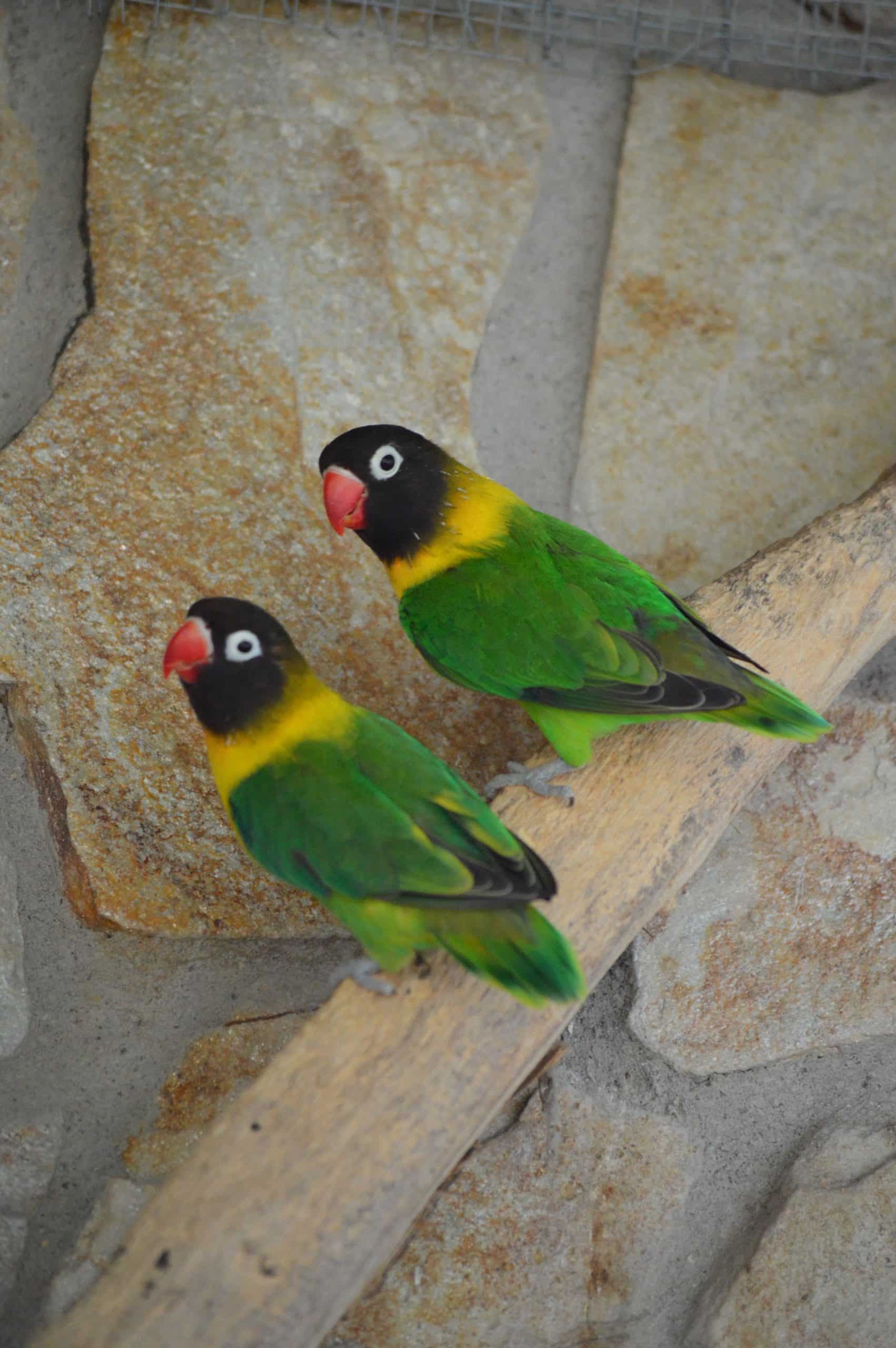
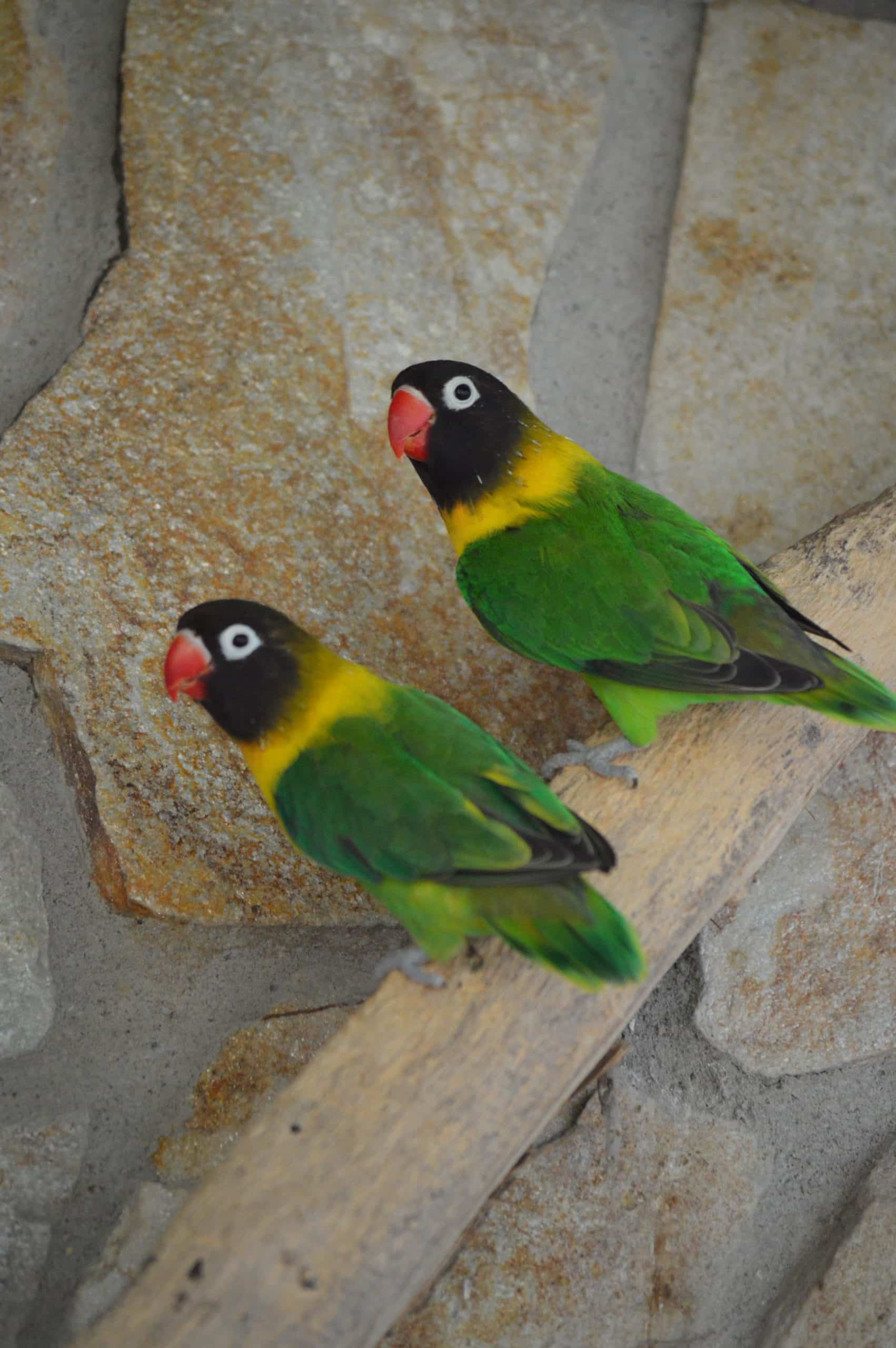
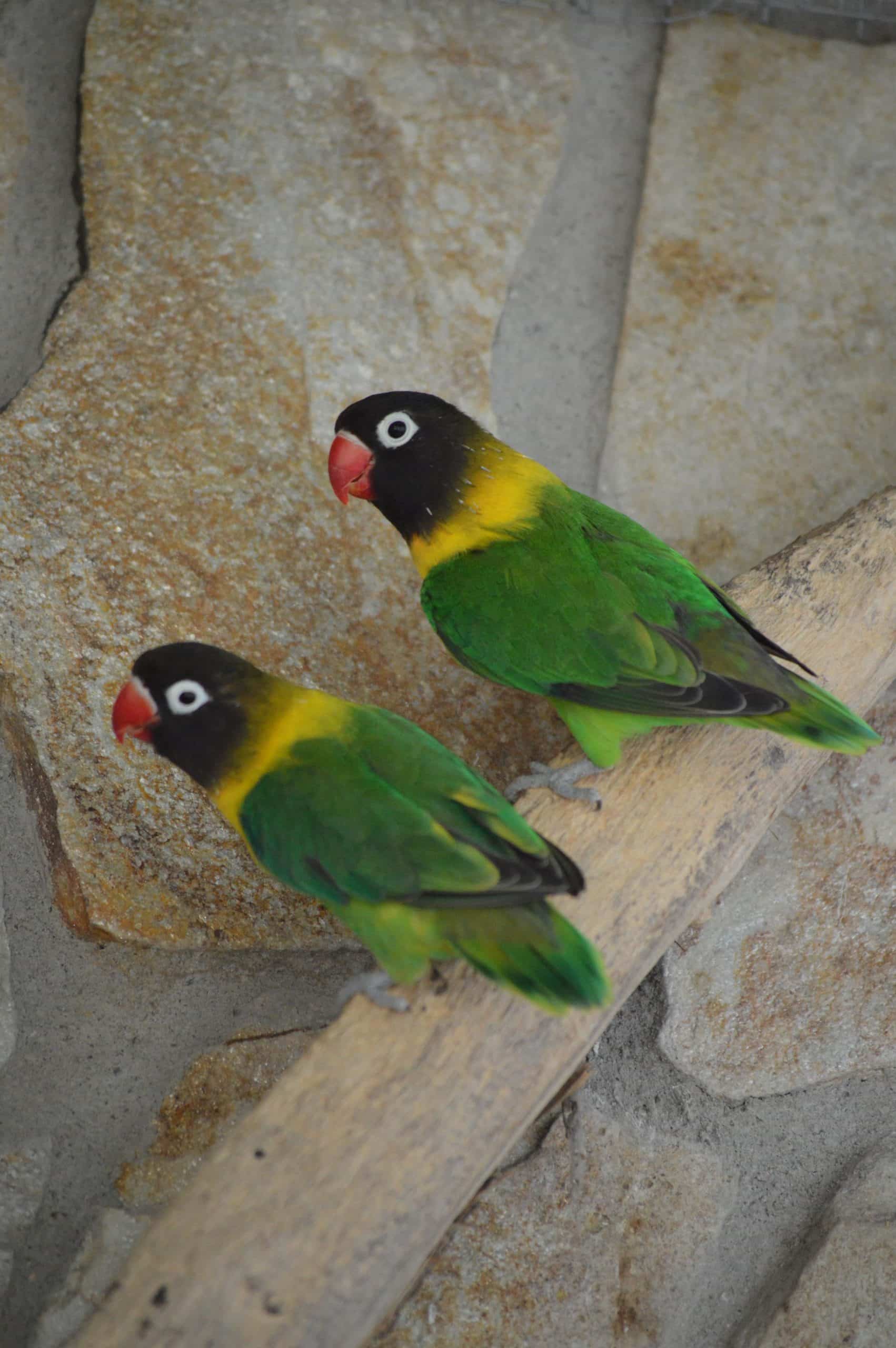
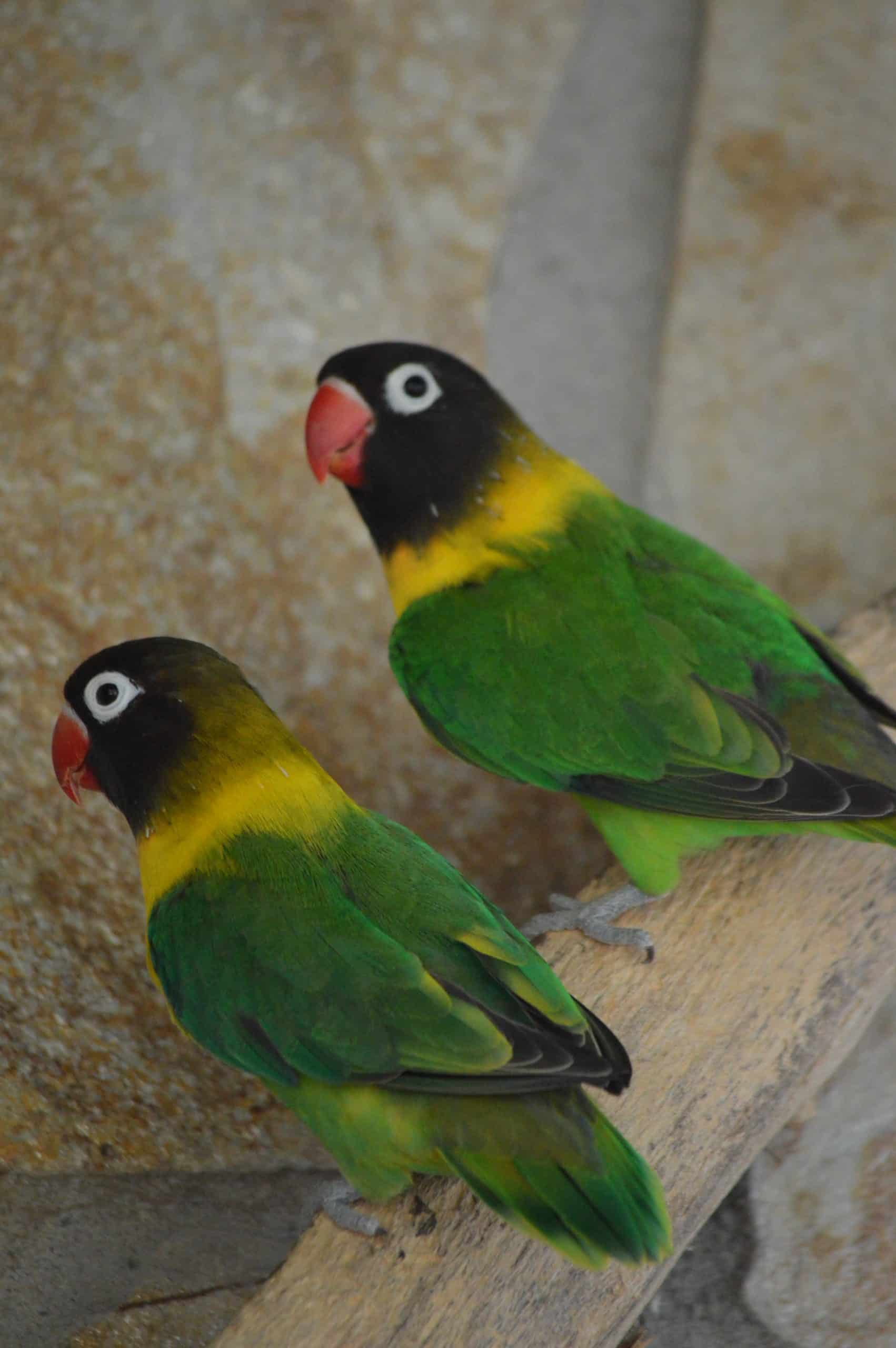
The head is black brown with a red beak and white ring around the eye. The chest is yellow. Belly, wings, and tail are green. All tail feathers can have an addition of orange and black colour, individually variable. A distinctive white ring around the eyes is also a typical feature. Various colour mutations have been bred in captivity.
All lovebirds are known to have a strong mate bond. The male and female stay together all the time, even when they are in a large flock. They regularly clean each other, preen their feathers, and touch each other’s beaks. Yellow-collared lovebird also ventures into city parks. They are very noisy and social creatures. The female searches for the nest herself, builds it herself, and is also its main protector. She also sits on the eggs by herself, both parents participate in the feeding.
Some lovebirds carry nest-building material in their feathers, which is a very rare phenomenon in birds. The female holds both plant parts and bark firmly to her body using feathers controlled by muscles that also allow them to fluff up. This way, she can carry a much larger load than she could with her beak.
In English, agapornis is called “lovebird”. They have really strong emotional ties.
The different species of lovebirds are so closely related that they often interbreed with each other in captivity. Some breeders consider such connections undesirable. Fischer’s lovebird and yellow-collared lovebird interbreed both in captivity and in the wild.
Yellow-collared lovebird
Agapornis personatus
Agapornisy
Date of hatching
Unknown
Order
Family
BODY LENGTH
13-15 cm
Weight
43-47 g
LIFE EXPECTANCY
ca 10 years, but they can also live for more than 20 years
INCUBATION PERIOD
22-25 days
NUMBER OF EGGS
3-8 eggs
CARE OF THE YOUNG
5-6 weeks
Occurrence
Africa and Madagascar
Food
seeds, fruits, plant buds, flowers, insect
Lovebirds are popular pets. However, before buying or donating such an animal, you must realize that despite its small stature, it is already a parrot. They need to occupy their minds, they are highly intelligent, they need social contact, and their vocal range exceeds their size. They form strong pair bonds for life, and since they are African species, they need a temperate area for the winter in which they can hide from the cold at night. In Malkia Park, we keep variegated lovebirds together in an exhibit with other African bird species, with which they breed.
These animals cannot be adopted.
The head is black brown with a red beak and white ring around the eye. The chest is yellow. Belly, wings, and tail are green. All tail feathers can have an addition of orange and black colour, individually variable. A distinctive white ring around the eyes is also a typical feature. Various colour mutations have been bred in captivity.
All lovebirds are known to have a strong mate bond. The male and female stay together all the time, even when they are in a large flock. They regularly clean each other, preen their feathers, and touch each other’s beaks. Yellow-collared lovebird also ventures into city parks. They are very noisy and social creatures. The female searches for the nest herself, builds it herself, and is also its main protector. She also sits on the eggs by herself, both parents participate in the feeding.
Some lovebirds carry nest-building material in their feathers, which is a very rare phenomenon in birds. The female holds both plant parts and bark firmly to her body using feathers controlled by muscles that also allow them to fluff up. This way, she can carry a much larger load than she could with her beak.
In English, agapornis is called “lovebird”. They have really strong emotional ties.
The different species of lovebirds are so closely related that they often interbreed with each other in captivity. Some breeders consider such connections undesirable. Fischer’s lovebird and yellow-collared lovebird interbreed both in captivity and in the wild.