Trumpeter swan
Cygnus buccinator
Trumpeter swan
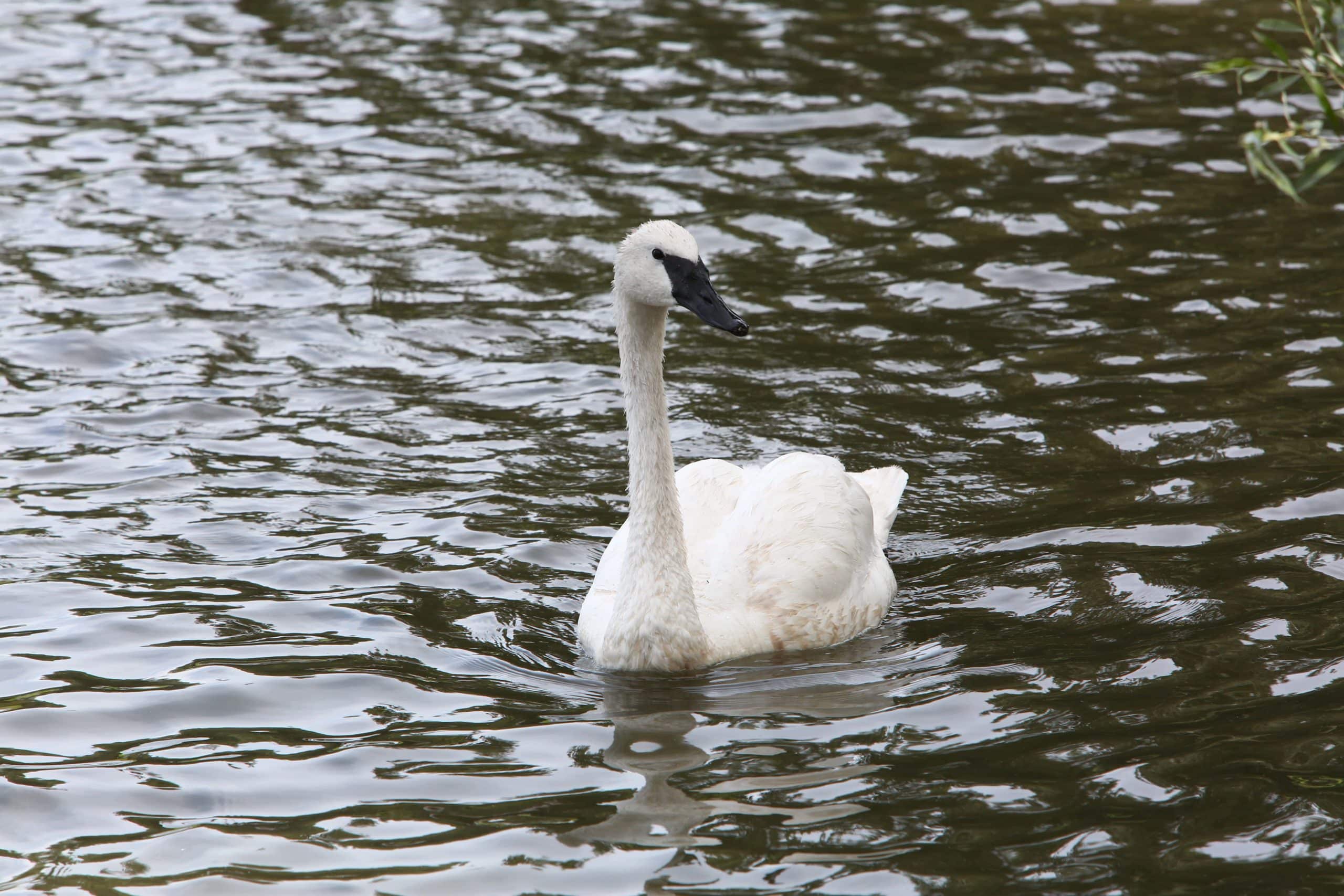
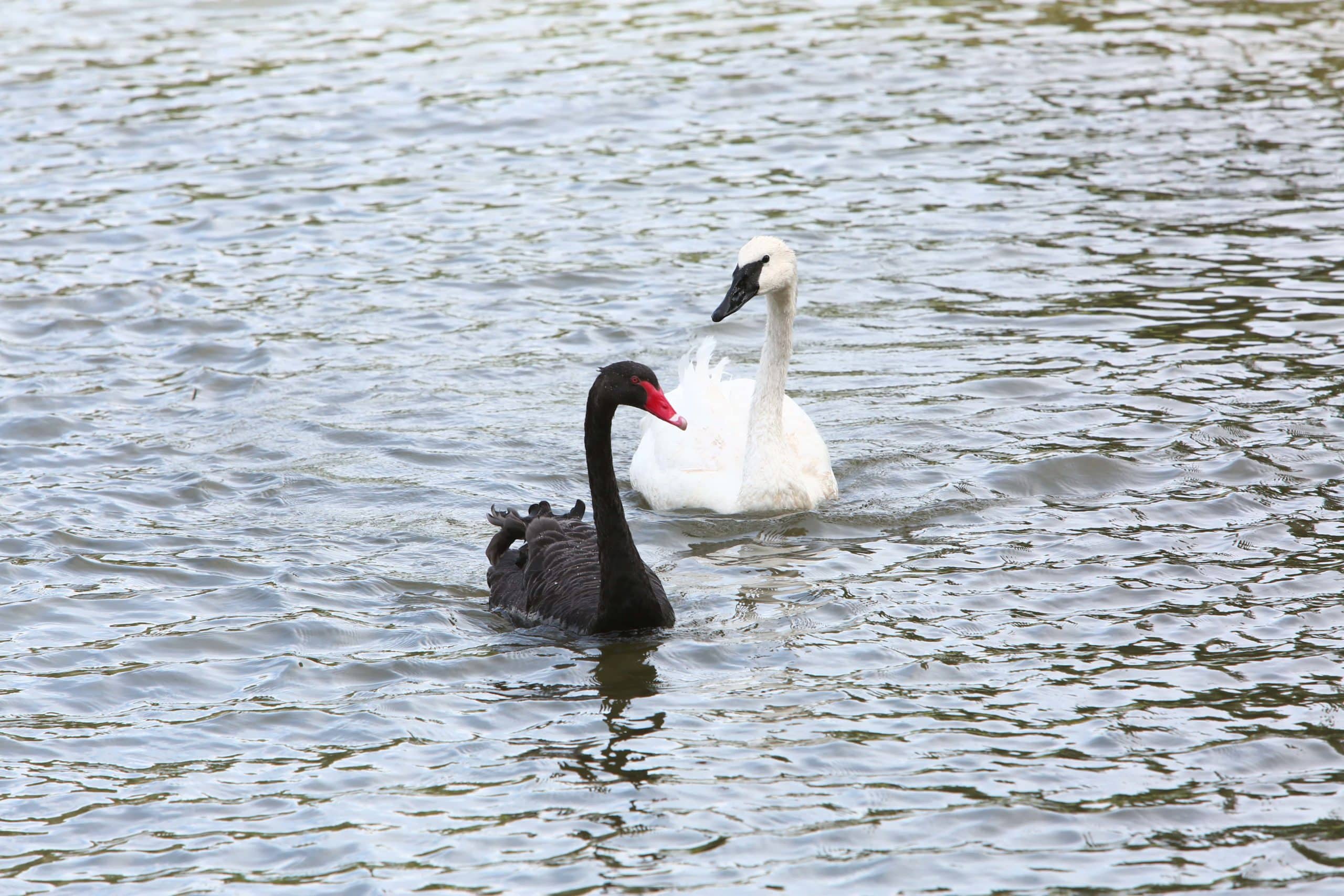
You can find our whooper swan on the big lake. An attentive and patient visitor can observe its behavior on the spacious water surface or hiding in various nooks and crannies by the lake.
This animal can not be adopted
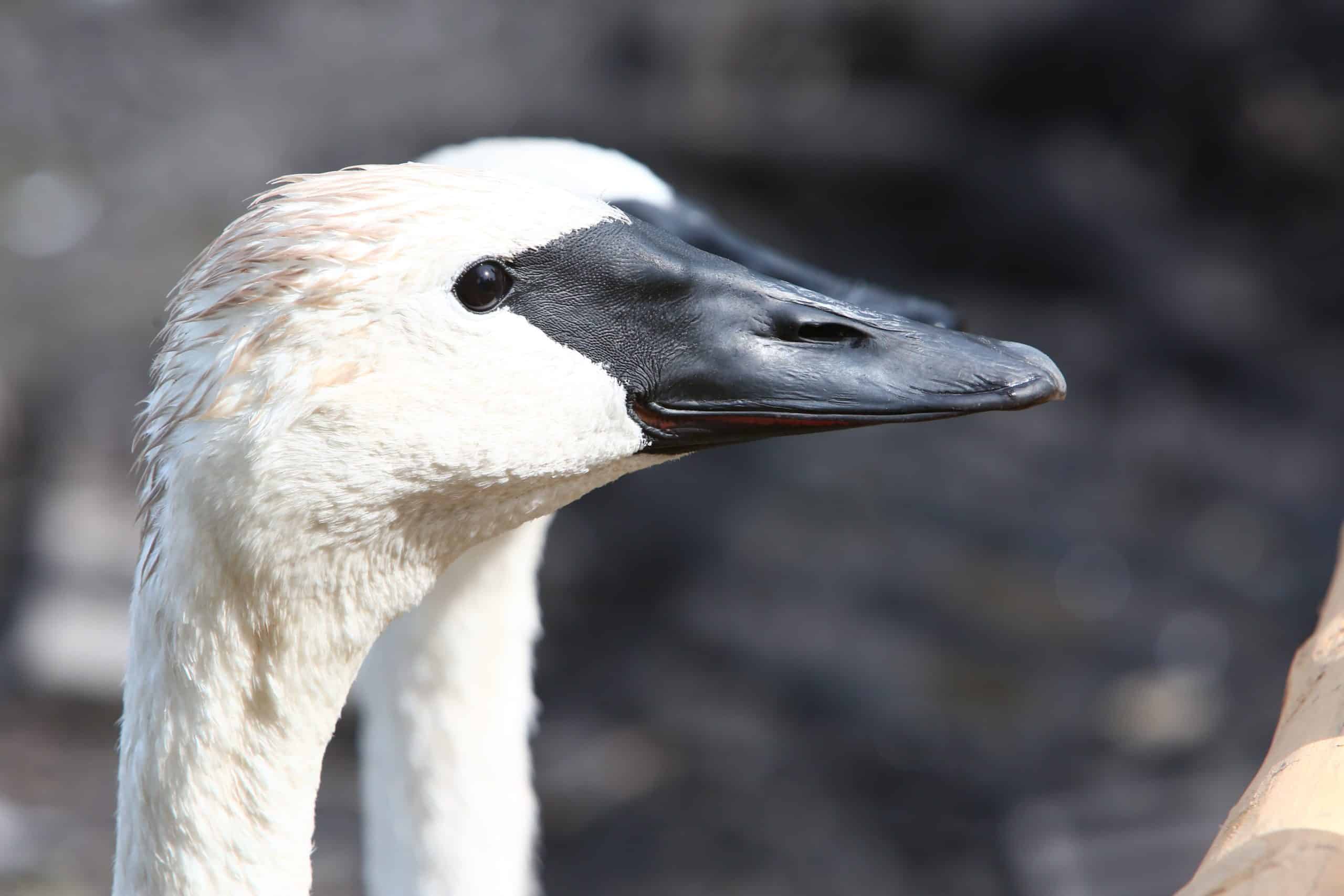
The trumpeter swan is the largest water bird. It is a majestic bird with snow-white feathers, angular black beak, feet and legs. Up close, a thin orange-red line can be seen at the base of the beak. Both males and females have a deep, resonant voice.
Naturally found only in North America, it is the rarest of the eight swan species.
Swans form pairs for life. They often like to return year after year to the same nest, which can be up to three metres in size. Both sexes participate in its construction. The young have grey down and are completely independent soon after birth. In case of danger, the parents hide them and fly away themselves. The young often stay with their parents even after they can fly many times until the next season.
The trumpeter swan was abundant in North America, but when Europeans arrived there, they nearly wiped it out. They are territorial animals and often react offensively rather than fleeing when defending their nests, which has made the hunters’ job much easier.
There is a legend about a dying swan. Even in the opinion of ornithologists, the heavy breathing of a dying swan does indeed sound like a mournful song.
During the breeding season, trumpeter swans defend their nest and territory very spiritedly. If other swans are circling over their nest, they will often even take off to defend their territory.
Swans living inland do not migrate like their coastal relatives, but remain in their habitat year-round.
Trumpeter swan
Cygnus buccinator
Trumpeter swan
Date of hatching
Unknown
Order
Family
BODY LENGTH
150-180 cm
Weight
11.9 kg male
9.4 kg female
LIFE EXPECTANCY
up to 30 years
INCUBATION PERIOD
33-37 days
CARE OF THE YOUNG
3-4 months
NUMBER OF EGGS
3-9
Occurrence
year-round middle of the North America
Food
aquatic plants
You can find our whooper swan on the big lake. An attentive and patient visitor can observe its behavior on the spacious water surface or hiding in various nooks and crannies by the lake.
This animal can not be adopted
The trumpeter swan is the largest water bird. It is a majestic bird with snow-white feathers, angular black beak, feet and legs. Up close, a thin orange-red line can be seen at the base of the beak. Both males and females have a deep, resonant voice.
Naturally found only in North America, it is the rarest of the eight swan species.
Swans form pairs for life. They often like to return year after year to the same nest, which can be up to three metres in size. Both sexes participate in its construction. The young have grey down and are completely independent soon after birth. In case of danger, the parents hide them and fly away themselves. The young often stay with their parents even after they can fly many times until the next season.
The trumpeter swan was abundant in North America, but when Europeans arrived there, they nearly wiped it out. They are territorial animals and often react offensively rather than fleeing when defending their nests, which has made the hunters’ job much easier.
There is a legend about a dying swan. Even in the opinion of ornithologists, the heavy breathing of a dying swan does indeed sound like a mournful song.
During the breeding season, trumpeter swans defend their nest and territory very spiritedly. If other swans are circling over their nest, they will often even take off to defend their territory.
Swans living inland do not migrate like their coastal relatives, but remain in their habitat year-round.