Tufted capuchin
Cebus apella / Sapajus apella
Johny, Chicco, Gita
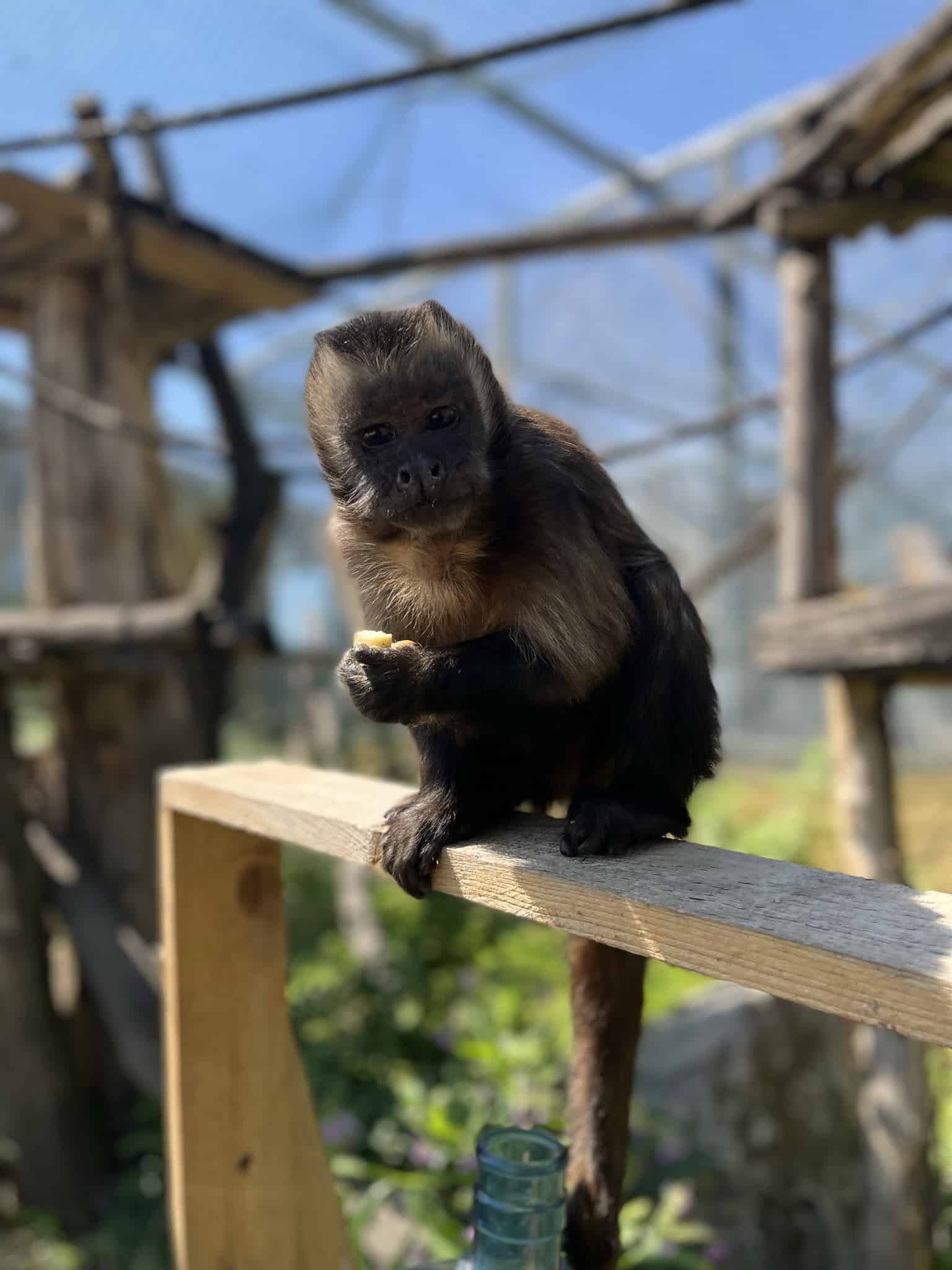
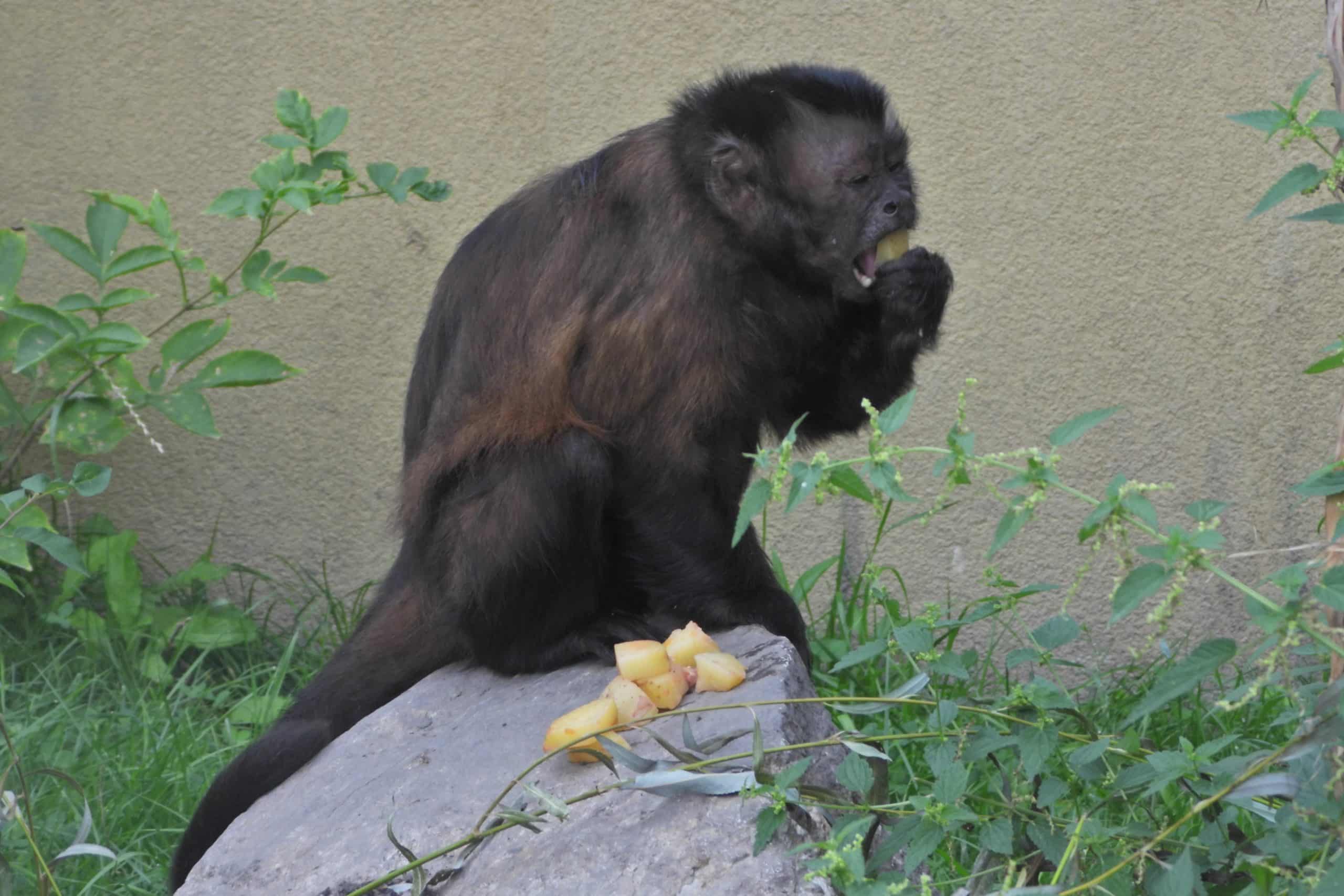
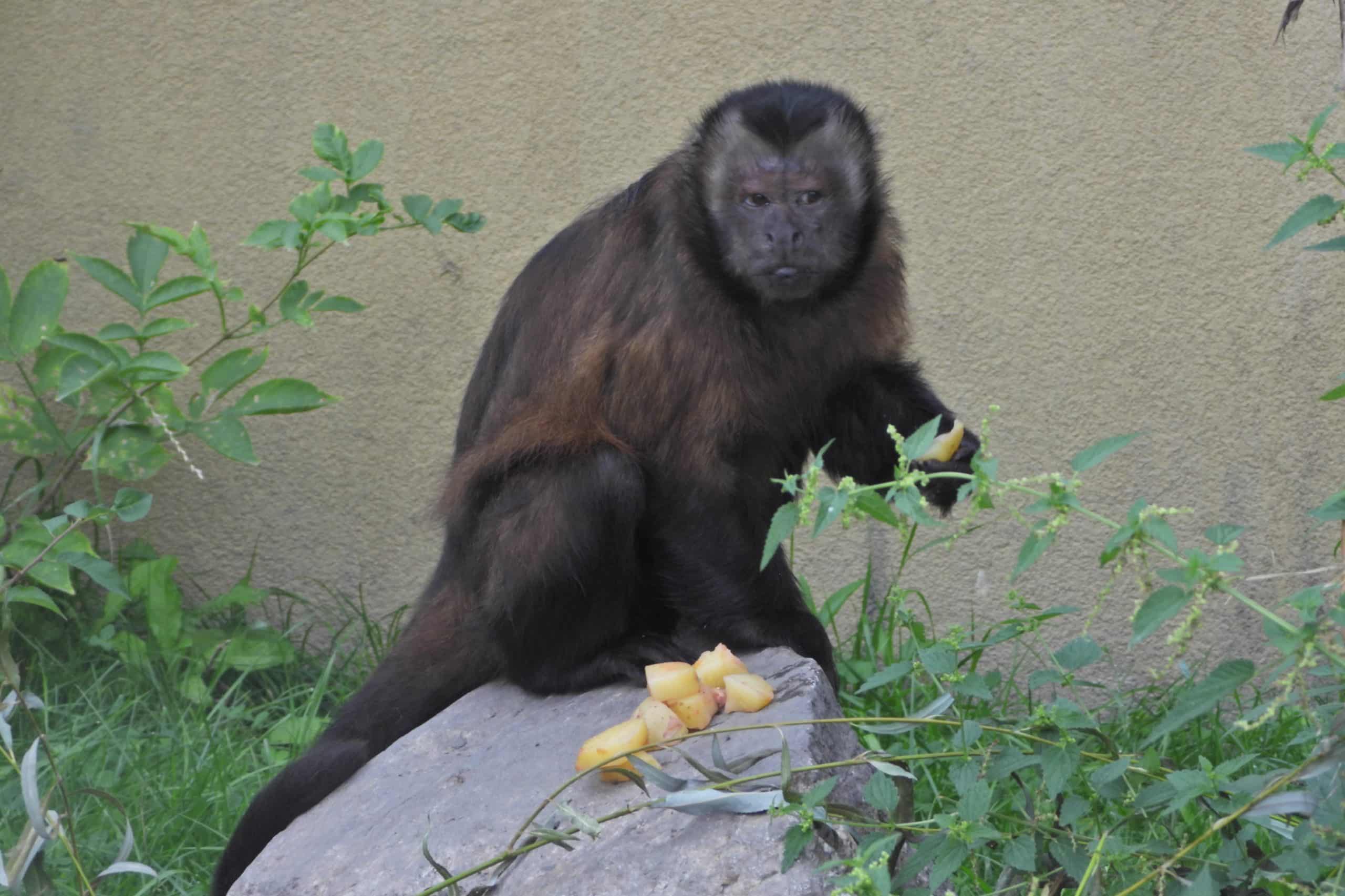
Johny, Chicco and Gita found a new home in Malkia Park.
They came to us from a private zoo abroad due to lack of space.
Visitors (and some keepers) love to observe their fascinating behavior and incredible smarts and intelligence.
Each monkey has its own specific expressions and personality.
Not yet adopted
The tufted capuchin is of rather sturdy build with a thick coat and a long tail. The coat is brown, with the belly slightly lighter than the rest of the body. The arms and legs are almost black. The tail is sensitive, strong and can be used for gripping.
They live in communities of 6 to 20 members. The troop is usually led by the dominant pair/or the dominant male. Females give birth to one young every two years, at any time of the year.
They forage for food in groups, and if one member discovers something edible, it may make a high-pitched squeaking sound to let the others know.
Tufted capuchins (and related species) are among the animals that have been observed in the wild and in captivity to use tools such as retaining water with containers, catching insects with twigs, using absorbent objects to retain fluids, or smashing hard fruits with stone hammers and anvils.
Monkeys have been observed smashing nuts with stones and even using stones to dislodge other stones that could serve as suitable tools. This behaviour, known as second-order tool use, was previously known only in chimpanzees.
Tufted capuchin
Cebus apella / Sapajus apella
Johny, Chicco, Gita
Date of birth
Johny: neznámy
Chicco: neznámy
Gita: 01. 01. 2012
Order
Family
BODY LENGTH
32-57 cm, tail 38-56 cm
Weight
1,9-4,8 kg
males are larger and heavier than females
LIFE EXPECTANCY
15-25 years, in captivity up to 40
LENGTH OF PREGNANCY
5-6 months
NUMBER OF YOUTHS
1-2
Occurrence
South America
Food
fruits, nuts, eggs, insects, small vertebrates
Johny a Chicco
Johny, Chicco and Gita found a new home in Malkia Park.
They came to us from a private zoo abroad due to lack of space.
Visitors (and some keepers) love to observe their fascinating behavior and incredible smarts and intelligence.
Each monkey has its own specific expressions and personality.
Not yet adopted
The tufted capuchin is of rather sturdy build with a thick coat and a long tail. The coat is brown, with the belly slightly lighter than the rest of the body. The arms and legs are almost black. The tail is sensitive, strong and can be used for gripping.
They live in communities of 6 to 20 members. The troop is usually led by the dominant pair/or the dominant male. Females give birth to one young every two years, at any time of the year.
They forage for food in groups, and if one member discovers something edible, it may make a high-pitched squeaking sound to let the others know.
Tufted capuchins (and related species) are among the animals that have been observed in the wild and in captivity to use tools such as retaining water with containers, catching insects with twigs, using absorbent objects to retain fluids, or smashing hard fruits with stone hammers and anvils.
Monkeys have been observed smashing nuts with stones and even using stones to dislodge other stones that could serve as suitable tools. This behaviour, known as second-order tool use, was previously known only in chimpanzees.