Senegal parrot
Poicephalus senegalus
Gina


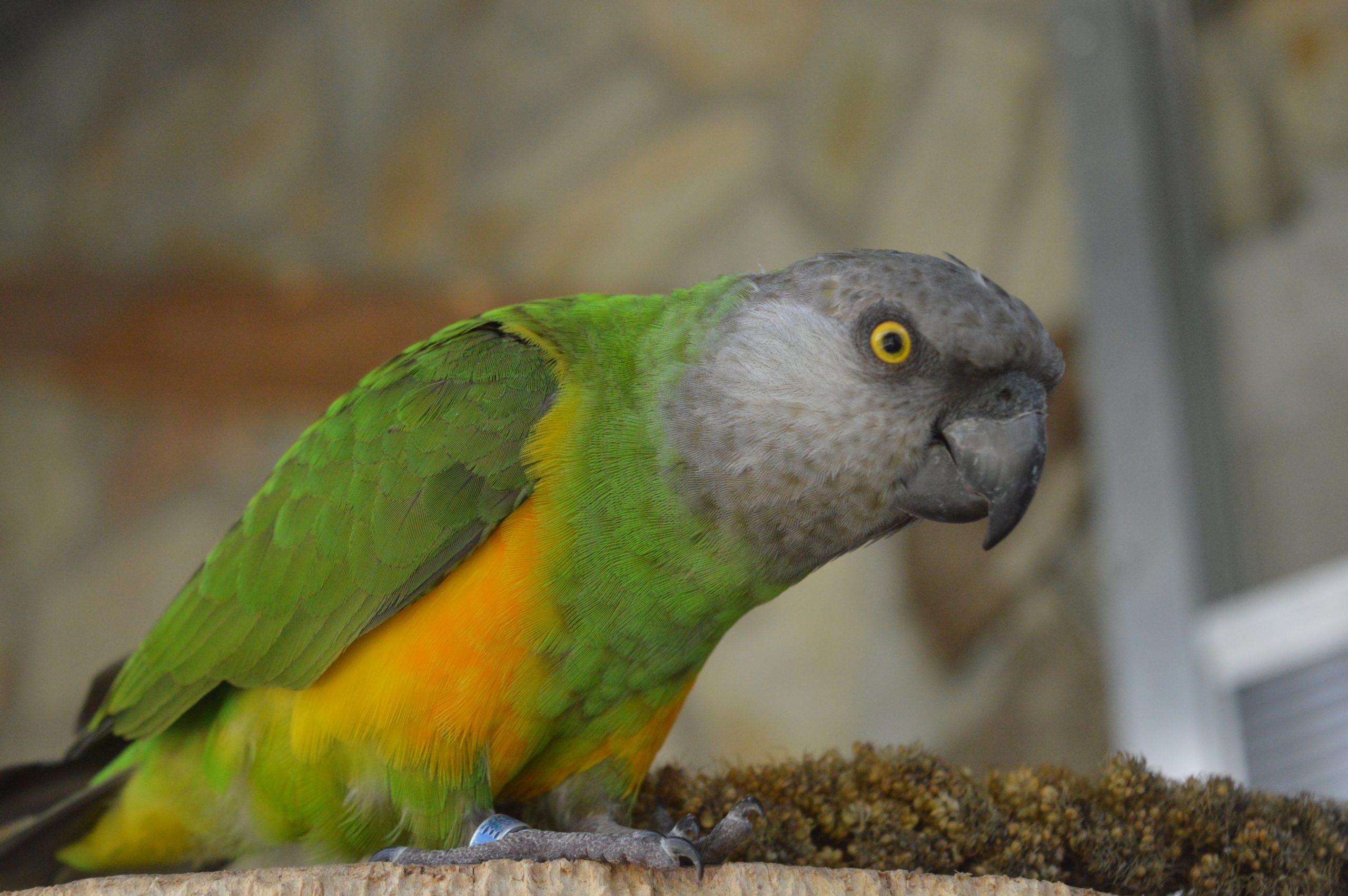


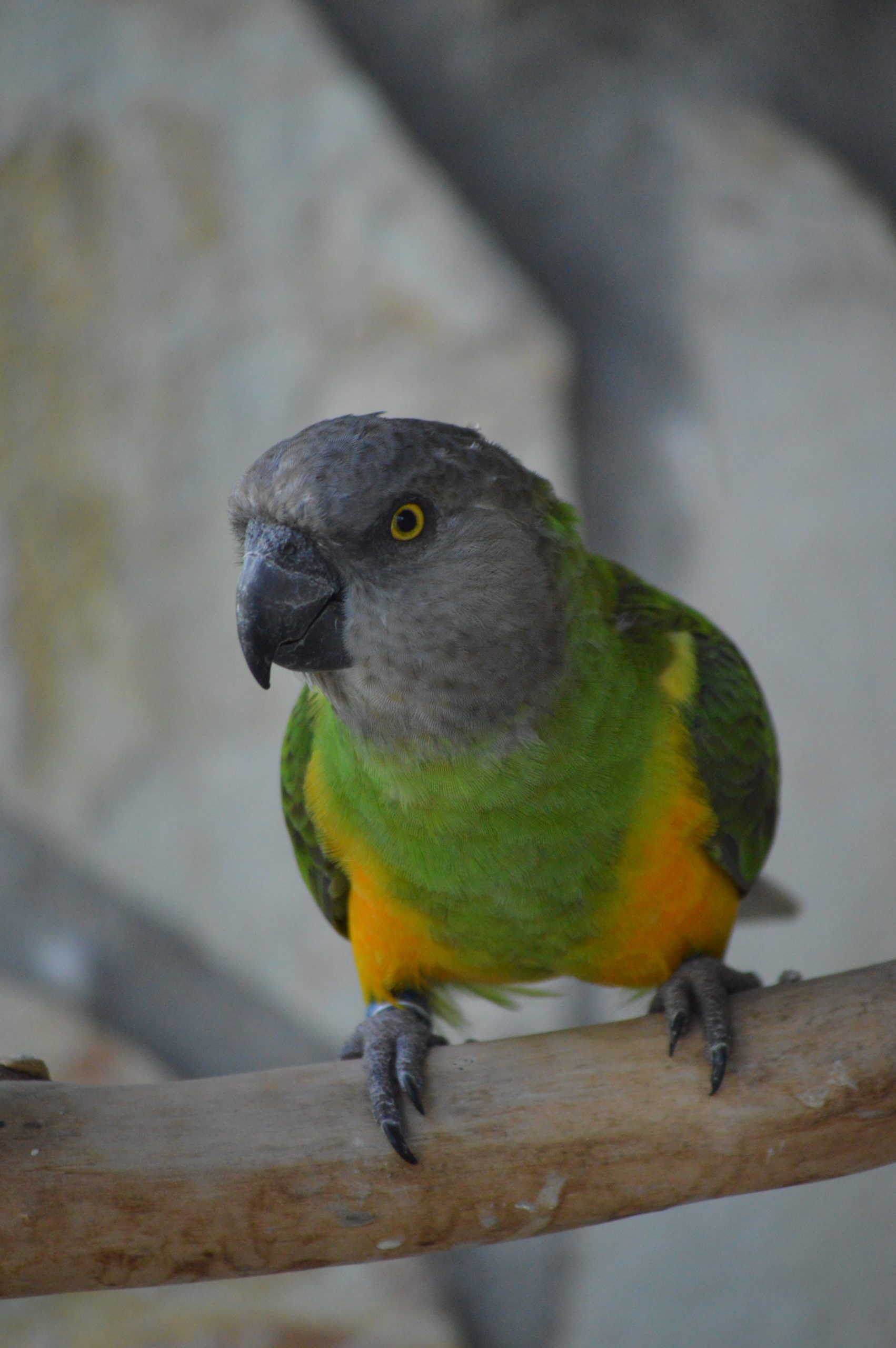

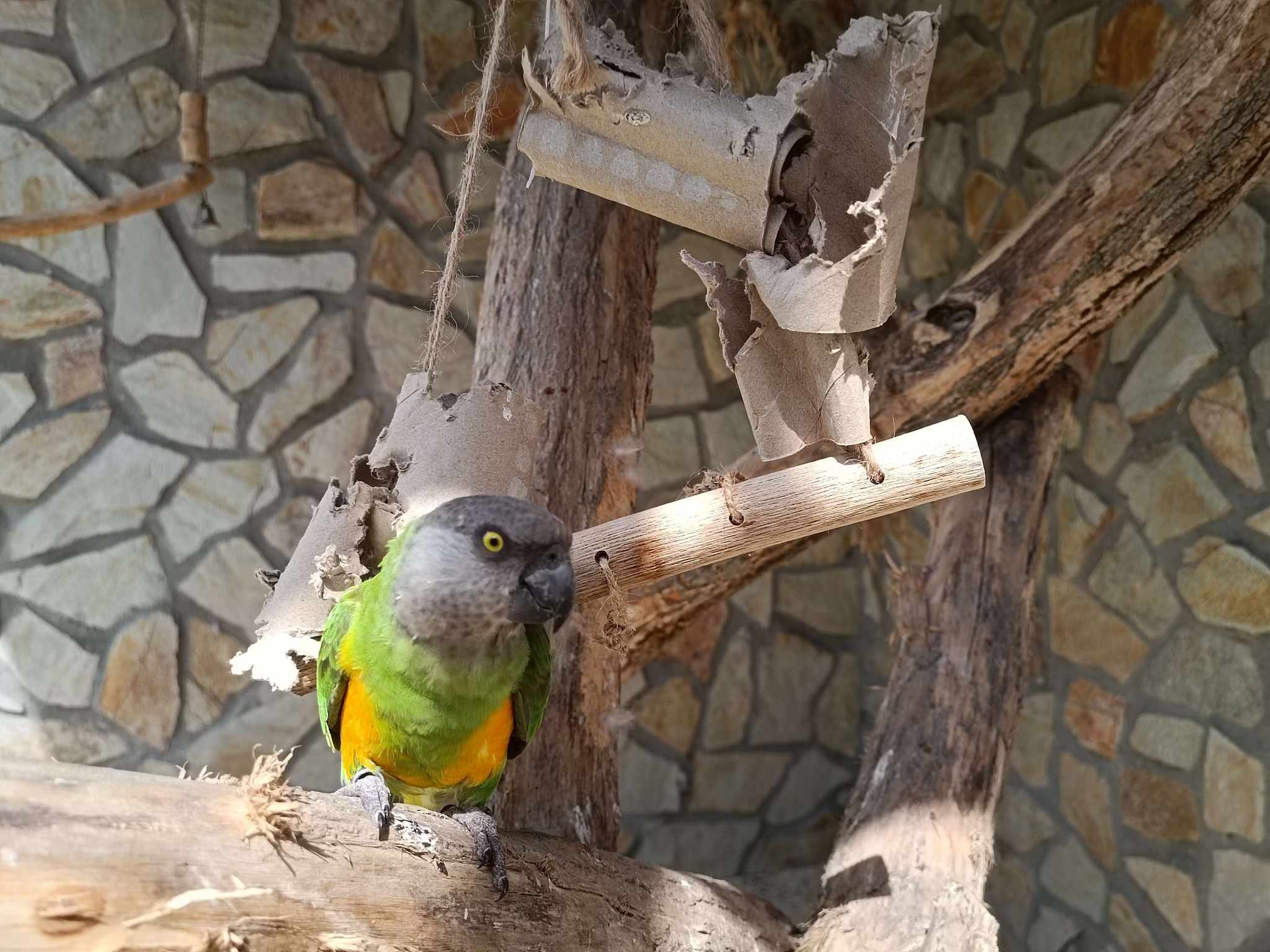
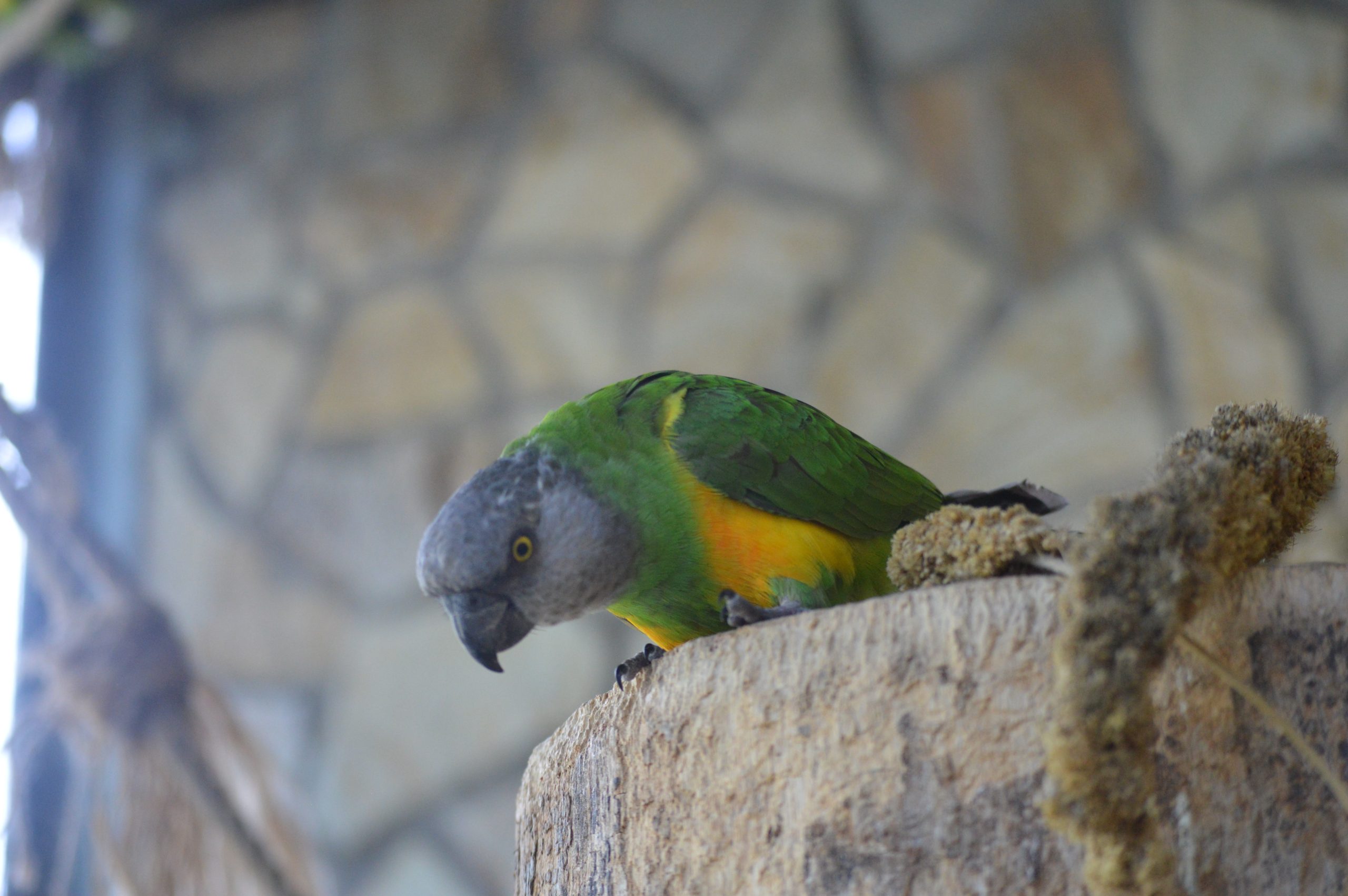
Ginka is a tame Senegal parrot who adores cashew nuts. After a few minutes, he “touches” very quickly and allows himself to be stroked by strangers without any problems. He pounces on his caregivers immediately upon arrival and demands petting. She is very communicative and likes the presence of people.
Not yet adopted
It has a black head, green back and throat, and yellow belly and tailbone. The green feathers on the chest enter the yellow feathers in the typical “V” shape. Both beak and legs are grey. The irises are orange.
The male is usually larger and heavier than the female. The female has a smaller head and narrower beak, and the green feathers extending into the yellow V-shaped plumage in front of her body extend all the way between her legs and do not end in the middle of her chest as they do in males.
It inhabits savannah grasslands and open forests. It lives in pairs or small flocks of up to 20 individuals. It is very inconspicuous in the wild and difficult to spot in green treetops.
It nests in the cavities of trees, especially baobabs, high above the ground. The female sits on the eggs. The male brings her, and later the chicks, food and protects the nest from intruders. The female usually stays in the nest until the chicks are 4 weeks old, when the chicks have enough feathers for thermal insulation. The chicks fly out at about 9 weeks of age.
Despite its small stature, it has the character traits of large parrots. It is curious, likes to climb, and easily clings to humans (sometimes it becomes too dependent). It can imitate both sounds and speech. In breeding, it tends to be territorial and defends the territory of its cage or aviary.
They like to make noise, but they are not as noisy as other parrots.
Senegal parrots that have been caught in the wild usually do not become tame and do not make good pets.
Senegal parrot
Poicephalus senegalus
Gina
Date of hatching
25. 05. 2007
Order
Family
BODY LENGTH
ca 23 cm
Weight
125-170 g
LIFE EXPECTANCY
25-30 years, in captivity up to 50 years
INCUBATION PERIOD
ca 27 days
CARE OF THE YOUNG
10-12 weeks
NUMBER OF EGGS
2-4 white eggs
Occurrence
midwestern Africa
Food
various seeds, nuts, berries and fruits
Gino
Ginka is a tame Senegal parrot who adores cashew nuts. After a few minutes, he “touches” very quickly and allows himself to be stroked by strangers without any problems. He pounces on his caregivers immediately upon arrival and demands petting. She is very communicative and likes the presence of people.
Not yet adopted
It has a black head, green back and throat, and yellow belly and tailbone. The green feathers on the chest enter the yellow feathers in the typical “V” shape. Both beak and legs are grey. The irises are orange.
The male is usually larger and heavier than the female. The female has a smaller head and narrower beak, and the green feathers extending into the yellow V-shaped plumage in front of her body extend all the way between her legs and do not end in the middle of her chest as they do in males.
It inhabits savannah grasslands and open forests. It lives in pairs or small flocks of up to 20 individuals. It is very inconspicuous in the wild and difficult to spot in green treetops.
It nests in the cavities of trees, especially baobabs, high above the ground. The female sits on the eggs. The male brings her, and later the chicks, food and protects the nest from intruders. The female usually stays in the nest until the chicks are 4 weeks old, when the chicks have enough feathers for thermal insulation. The chicks fly out at about 9 weeks of age.
Despite its small stature, it has the character traits of large parrots. It is curious, likes to climb, and easily clings to humans (sometimes it becomes too dependent). It can imitate both sounds and speech. In breeding, it tends to be territorial and defends the territory of its cage or aviary.
They like to make noise, but they are not as noisy as other parrots.
Senegal parrots that have been caught in the wild usually do not become tame and do not make good pets.